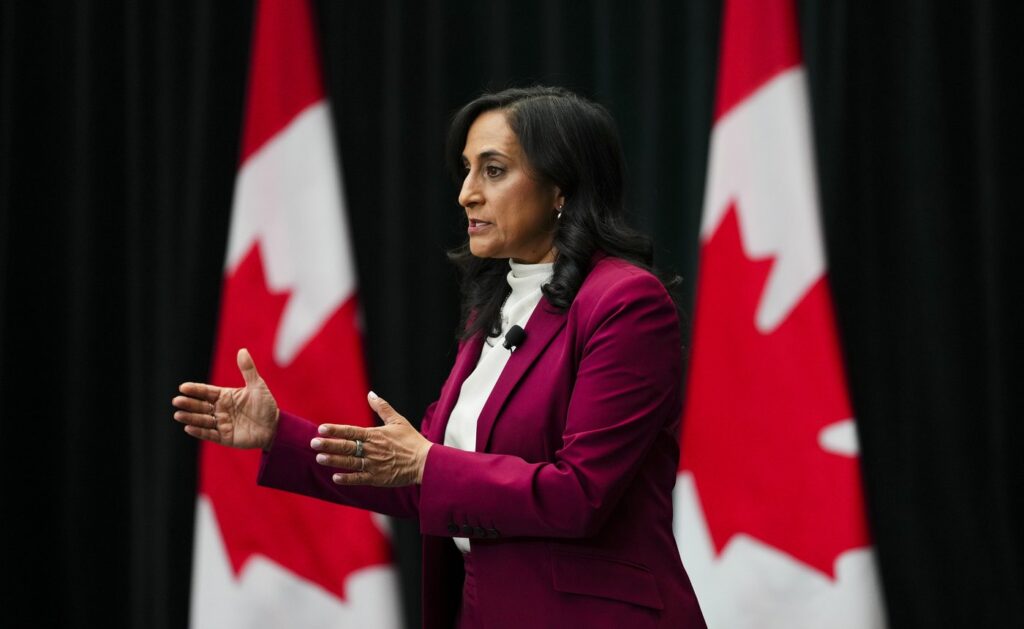
OTTAWA – Foreign Affairs Minister Anita Anand has articulated a transformative approach to Canada's foreign policy, highlighting an effort to rejuvenate relationships with various countries across multiple continents, primarily aimed at enhancing trade opportunities.
During a recent interview in Islamabad, where she met with Pakistan's foreign minister—marking the first visit by a Canadian foreign minister to Pakistan in 19 years—Anand asserted that this new diplomatic strategy distinguishes itself from Canada's historical practices. Her recent travels included visits to Brazil, Romania, and Panama, with upcoming trips planned for Benin, Ivory Coast, Morocco, and Kazakhstan.
Under this revised framework, Ottawa is emphasizing trade and economic growth, actively pursuing trade agreements and restoring or initiating diplomatic relationships through direct engagements. Anand noted, “Certainly, it reflects a changed foreign policy,” referencing a response to the evolving global trading landscape and Canada’s objective to double its non-U.S. trade within the decade.
The minister explained that her office's preparation for international trips has also evolved. She engages with major Canadian business organizations prior to her diplomatic missions to pinpoint commercial possibilities in the host countries. For example, before her recent visit to Brazil, Anand consulted with the Canadian Meat Council to understand the commercial implications of her trip.
She elaborated that her staff at Global Affairs Canada has been assigned the task of assessing prospects for trade agreements, investment protection deals, and strategic partnerships relevant to the visited nations. Anand stated, “My briefing notes have to be different than they have historically been,” emphasizing her focus on identifying key Canadian commercial interests before engaging diplomatically.
In a speech delivered to Canada’s diplomatic corps in Ottawa on June 1, Anand conveyed the critical directive for diplomats to foster engagements with Canadian businesses and discover new trade opportunities. Historically, Canada has prioritized diplomatic relationships mainly with the United States and Europe, often devoting less attention to Asia, Africa, and South America. Anand acknowledged that Canada’s foreign engagement in other regions has experienced fluctuations over the years.
She described the shift in strategy as positioning Canada as a reliable partner amidst a volatile global environment, especially as countries work to secure stable access to energy and critical minerals. Anand remarked, “This is a new way of doing diplomacy,” asserting that countries are now more keenly interested in diversifying their trading relationships and that Canada is ahead in this initiative.
Prime Minister Mark Carney’s government has successfully negotiated 20 economic and security agreements across five continents, including a long-awaited trade deal with Indonesia and Canada’s inaugural defense industry framework with Qatar. Anand pointed out that Canada possesses significant advantages in the global trade arena due to its abundant resources, including oil, gas, potash, and food products, stating, “We have what the world wants.”
Despite these advancements, the Conservative Party has criticized the Carney administration, accusing it of establishing international agreements that lack detailed frameworks and raise security and human rights concerns. The NDP has also highlighted how cuts within the public service may hinder Canada's ability to implement Carney's ambitious diplomatic vision effectively.
The Senate foreign affairs committee has echoed these concerns, indicating that the diminished diplomatic capacity is preventing Canada from capitalizing on potential opportunities in rapidly growing African economies. Anand discussed recent developments, such as Pakistan's decision to permit the importation of Canadian canola seeds following restrictions from China, as evidence of the positive outcomes from Canada’s renewed diplomatic focus. A new defumigation agreement was also announced to facilitate increased canola exports to Pakistan.
Looking ahead, Prime Minister Carney aims to finalize a trade deal with the Association of Southeast Asian Nations (ASEAN) by November. Anand plans to travel to the Philippines soon to support these efforts. The Prime Minister has previously called upon middle powers to unite and advocate for their collective interests on the global stage during a notable speech at the World Economic Forum in Davos in January.
To actualize this vision, Anand is dedicated to reviving previously dormant overseas relationships, while simultaneously addressing issues of human rights and consular cases during her visits. She frequently holds meetings shortly before or after Carney's visits to ensure continuity in diplomatic efforts. In her role, Anand aims to lay essential groundwork for future engagements between leaders from Canada and other nations.