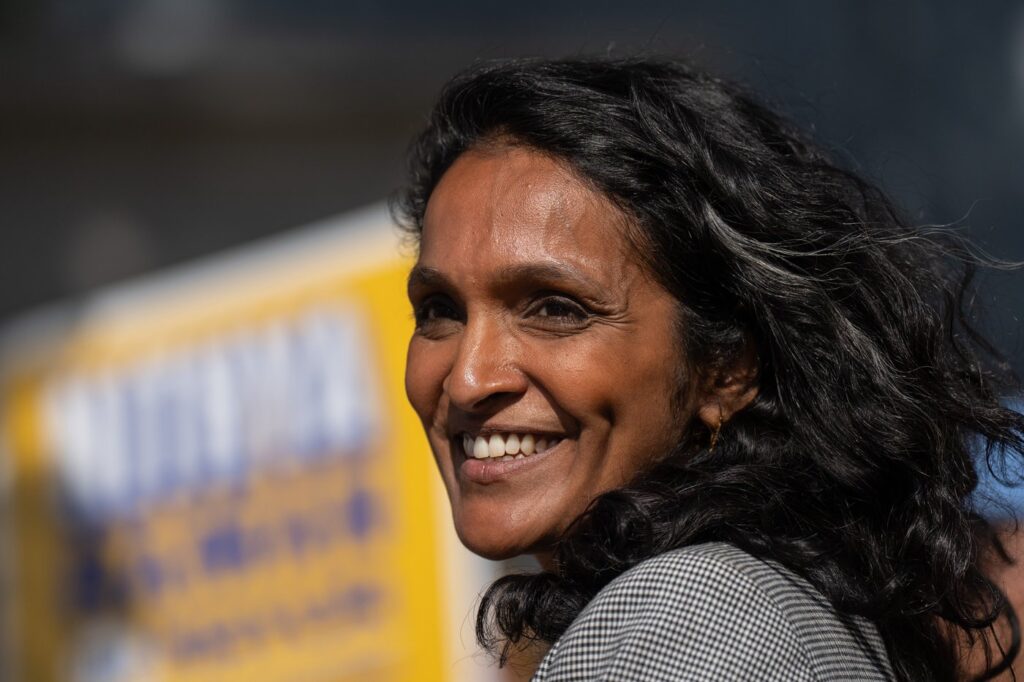
LOS ANGELES (AP) – Progressive city council member Nithya Raman has advanced to a November runoff against Los Angeles Mayor Karen Bass, resulting in an unexpected match between two Democrats and former political allies vying to lead a city grappling with significant challenges. The election has significant implications for the nearly 4 million residents of Los Angeles, as both candidates offer differing visions for addressing the city's struggles with homelessness, infrastructure deterioration, and surging housing costs.
The primary election saw Republican Spencer Pratt, a former reality television star, fail to secure a spot in the runoff despite drawing national attention due to his celebrity status and outspoken criticism of the liberal governance prevalent in LA. His campaign, although notable for its media presence, did not convert to sufficient voter support.
Raman's late entry into the mayoral race was particularly surprising, given her previous endorsement of Bass for reelection. As a member of the city council, Raman aligned herself with the Democratic Socialists of America, positioning herself to appeal to the city’s left-leaning electorate. The forthcoming election will serve as a critical test of whether voters prefer a shift further left, especially regarding policies related to homelessness and urban management, or if they favor incumbent Bass's approach to governance.
This mayoral contest is marked by historical significance: Bass has the distinction of being the first Black woman to hold the office, while Raman has the potential to become the first South Asian woman elected to the position. Raman expressed her determination by stating, “If you’re as frustrated by the broken status quo as I am, I hope you’ll join our movement to build a city that works for everyone.” She criticized the prioritization of powerful interests over working people's needs, highlighting the adverse effects of rising rents and diminished city services.
On the other hand, Bass's campaign strategist asserted confidence in Bass's chances, emphasizing her administration's focus on public safety and community welfare, particularly in contrast with Raman's stance on policing. Following Election Day, Raman consistently gained votes over Pratt, eventually overtaking him to secure her runoff spot. By Monday, she extended her lead over Pratt to nearly 22,000 votes, signaling a resurgence of voter support from mail-in ballots as the counting process progressed.
The Los Angeles mayoral race marks one of the two significant electoral contests in California, alongside the governor's race, where Democrat Xavier Becerra has advanced but faces uncertainty regarding his opponent, potentially either Republican Steve Hilton or fellow Democrat Tom Steyer. While the mayoral race is technically nonpartisan, both Raman and Bass are well-known figures within the Democratic Party, indicating a battle of ideologies in a predominantly blue city.
According to incomplete returns, Bass received under 35% of the vote, raising concerns about her incumbency as she faces Raman's increasing popularity. Bass, representing the Democratic establishment, is supported by influential figures like Governor Gavin Newsom and former House Speaker Nancy Pelosi, and has held various political roles prior to becoming mayor.
In recent statements, Raman has committed to addressing issues such as housing supply, entertainment industry jobs, and deteriorating urban conditions. She criticized the prevailing approach to homelessness as merely relocating encampments rather than providing sustainable solutions. This has resonated with constituents like Tanika Vickers, who articulated feelings of neglect among working citizens, expressing her vote for Raman based on her perceived qualifications to enact change. Vickers highlighted a collective desire for transformative governance that directly addresses citizens' concerns.
Raman’s political trajectory reflects some shifts, particularly on issues surrounding homelessness and police funding. Initially opposing no-camping zones, she has signaled a willingness to accept them so long as they are effectively implemented. Similarly, her stance on police funding has evolved from advocating for a significantly reduced police force to maintaining current staffing levels, addressing the criticism she faces for her previous statements.
As the election nears, both candidates must navigate a diverse electorate that demands comprehensive strategies for urban challenges. Raman's success in capturing a broader voter base may be critical, given Bass’s established presence within the party. Ultimately, the upcoming runoff will further illuminate the political landscape in Los Angeles and the direction residents wish to take for the city's future.