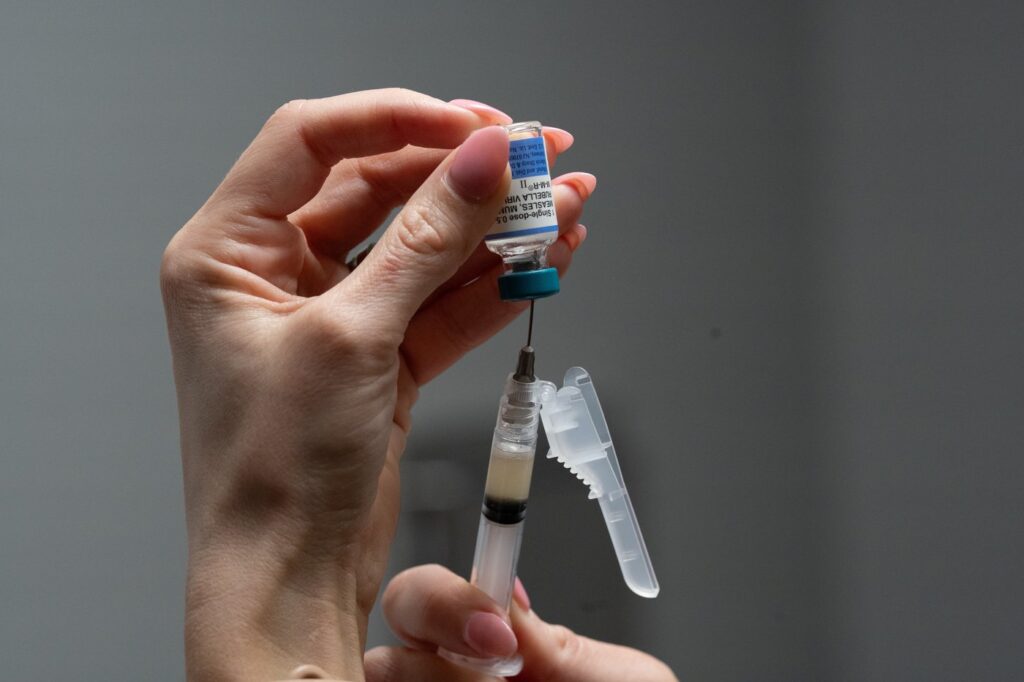
A prominent OB-GYN group has announced new vaccine recommendations on Wednesday that diverge from the U.S. government's advice. This newly released immunization schedule specifically targets pregnant, postpartum, and breastfeeding women and has drawn from previous recommendations made by the U.S. Centers for Disease Control and Prevention (CDC) before alterations were introduced during the Trump administration and by Health Secretary Robert F. Kennedy Jr.
Earlier in the year, the American College of Obstetricians & Gynecologists (ACOG) withdrew from a CDC advisory committee on vaccines due to the changes that have prompted legal challenges. Dr. Christopher Zahn, the OB-GYN group’s chief of clinical practice, explained that “for the first time, ACOG has made the decision to formally release its own immunization schedule to provide and communicate clear evidence-based guidance and to address the growing vaccine misinformation that is circulating.”
The new vaccine schedule has received endorsements from 13 other professional and medical societies. In a similar vein, other organizations, including the American Academy of Pediatrics, have also published vaccine schedules this year that differ from the CDC's guidelines.
The OB-GYN group's recommendations outline four vaccines that are routinely suggested during pregnancy. These include:
- The flu vaccine, which is recommended at any time during pregnancy and in any trimester, although early fall vaccination is preferred.
- The COVID-19 vaccine, which can also be administered at any stage of pregnancy, with a recommendation to receive it as soon as possible.
- A tetanus, diphtheria, and pertussis (Tdap) shot, ideally administered between 27 and 36 weeks of gestation.
- A respiratory syncytial virus (RSV) vaccine for first-time pregnancies, advised between 32 and 36 weeks, specifically for women pregnant during September through January in most U.S. regions. If a woman received the RSV vaccine in a prior pregnancy, she does not need another; however, her newborn will need an antibody shot post-birth or can receive that shot instead of the maternal vaccine.
Furthermore, the group advises that other vaccines—including pneumococcal, meningococcal, hepatitis A, and hepatitis B—may be necessary based on individual risk factors, recommending consultation with healthcare providers regarding these vaccines. Three additional vaccines are suggested for administration either before pregnancy or after giving birth, which cover human papillomavirus (HPV), measles, mumps, and rubella, as well as chickenpox.
One of the key distinctions between the OB-GYN group's recommendations and those of the CDC pertains to the COVID-19 vaccination. Following a statement made by Kennedy last May, which indicated that COVID-19 vaccines are no longer advised for healthy pregnant women and children, experts raised concerns about the veracity of this claim and its potential public health implications.
Responses from health care providers indicate a significant degree of vaccine hesitancy among patients. During an event to announce the new guidelines, Carol Hayes of the American College of Nurse Midwives noted that many patients express doubts rooted in personal research that often lacks a scientific basis. Similarly, Sarah Vaillancourt from the National Association of Nurse Practitioners in Women's Health indicated that misinformation, largely propagated through social media, adds to the confusion. In this context, she emphasized the value of the OB-GYN group's initiative to provide precise information for patients.
In summary, the new immunization schedule from the OB-GYN group stands as a measure to counter vaccine misinformation, aiming to equip healthcare providers and their patients with credible guidance amidst the backdrop of evolving vaccine recommendations and public skepticism.