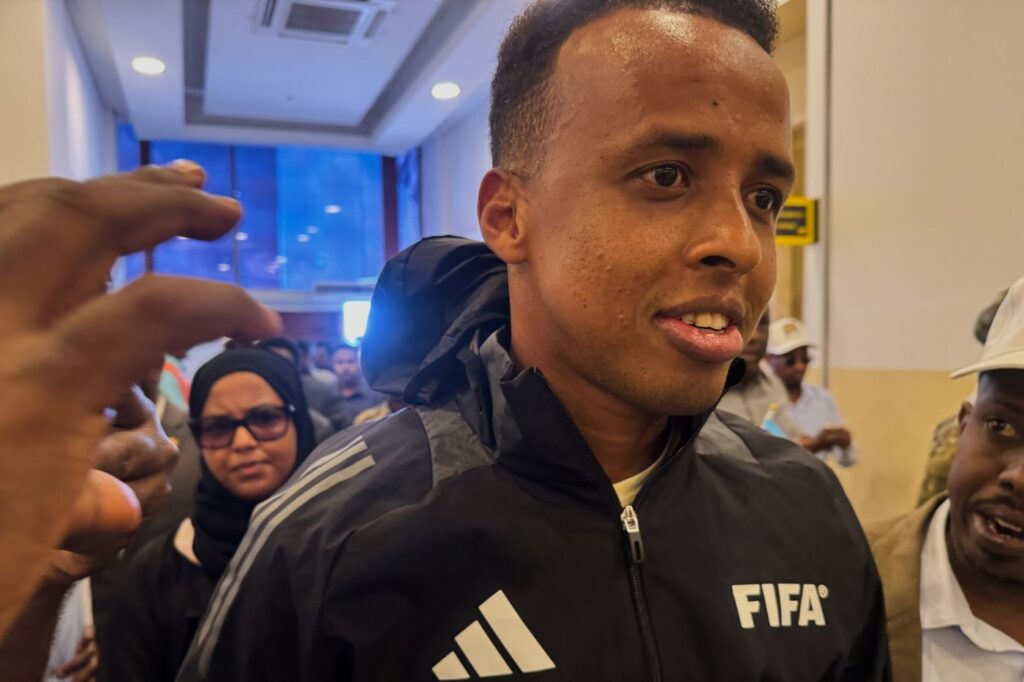
MOGADISHU, Somalia (AP) — Omar Artan, a Somali soccer referee poised to make history as the first from his country to officiate at the World Cup, was denied entry to the United States. This unprecedented decision by the U.S. led to his disappointment but also resulted in Artan being named Africa's best referee, earning him hero status among many in Somalia.
At 34 years old, Artan was recognized for his dedication and skill, having worked diligently for years in the soccer arena. His selection for the FIFA World Cup brought immense hope to the nation of approximately 19 million, which has been striving for recovery after enduring decades of civil unrest and war.
Artan's entry denial marked an extraordinary moment in the realm of modern soccer, as the U.S., a co-host of the tournament alongside Mexico and Canada, took the unusual step of blocking a match official appointed by FIFA from entering its territory.
Upon returning to Mogadishu after being dropped from the World Cup officiating list, Artan received a hero's welcome. He used the opportunity to inspire the nation’s youth, encouraging them to take pride in their country amid the challenges they face.
Enlisted as a FIFA referee in 2018, Artan was the first Somali to officiate at the African Cup of Nations, where he managed a group fixture between Tunisia and Namibia in January 2024. In May 2025, he was the referee for the decisive leg of the African Champions League final, Africa's premier club soccer event. His reputation soared, culminating in his recognition as Africa's best male referee in 2025.
The selection process for World Cup referees is rigorous, overseen by FIFA's refereeing officials. Candidates undergo extensive evaluation over several years across various competitions, starting from local to international events. Referees need to be nominated by their national soccer associations, gaining experience in continental tournaments such as the African Cup of Nations before potentially being selected for FIFA-organized events, including the World Cup. Artan had also participated in the men’s Under-20 World Cup in Chile in 2025.
Regarding his denied entry to the U.S., the U.S. Customs and Border Protection cited “vetting concerns” as the reason for Artan's inadmissibility. An anonymous U.S. official hinted that the denial was linked to his supposed association with individuals affiliated with suspected terrorist organizations. Similarly, Somali officials attributed the decision to restrictions put in place during the Trump administration, which targeted citizens from numerous countries, including Somalia.
The action of barring a FIFA-appointed referee raised eyebrows within the soccer community. FIFA clarified that it had no involvement in the immigration decisions and stated that, traditionally, the host country calls the shots regarding visas and entry permissions. The community and fans viewed Artan’s barring as indicative of potential issues for the U.S. in hosting a global event such as the World Cup.
Despite the turmoil and challenges posed by civil conflict over the past three decades, soccer continues to thrive in Somalia. It stands as one of the most popular sports, offering a semblance of unity and hope to the youth. The Somali Football Federation organizes numerous competitions each year, successfully maintaining local leagues even in adversities faced during periods of instability. The restoration of Mogadishu Stadium, with a capacity of roughly 65,000, symbolizes the nation's gradual recovery, enhancing the unifying role soccer plays in the society.
Artan's journey encapsulates both the spirit of perseverance in the face of adversity and the complicated dynamics of international relations affecting sports.