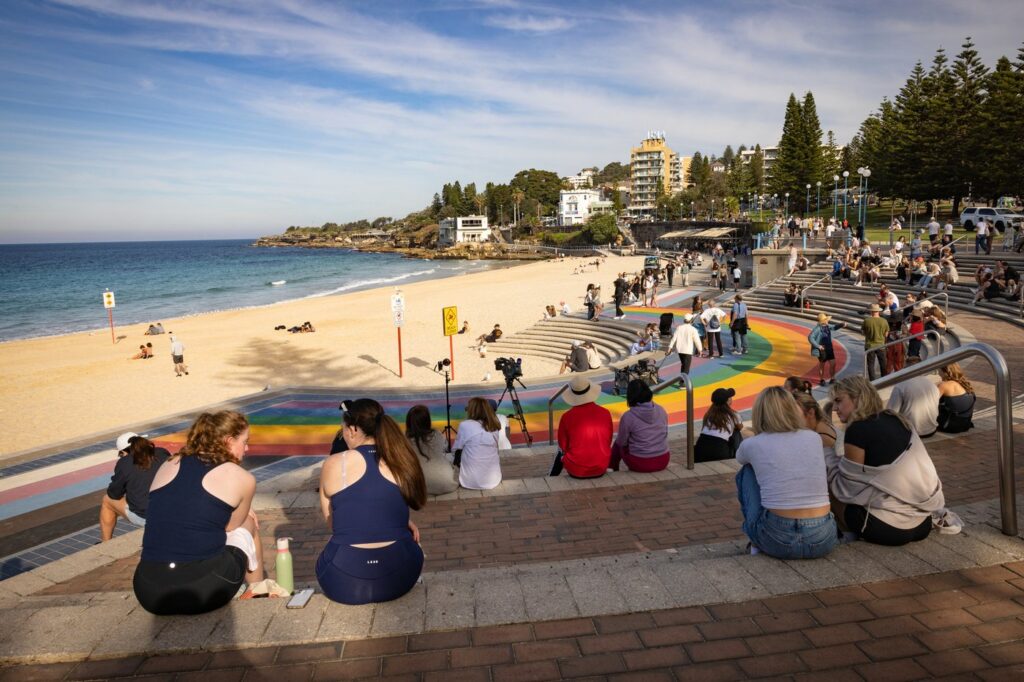
MELBOURNE, Australia (AP) — A 35-year-old woman was critically injured by a 3.5-meter (11-foot) white shark while swimming off Coogee Beach in Sydney on Saturday at 11:15 a.m. The attack occurred just 30 meters (100 feet) from the shore, where the victim was swimming with two friends. Lifeguard Charlie Verco, who was nearby on his 5.5-meter (18-foot) paddleboard, was the first rescuer to arrive at the scene.
According to Verco, he was shocked by the sight of the shark as it emerged from the water. He described a tense moment when the shark took the woman underwater. However, she later resurfaced, and despite being too weak to climb onto the paddleboard, Verco was able to grab her arm and began to paddle toward the beach. Other bystanders quickly joined in to assist, helping them reach safety.
Dr. Ian Ferguson, who was at the beach with his family, reported hearing screams and seeing a "big cloud of blood in the water" as he rushed to help. After the woman reached the shore, he and others applied tourniquets to her severe injuries. She had a 30-centimeter (12-inch) bite on her thigh, exposing bone, and similar injuries on her arm. Following emergency care at a rugby field nearby, she was airlifted to a hospital, with authorities describing her condition as critical.
The attack comes amid increasing concern over shark-related incidents in Australia, where three spearfishing divers have been killed by sharks since May 16, bringing the total fatalities for the year to four. Notably, a 12-year-old boy died in January after being bitten by a bull shark in Sydney Harbor.
Statistics show that Australia has experienced an average of two to three fatal shark attacks annually since the year 2000, as reported by the Australian Shark Incident Database, a collaboration between the Taronga Conservation Society Australia, Flinders University, and the New South Wales state government. In 2022, the country recorded five fatal attacks, highlighting a troubling trend as shark incidents have become more common over the decades due to rising recreational activities such as surfing and scuba diving.
This particular incident at Coogee Beach adds to the ongoing dialogue surrounding shark safety and public awareness, especially in areas with increasing swimming and surfing populations. The response to the attack highlights the swift actions of local lifeguards and bystanders in emergencies, potentially saving the woman's life. The future implications of such attacks on public health and safety measures at Australian beaches remain an important consideration moving forward.