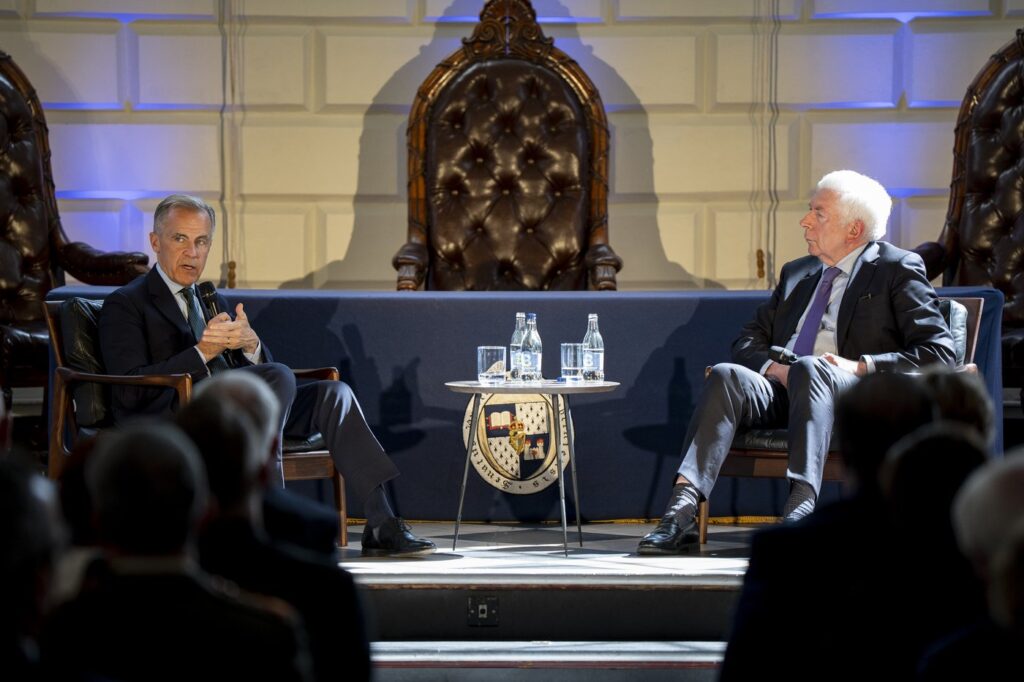
OTTAWA — Prime Minister Mark Carney has asserted that the “strands” of a new world order could potentially be woven at the upcoming G7 summit, scheduled for next week. Carney made these remarks during a recent discussion at Trinity College Dublin while on a six-day trip to Europe.
Earlier this year, during his speech at Davos in January, Carney urged middle powers to unite in the face of challenges posed by great powers, a call that has garnered significant global attention. The G7 summit, taking place in Évian-les-Bains, will include not only key member countries but also representatives from various nations including Gulf states, Kenya, Brazil, Egypt, and India. Carney emphasized that these additional participants would contribute a “broader perspective and a broader element of the solution.”
He commented on the changing dynamics of global governance, stating, “It’s a recognition that the G7, if it ever did run the world, no longer runs the world or pretends to.” In his comments, Carney noted multiple pressing issues that are evolving rapidly, particularly addressing the unregulated nature of artificial intelligence (AI). He warned of potential risks linked to AI, including threats to child safety and systemic vulnerabilities to cyber attacks. Carney articulated the need for shared defenses and common standards regarding AI, asserting that the discussion surrounding these topics will be critical at the G7 summit.
The French government, hosting the summit, has designated several priorities for the G7 agenda, including resolving significant geopolitical crises, supporting Ukraine, and enhancing online protection for children. Earlier, French lawmakers approved legislation that bans social media access for children under the age of 15, reflecting a growing movement in Europe to establish a minimum age for social media use.
In Canada, the Liberal government has introduced its own online safety legislation, Bill C-34, which seeks to block access to social media for individuals under 16. However, exceptions may be granted if platforms put adequate safeguards in place. This legislation also aims to regulate companies behind AI chatbots, imposing a duty on them to act responsibly, including preventing chatbots from disseminating harmful content and implementing crisis intervention protocols for users exhibiting signs of self-harm or violence.
A Canadian government official indicated that a comprehensive final communiqué may not be issued at the conclusion of the summit; instead, participants can anticipate issue-specific statements released throughout the event. Recent reports from both the International Monetary Fund and France's G7 presidency highlight worsening global macroeconomic imbalances that cannot be addressed without China's involvement. Leaders are expected to engage in discussions regarding the future of the global economy, likely addressing issues such as China’s industrial overcapacity.
While Carney is anticipated to engage in meetings with world leaders at the summit, it remains uncertain whether he will have an audience with U.S. President Donald Trump. The discussions and interactions at this summit could significantly inform the trajectory of international relations and governance approaches in the context of contemporary global challenges.