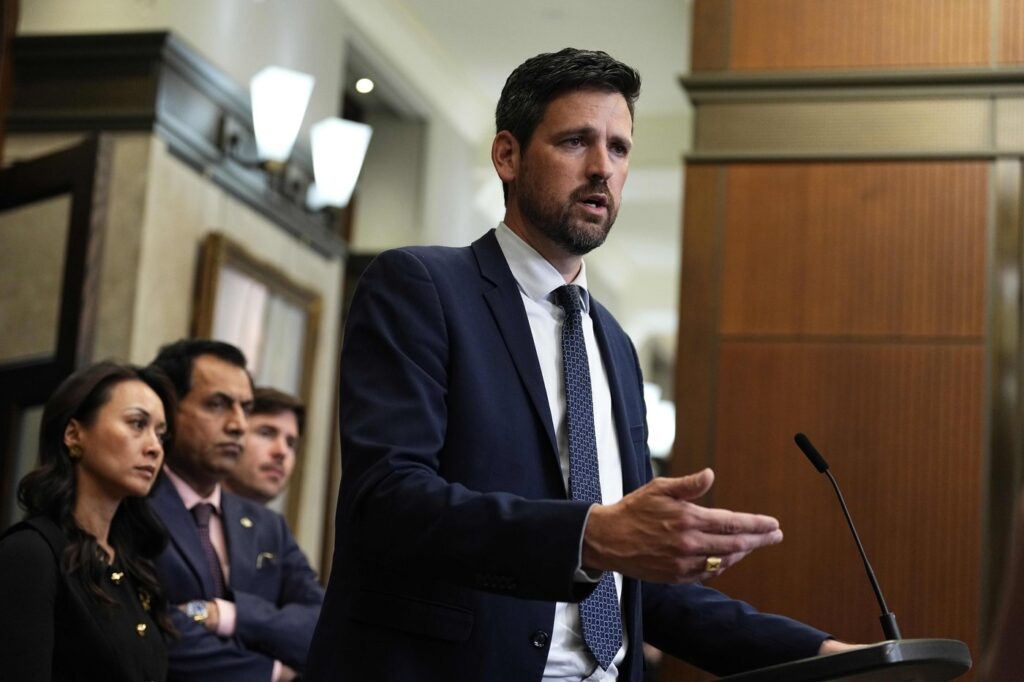
OTTAWA – Justice Minister Sean Fraser announced that he will be taking the summer to thoroughly review the work of a committee dedicated to assessing Canada's readiness to permit individuals with mental illnesses to access medically assisted dying (MAID). This announcement comes in light of a report that is poised to be presented to Parliament, following an effort to ensure that it reaches the government before the House of Commons embarks on its summer recess.
Marcus Powlowski, the co-chair of the committee, indicated last week that the report's submission is strategically timed so that it can influence the upcoming legislative discussions. Fraser noted that, beyond evaluating the committee’s conclusions and recommendations, he intends to delve into the witness testimony that formed the basis of these recommendations. He emphasized the importance of ensuring that the findings reflect thoughtful conclusions drawn from knowledgeable sources.
As it stands, individuals with a mental illness as their sole underlying condition are currently ineligible to access MAID under existing Canadian legislation. This exclusion is set to be reviewed in March 2027, as it was initially implemented in 2021 when the previous Liberal administration broadened the scope of MAID eligibility. This reform was prompted by a Quebec Superior Court ruling, which deemed the previous restrictions unconstitutional for those experiencing suffering without being close to the end of life.
The exclusion was intended to be temporary, lasting just one year; however, it has been extended twice since then. Currently, individuals suffering from both psychiatric and physical ailments can be assessed for MAID, but those with only a mental condition continue to be ineligible. The newly formed committee of senators and MPs was established to evaluate whether Canada is prepared to lift this exclusion by next spring.
During a recent series of meetings, the committee discovered a significant lack of consensus among medical professionals regarding what constitutes an irremediable mental illness. To qualify for MAID, an individual must demonstrate that they are suffering from a grievous and irremediable medical condition, among other criteria. This uncertainty about definitions complicates the discourse around mental illness and MAID.
Moreover, some committee members and expert witnesses expressed concerns that the committee's work has been biased. Many of the invited testimonies were opposed to MAID for those with mental illnesses, while notable groups, including the Canadian Psychiatric Association and individuals suffering from psychiatric disorders advocating for MAID, were excluded from the hearings. Powlowski rebuffed these allegations, stating that the witness list was curated based on suggestions from all committee members.
A coalition of 90 organizations, spearheaded by Inclusion Canada, has penned a letter appealing to Parliament to reconsider the potential inclusion of individuals with mental illnesses in MAID legislation. Conservative MPs, including Andrew Lawton, stand firmly against lifting the exclusion. Lawton made it clear that he believes MAID should not be available to individuals solely experiencing mental illness, refusing to comment on reports suggesting that the committee might recommend an indefinite exclusion.
A previous iteration of the parliamentary committee reported in 2024 that the country was not yet prepared to extend MAID eligibility to individuals with mental illnesses. Notably, three out of the five senators on that committee filed dissenting reports challenging the committee's approach, with one senator, Pierre Dalphond, asserting that excluding all members of this group from accessing MAID was likely unconstitutional. He advocated for Parliament to pose a reference question to the Supreme Court of Canada for further clarity.
Fraser has previously stated that he is not considering a reference to the Supreme Court regarding MAID, indicating that his focus remains on the committee’s findings and the broader implications for mental health and the legislative process in Canada.