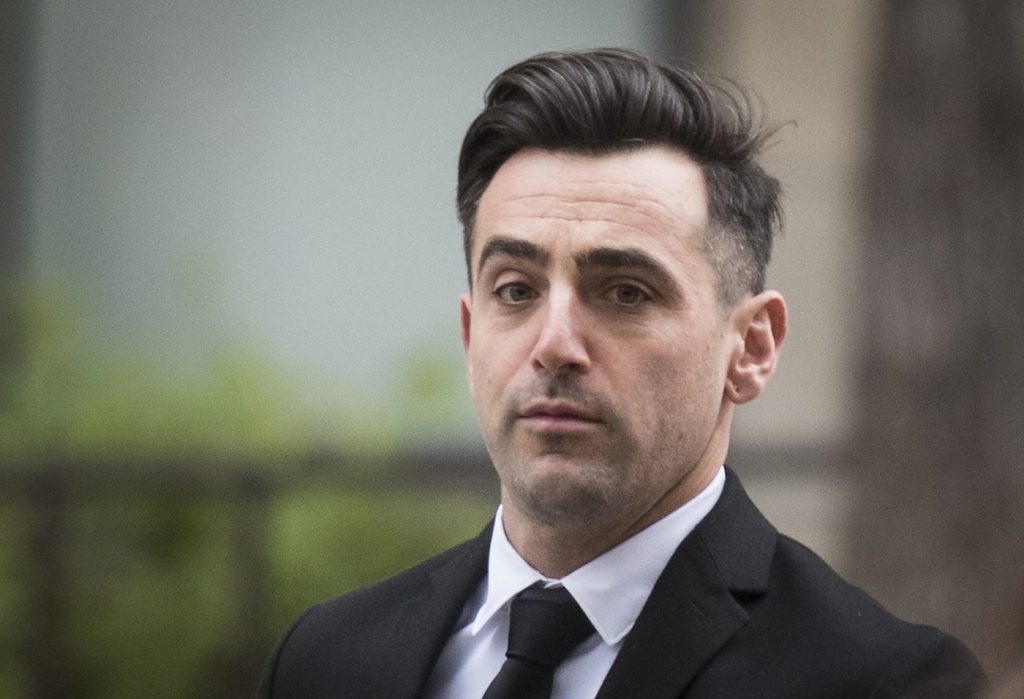
The Parole Board of Canada has recently denied Jacob Hoggard's request for full parole, citing the need for professional supervision as a key concern. Hoggard, formerly the frontman of the band Hedley, is a convicted sexual offender who is currently serving a five-year prison sentence following his conviction in June 2022. The court found him guilty of sexual assault causing bodily harm against an Ottawa woman, with the incident having occurred in a Toronto hotel room.
Despite the rejection for full parole, the board has granted Hoggard six months of day parole at a halfway house. This decision is accompanied by specific conditions aimed at monitoring his reintegration into the community more gradually. The ruling, released earlier this month, outlines that Hoggard must report all interactions with girls and women and cannot be in the company of sex workers. Additionally, the board imposed stricter conditions that called for oversight of any contact he may have with females under 18, requiring the presence of a responsible adult who is aware of his criminal history and has been approved by his parole officer.
Hoggard's past is also reflected in the conditions of his release; he must permit monitoring of his telecommunications, including texts, messages, and social media usage, by his parole officer. This strict oversight stems from the board's assessment that he poses a considerable risk to the community, emphasizing the nature of his prior actions. In particular, the board pointed to allegations concerning Hoggard’s manipulative behavior toward a teenager, wherein he allegedly groomed her for sexual relations.
The panel noted that his conduct in the assault reported by the Ottawa woman appeared to align with a broader pattern of predation and sexual manipulation, further justifying the stringent requirements for his release. The ruling described Hoggard's previous behavior as demonstrating a severe lack of self-control, which has inflicted lasting damage on his victims.
During the hearings, Hoggard maintained his innocence concerning allegations aside from the conviction that led him to prison. He stated that he had no understanding of consent at the time of the offenses, illustrating a significant disconnect regarding the gravity of his actions. The board expressed skepticism over his claims of limited understanding, considering the pattern of behavior and the numerous sexual encounters he admitted to having. They conclude that his conviction might not be an isolated incident.
While some progress was acknowledged in Hoggard's ability to take accountability for his actions during his prison sentence, the board indicated that much of this development was relatively recent. Reportedly, Hoggard only confessed to his wife about his guilt after considerable time had passed and after initially denying allegations due to fear and embarrassment.
In its final assessment, the panel stated that although his family expressed support for his release, significant concerns about his deceptive behaviors remained. The board concluded that Hoggard's reintegration into society should be approached cautiously, giving consideration to the potential risks involved based on his history. Such concerns culminated in the board's decision to favor a monitored, structured release over a more liberal form of parole.
This case has been remarkably public since allegations against Hoggard emerged in early 2018, which subsequently led to an indefinite hiatus for Hedley. In addition to his recent conviction, there were other charges, including a separate sexual assault accusation linked to an incident in Kirkland Lake, Ontario. However, that charge resulted in an acquittal after a brief deliberation by a jury in 2024.
Hoggard's continuing saga illustrates the complexities and challenges associated with rehabilitating individuals convicted of serious sexual offenses, emphasizing the overarching societal need for thorough oversight and careful assessment of the risks they may pose during reintegration efforts.