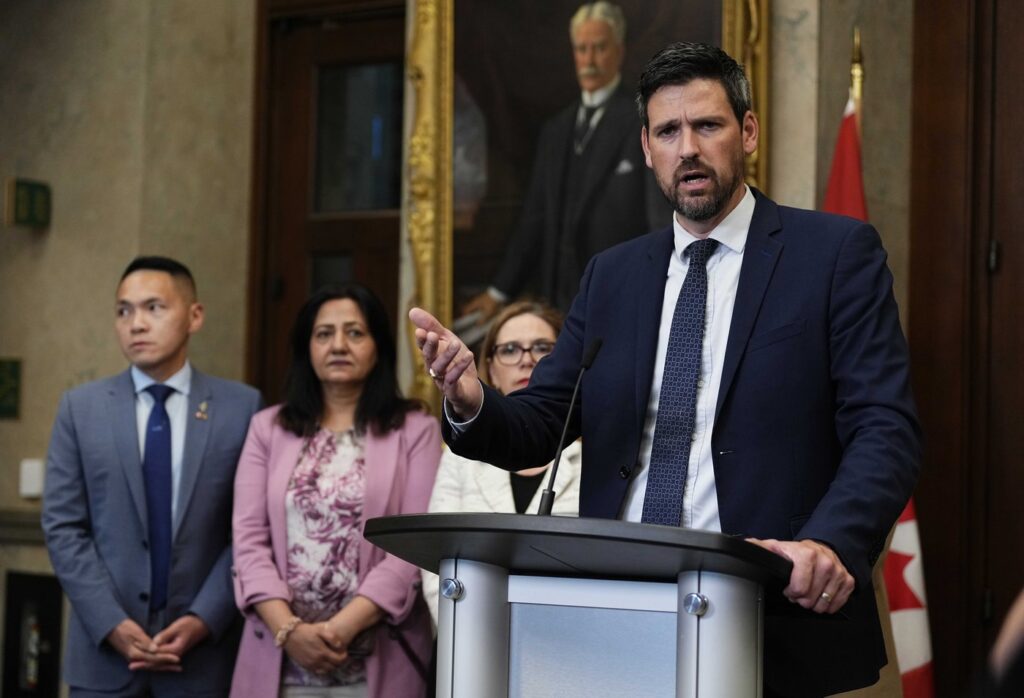
OTTAWA – On Tuesday, Justice Minister Sean Fraser expressed optimism that all three crime bills introduced by the Liberal government would receive royal assent before Parliament breaks for the summer. The introduction of these bills marks an important step in addressing public safety concerns across Canada.
Bill C-14, also known as the Bail and Sentencing Reform Act, successfully received royal assent and became law on Monday. This development is significant as it occurs during what is likely the last week of the spring session of Parliament. Fraser emphasized that the bill was crafted to address some of the most pressing issues identified through engagement with communities across the country.
According to Fraser, the legislation aims to alleviate the concerns voiced by provinces, mayors, and law enforcement regarding repeat offenders and the strain they place on public safety. The bill makes it more challenging to secure bail for a range of crimes, including vehicle theft, extortion, and human trafficking, by imposing a reverse onus. This provision shifts the onus of proof from prosecutors to defendants, who must now justify their request for bail.
Additionally, the legislation allows courts to impose consecutive sentences for repeat violent offenses, vehicle theft, breaking and entering, extortion, and arson. The Federation of Canadian Municipalities praised the passage of this legislation, noting its alignment with long-standing local concerns about public safety and the challenges faced by frontline responders.
Tim Tierney, president of the Federation, stated that the new law responds to the daily strains witnessed by local governments, police, firefighters, paramedics, and other essential services due to repeat offending. He reaffirmed that municipal leaders are committed to playing their part in achieving lasting safety results in their communities.
British Columbia’s Attorney General, Niki Sharma, expressed her support for the bill, highlighting its alignment with the reforms her province has been advocating. She particularly noted the importance of the reverse-onus bail provisions, which have been a significant priority in discussions with the federal government. Sharma concluded her statement by emphasizing the devastating impacts of repeat violence on families in British Columbia.
The provincial statement also signaled enthusiasm for Bill C-16, which remains under consideration in the Senate. This bill aims to restore mandatory minimum sentences for certain crimes and criminalizes coercive control as well as non-consensual sexual deepfakes.
Fraser confirmed to reporters on Tuesday that he anticipates royal assent for both the Combating Hate Act and the Protecting Victims Act within the week. The Combating Hate Act, currently being debated in Parliament, proposes new offences that would penalize intimidating or obstructing individuals outside religious or cultural institutions.
As the House of Commons reviews amendments made by the Senate to hate crime Bill C-9, the implications of these bills are poised to create more stringent regulations and heightened measures to improve safety and protect vulnerable communities.
The legislative efforts by the Liberal government represent a concerted approach to enhancing public safety by addressing both the root causes of crime and the challenges posed by repeat offenders through comprehensive reform in bail and sentencing practices.