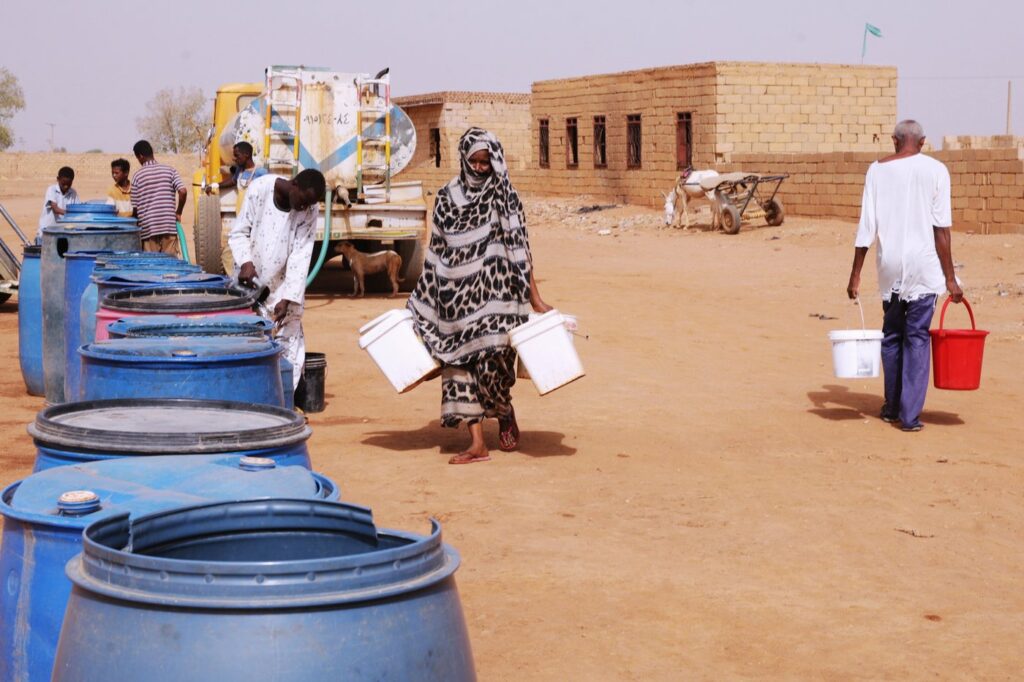
The United Nations' food agencies have issued a grave warning regarding escalating acute hunger across 13 global hot spots in the months ahead, driven by conflict, funding shortages, and climate-related shocks that are pushing millions of people closer to famine. The Food and Agriculture Organization (FAO) and the World Food Program (WFP) have outlined in a new joint report that conditions are expected to deteriorate between June and November 2026. Currently, approximately 266 million people are grappling with high levels of acute food insecurity, necessitating urgent international action.
WFP Acting Executive Director Carl Skau emphasized the urgency of the situation, stating, “The warnings in this report cannot be ignored. Without action now, millions more are expected to face worsening levels of hunger in the months ahead, pushing some closer to famine.” The report identifies Sudan, South Sudan, Yemen, and the Gaza Strip as areas of greatest concern, while Nigeria and Somalia have been newly categorized as alarming regions as conditions worsen and famine risks increase. In total, seven additional countries—Afghanistan, Congo, Myanmar, Haiti, Mali, Lebanon, and Madagascar—are also listed as hot spots.
The primary drivers of hunger in these areas are conflict and violence, exacerbated by economic shocks, severe reductions in humanitarian funding, and the anticipated impacts of an El Niño weather pattern, which poses threats of droughts and floods in vulnerable regions. The situation is further deteriorating due to spillover effects from ongoing conflicts in the Middle East and an Ebola outbreak in eastern Congo, which disrupt market access, livelihoods, and the delivery of aid.
Over the past year, funding for food assistance and related programs has plunged by approximately 59% since 2022, even as the need for assistance has surged. In a slight positive development, the United States announced an $800 million pledge to the WFP, which is expected to assist over 38 million people in at least 37 countries during this unprecedented global crisis. Nonetheless, WFP’s appeal of more than $10 billion for 2026 remains significantly underfunded, limiting further aid efforts.
The U.S. Agency for International Development (USAID) has historically been a cornerstone of global humanitarian aid. However, following the Trump administration's decision to abolish the agency last year—which resulted in a loss of $60 billion in overall assistance—funding has been strained. In December, the U.S. began to restore funding to WFP and recently allocated $218 million to UNICEF, the U.N. children's agency. Skau has described the new U.S. donation as “a lifeline” for those on the brink of famine, essential for providing nutritional support to mothers and children and preventing millions from falling deeper into extreme hunger.
In assessing the global hot spots, the report indicates that while conditions in the Gaza Strip have improved since a ceasefire in October 2025, they still remain fragile. Approximately 1.6 million people—about 77% of the analyzed population—were classified as acutely food insecure earlier this year, with a significant number requiring urgent assistance, including over half a million facing emergency or catastrophic conditions. Yemen continues to be labeled “one of the world’s worst food security crises,” hosting the largest population facing emergency or catastrophic levels of food insecurity. Additionally, threats of famine loom over residents in Nigeria's Borno state, Somalia's Burhakaba district, as well as South Sudan's Jonglei and Upper Nile states, and in Sudan's North Darfur, South Darfur, and South Kordofan regions.
The FAO and WFP have called for a swift, coordinated international response to scale up aid, protect livelihoods, and prevent further deterioration of food security. Without immediate and effective intervention, millions more could face catastrophic hunger in the coming months.