OTTAWA – Starting Wednesday, China will implement a substantial 73.5 per cent tariff on pea starch imported from Canada. This action follows an anti-dumping investigation initiated by the Chinese commerce ministry in August of the previous year, which concluded that Canadian products were being sold at unfairly low prices in the Chinese market.
Pea starch is widely utilized in various industries, serving as a thickening agent and stabilizer in food products, animal feed, and medications. The imposition of this tariff highlights ongoing trade tensions between Canada and China, which have seen a complicated history over the past few years.
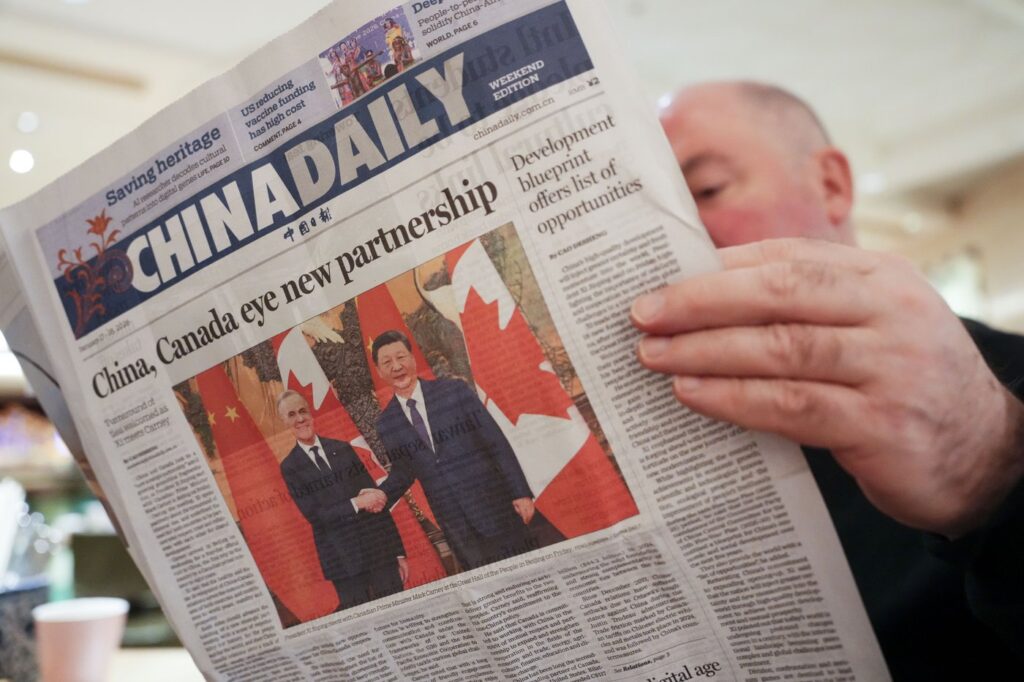
Relations between the two nations appeared to improve after Canadian Prime Minister Mark Carney visited Beijing in January, where he engaged in discussions that led to the establishment of a new strategic partnership with Chinese President Xi Jinping. This partnership was framed as a "turning point" in the historically rocky relations, which have been fraught with conflict since 2018.
As part of their negotiations, Canada agreed to lower tariffs on several Chinese imports, including canola seed and meal, seafood, and peas. In exchange, Canada would permit the import of up to 49,000 Chinese electric vehicles at a reduced tariff rate. Previously, Canada had imposed a full 100 per cent tariff on Chinese electric vehicles, batteries, solar panels, and critical minerals, prompting retaliatory measures from China that included similar tariffs on Canadian canola and seafood products.
The Canadian government has expressed ongoing concerns regarding Chinese practices of dumping steel products amid existing U.S. tariffs. In response to these concerns, the Canada Border Services Agency (CBSA) announced in April that it would initiate an anti-dumping investigation into steel racks imported from China, based on complaints from domestic producers. Preliminary decisions regarding this investigation were anticipated by July 20.
Criticism of the Liberal government's trade strategy has intensified following the announcement of the new tariff on pea starch. Conservative Party officials, including agriculture critic John Barlow, international trade critic Stephanie Kusie, and foreign affairs critic Eric Duncan, have labeled the strategic partnership with China as "reckless." They argue that the unveiling of the 73.5 per cent tariff is indicative of failures in the government's trade approach, stating that there was no assurance that trade barriers would be permanently or comprehensively removed.
In a joint statement, the Conservative officials claimed, "While our pea starch processors face more uncertainty, Canadian agricultural and seafood exporters continue to suffer under persistent Chinese trade barriers on pork, canola, peas, and seafood, which this Liberal government has left completely unresolved." Following his trip to China, Prime Minister Carney indicated that pork producers would soon see some relief from the heavy tariffs imposed by China; however, these tariffs, along with the 100 per cent levy on Canadian canola, still remain in effect.
Looking ahead, Canada has set an ambitious goal of increasing its exports to China by 50 per cent by the year 2030. This target correlates with the Carney government's broader objective to double non-U.S. exports globally by the same year. The shift in trade dynamics, particularly regarding pea starch and other agricultural products, highlights the ongoing complexity and volatility in Canada-China trade relations as both nations navigate their respective economic interests.