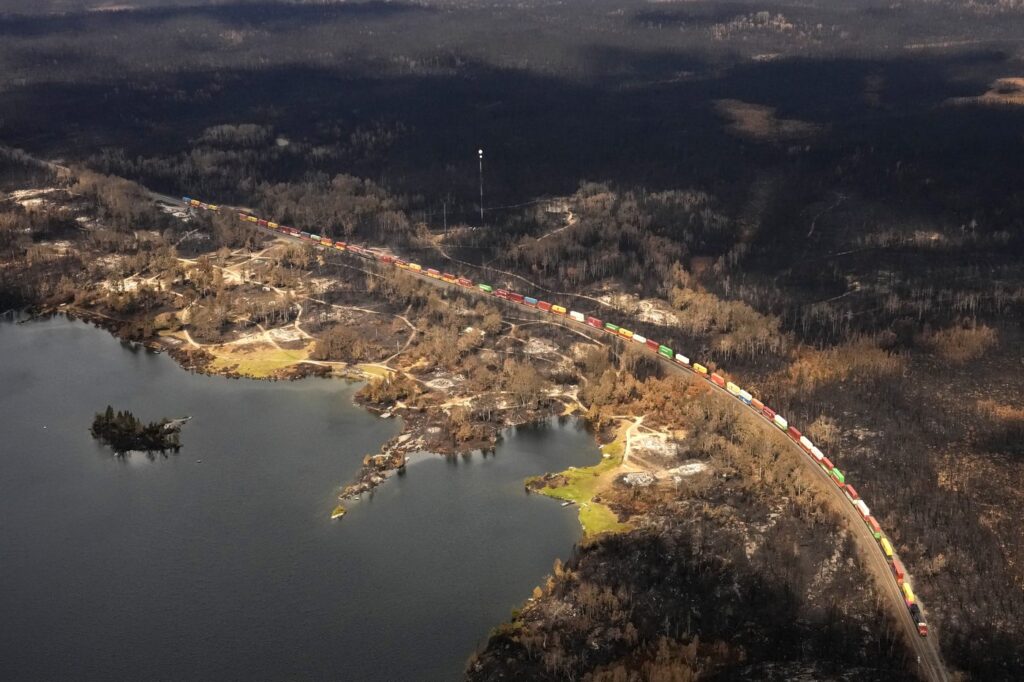
As Ontario continues to grapple with its most devastating wildfire season on record, the Ministry of Natural Resources reports that there are currently 177 active wildfires across the province. Fortunately, no new blazes have been reported in the last 24 hours. Despite this slight reprieve, the situation remains dire for many residents. Over 1,800 individuals have been evacuated from their homes, and the impacts of the fires are being acutely felt.
The devastation caused by the wildfires has disproportionately affected Indigenous communities. Out of the 13 communities that have been evacuated, 12 are Indigenous First Nations. This alarming statistic highlights the significant challenges faced by these communities as they contend with the wildfires and their aftermath.
In response to the crisis, many of those fleeing the flames are finding temporary shelter in Thunder Bay, Ontario. Others have sought refuge further south in cities like Toronto and Niagara Falls. The plight of evacuees has ignited discussions about the adequacy of the province’s wildfire response strategies.
Indigenous leaders have voiced strong concerns regarding the government's handling of the wildfire crisis. They have called for a public inquiry to investigate the province's response, arguing that some communities were left to manage the emergency on their own, without adequate support or resources from the provincial government. The need for accountability in crisis management is a key theme in their appeal.
However, Premier Doug Ford has adamantly disagreed with the notion that more could have been done to prepare for the wildfires. According to Ford, his government took all necessary actions to respond effectively to the rapidly spreading flames. His comments suggest a stark contrast between the experiences of affected communities and the government’s assessment of its performance during the crisis.
This wildfire season marks a significant moment for the province of Ontario, as early estimates indicate an unprecedented scale of destruction. The consequences of these fires are likely to have long-lasting effects on both the environment and the communities involved. As the situation evolves, the response and recovery efforts will require careful consideration and coordination to ensure that all affected residents receive the support they need.
This report serves as a reminder of the importance of preparedness and effective communication in disaster response. The uprooting of families and the impact on Indigenous communities raise critical questions about how such incidents can be better managed in the future, particularly in the context of climate change and its increasing role in natural disasters.