NEW YORK (AP) — The ongoing legal battle over former President Donald Trump's tariffs is set to continue as two lawsuits have been filed by small businesses challenging a new round of tariffs. These tariffs were announced on Thursday and impose double-digit levies on 60 trading partners, covering approximately 99% of U.S. imports.
Implemented under Section 301 of the Trade Act of 1974, the tariffs were justified by the Trump administration as a response to various countries' failures to prevent imports produced by forced labor. Critics, however, suggest that the primary motivation behind these tariffs is to replace the global tariffs imposed last year, which were struck down by the Supreme Court in February. These tariffs were implemented just as temporary 10% worldwide tariffs—previously challenged in court—expired.
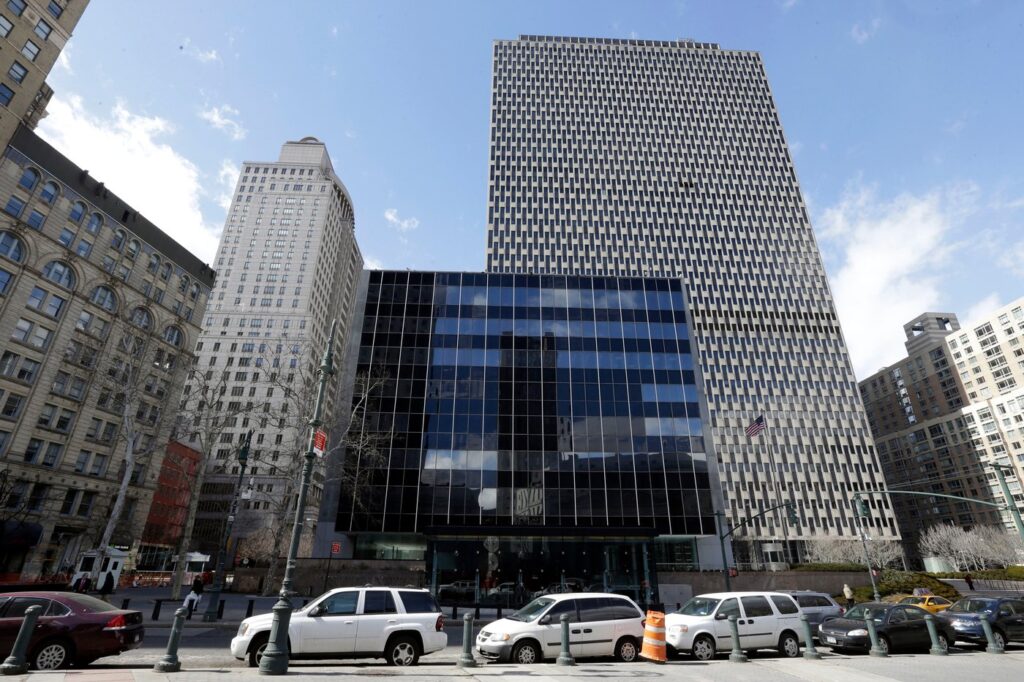
Among the entities filing lawsuits is Learning Resources, an educational toy company that previously succeeded in a Supreme Court case against tariffs. This company has initiated a new suit along with several other small businesses in the Court of International Trade on Friday regarding the current tariffs. The second lawsuit has been lodged by Burlap and Barrel, a spice company based in New York, and Collective Horology, a watch retailer from Ventura, California. They are represented by the Liberty Justice Center, a libertarian advocacy group focused on individual rights.
Both lawsuits assert that the government has not sufficiently established its case against each specific economy involved or demonstrated how the tariffs will effectively address the practice they are intended to combat, as dictated by Section 301. Sara Albrecht, chairman and CEO of the Liberty Justice Center, emphasized that while forced labor is morally indefensible, the government cannot simply ignore legal requirements. She noted that the administration allowed one global tariff to lapse only to replace it swiftly with another, arguing that altering the statute does not change the underlying legal framework.
The White House has yet to respond to inquiries regarding these legal challenges. Legal experts believe that it may be more challenging to successfully contest this latest round of tariffs compared to previous efforts. In his first term, Trump employed Section 301 to impose significant tariffs on China, which generally withstood court scrutiny. Patrick Childress, a partner at Holland & Knight and a former U.S. trade official, indicated that unlike the Section 122 levies that have recently expired, these new tariffs may endure for an extended period.
Childress further mentioned that even if countries were to enact the precise policies desired by the U.S., they would still need to prove compliance to the satisfaction of the U.S. government before any relief from the tariffs could be considered. This implies a lack of immediate prospects for nation-wide relief from the newly imposed Section 301 tariffs.