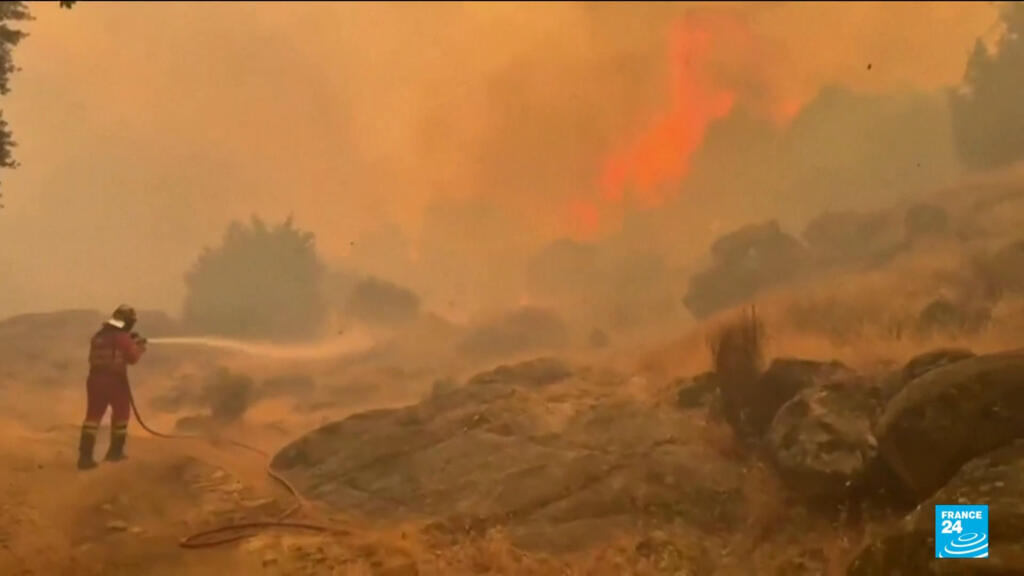
Spain is currently facing a severe environmental crisis as wildfires, exacerbated by extreme dryness, heatwaves, and powerful winds, have forced the evacuation of tens of thousands of residents from villages located to the west of the capital, Madrid. The situation has escalated dramatically in recent days, prompting urgent intervention from both local authorities and emergency services.
The wildfires, which have been intensified by a prolonged period of heat and drought, have had a significant impact on the region's ecosystems and communities. As temperatures soared, the combination of dry vegetation and inhospitable weather conditions created an ideal environment for the rapid spread of flames, threatening homes and livelihoods. In response to this dire situation, evacuation orders were issued to safeguard the residents and ensure their safety as emergency crews continue to battle the raging fires.
In addition to the immediate danger posed by the wildfires, the adverse weather conditions have presented challenges for firefighting efforts. Strong winds have contributed to the unpredictable nature of the flames, making it difficult for firefighters to control the spread. The government has mobilized various resources, including aerial firefighting units, to combat the fires, yet the situation remains precarious. Firefighters are working around the clock under challenging circumstances, facing not only the flames but also the relentless heat that complicates their efforts.
Towns and villages in the affected areas have experienced significant disruption as families have been forced to evacuate their homes. Local authorities have set up emergency shelters to accommodate those displaced, providing essential services and support during this crisis. Residents have reported a deep sense of anxiety and uncertainty as they witness the flames encroaching on their communities, highlighting the emotional toll of such natural disasters.
Environmental experts have indicated that this pattern of extreme weather, including droughts and heatwaves, is becoming increasingly common due to climate change. Such conditions raise pressing concerns about the future resilience of affected areas and the long-term implications for local ecosystems and community safety. The ongoing crisis underscores the urgency for comprehensive strategies aimed at tackling climate change and enhancing disaster preparedness in vulnerable regions.
As the situation continues to evolve, the Spanish government remains committed to addressing the immediate needs of those impacted while also looking towards long-term solutions. The combination of fire suppression efforts and community support will be crucial as the nation navigates this challenging environmental crisis. The plight of the affected population serves as a stark reminder of the realities of climate change and the need for concerted action to mitigate such threats moving forward.