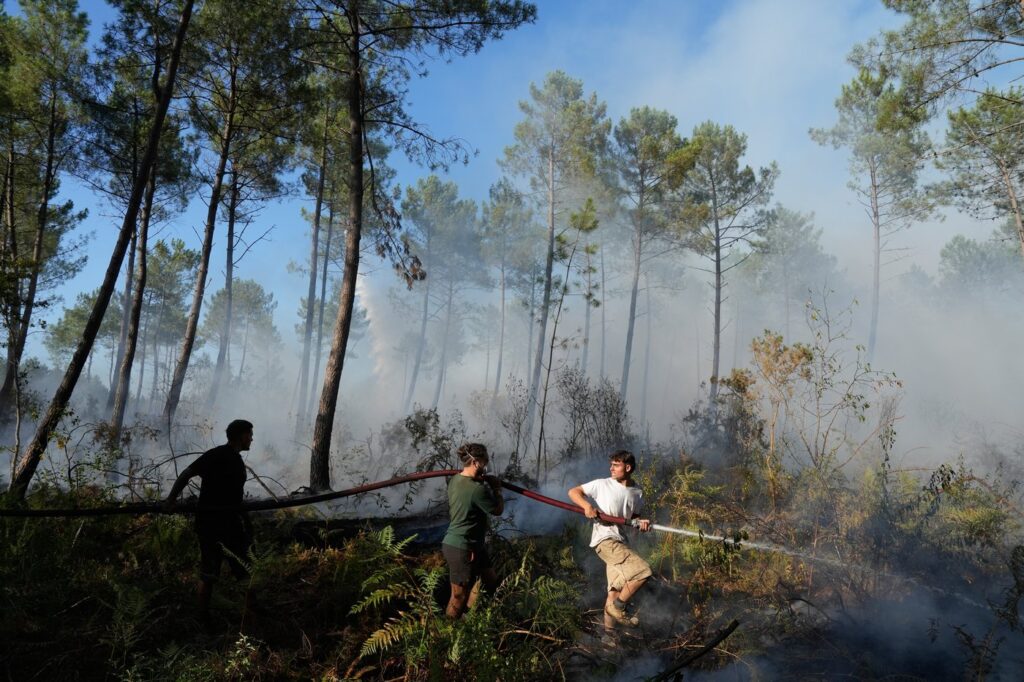
Authorities in France have ordered the evacuation of an additional 4,000 people from tourist sites along the Atlantic coast, as wildfires continue to pose a severe threat in what may be the country’s largest peacetime evacuation. The situation remains precarious, particularly in the Gironde region west of Bordeaux, where a vast wildfire has been challenging firefighters, especially with the return of rising temperatures.
On Tuesday, fresh flames ignited near Grand Crohot, a popular beach area on the Lège-Cap-Ferret peninsula. In response, a fleet of 23 aerial firefighting units was deployed to combat the flames, an increase from 18 units previously in action. Sophie Brocas, the prefect of Gironde, acknowledged that “we're not out of the woods” yet, highlighting the ongoing risks as about 60,000 residents who had evacuated areas around Bordeaux were allowed to return with warnings to remain alert and prepared for further emergencies.
The contrasting situation of thousands being ordered to evacuate coastal resorts while others returned home emphasized the volatility of the wildfire situation. Across France and Spain, approximately 330,000 people have been displaced due to massive wildfires. In Spain, the country was bracing for its fourth heatwave of the summer, with several blazes still raging, including one that has become the largest on record in its history.
The Gironde fire has already scorched an area four times larger than Paris, resulting in significant evacuations of 220,000 people. France's Interior Minister Laurent Nuñez indicated that this could easily be the largest civilian evacuation operation outside of warfare. Precautionary measures included the evacuation of campsites and vacation residences around Lacanau.
Even with the threats of fire looming, some vacationers opted to proceed with their plans despite the evacuations. One family insisted on continuing their trip to avoid losing a €4,000 (approximately $4,558) booking, while others debated abandoning vacations that cost €650 (around $741) each. The situation escalated as the Gironde blaze created a colossal pyrocumulonimbus cloud, leading to dangerous weather conditions that reignited fires and produced lightning strikes of its own.
The national weather service issued a yellow heat warning for Gironde, predicting temperatures could soar between 33 to 35 °C (91 to 95 °F). According to reports, over 1,160 square kilometers (448 square miles) have already burned in France this year. The region has been particularly affected by extreme heat and dryness associated with ongoing climate change, making wildfires more frequent and severe.
In Le Porge, near Bordeaux, about 150 homes have been destroyed. Officials warned that hot spots in the fire’s perimeter could reignite, necessitating continued surveillance and firefighting efforts. Approximately 110 firefighters have reported injuries amidst ongoing firefighting operations, and military engineers have been cutting firebreaks to help contain the fires effectively.
In the Landes region, around 15,000 evacuees were permitted to return home after a separate wildfire ceased expanding. French President Emmanuel Macron reported that the fire was now stable, although residents were cautioned about lingering risks related to residual heat and unpredictable wind conditions. Meanwhile, progress was being made in Spain, where evacuation orders were lifted for 20,000 residents in various municipalities as firefighters fought against several significant wildfires.
The situation in Spain remains critical, with over 79,000 people previously forced to leave their homes. Spanish authorities declared a national emergency amid rising temperatures expected to exceed 40 °C (104 °F). The fires have already caused the deaths of at least 13 individuals, marking one of the deadliest fire seasons in Spain's history. Furthermore, a dangerous fire in Ávila has covered over 500 square kilometers (193 square miles), and the government is alarmed by the formation of pyrocumulonimbus clouds during the fires, similar to those seen in recent years.
Overall, the ongoing battle against wildfires in both France and Spain underscores the urgent need for concerted efforts to address the root causes linked to climate change and mitigate the effects of increasingly severe fire seasons.