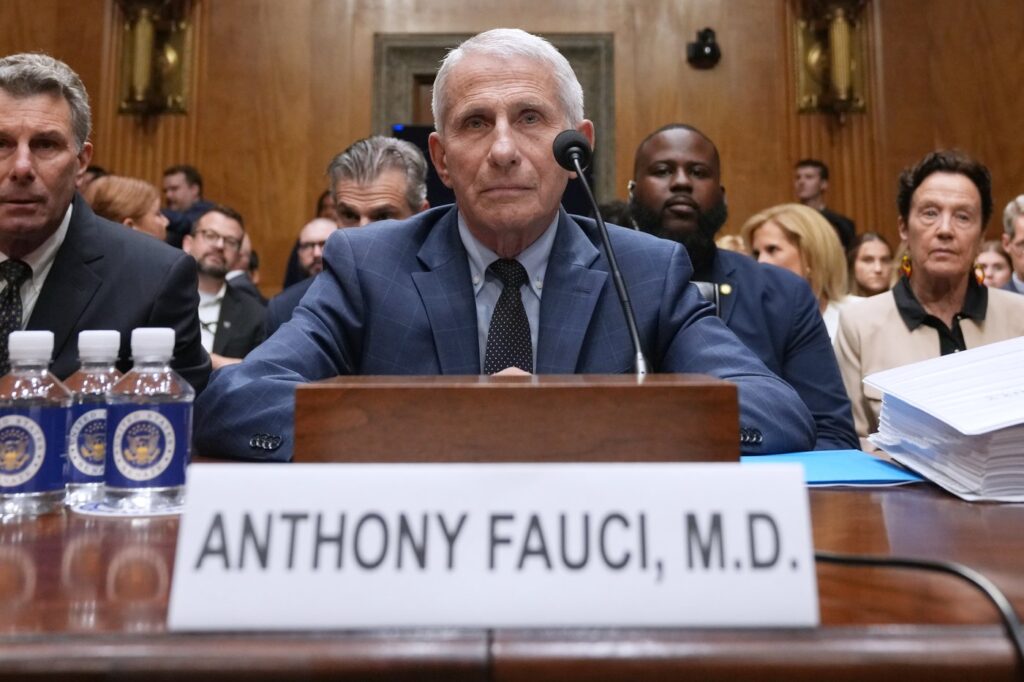
On Wednesday, Dr. Anthony Fauci, a key figure in the U.S. COVID-19 response, invoked the Fifth Amendment frequently during a Republican-led committee hearing, refraining from answering numerous questions regarding his management of the pandemic. His decision allowed him to avoid potential accusations of perjury, even after receiving a pardon from President Joe Biden in early 2025. Some Republicans, who have pursued a lengthy campaign against Fauci, hinted that he might still face charges for alleged lying under oath during this hearing.
Fauci was subpoenaed to provide testimony by Republican Senator Rand Paul of Kentucky, who has held an antagonistic stance toward him. Throughout the hearing, Fauci declined to answer more than 100 questions, heightening the ongoing partisan tensions that have existed surrounding the COVID-19 pandemic. The hearing underscored Fauci’s polarizing status, having received death threats that led him to seek additional security.
In his opening remarks, Fauci pointed out Paul’s "obvious obsession" with pursuing his prosecution, asserting that Paul's intentions were to provoke him into a statement that might validate his accusations of Fauci deserving incarceration. Following advice from his attorney, Fauci chose not to answer questions during the proceedings. Paul, advocating for Fauci’s criminal investigation, indicated that the committee would vote next week on possibly holding Fauci in contempt for his refusal to answer questions. He raised questions on whether Fauci’s pardon could impact the protections offered by the Fifth Amendment.
During the contentious hearing, Republicans accused Fauci of dishonesty regarding the origins of the coronavirus, while Democrats characterized the hearing as politically motivated and praised Fauci’s contributions during the pandemic. Paul monopolized much of the conversation during the three-hour hearing, listing various accusations and detailed inquiries against Fauci. He proclaimed, “Today will be the capstone to Anthony Fauci’s 40 years of abuse of power at NIH,” labeling the situation a historical judgment of dishonesty.
In a heated exchange, Fauci’s attorney, David Schertler, was forcibly removed from the hearing after attempting to speak without recognition. Schertler described the ejection as “outrageous,” asserting it demonstrated the unfairness and unfounded nature of the proceedings.
Leading up to the hearing, Paul released over 1,000 pages from Fauci’s personal diary, suggesting discrepancies between Fauci’s private thoughts and his public statements. Although some entries reflected uncertainty during the early days of the pandemic, they have fueled criticism from those blaming Fauci for pandemic-related policies like mask mandates and school closures. Former President Donald Trump shared that he stopped relying on Fauci due to his perceived missteps regarding COVID-19 protocols and expressed that he watched the hearing in its entirety.
In a letter of support, more than 150 infectious disease experts defended Fauci, stating that “no credible evidence has been produced to support these absurd charges” and urged political figures to cease what they termed as witch hunts against him. The hearing addressed various topics, including NIH-funded research in China and its potential links to the pandemic’s origins. Many scientists believe the virus likely emerged in nature, with the prevailing view attributing its rise to a transmission from animals to humans at a wildlife market in Wuhan, China.
Furthermore, Republicans contended that Fauci had misrepresented whether his agency financed gain-of-function research related to coronaviruses studied at a Wuhan lab. The debate over gain-of-function research—enhancing a virus in a laboratory to assess its potential impact—remains contentious. Fauci previously asserted that improper activities defined as gain-of-function could not have resulted in the emergence of the pandemic virus. Amidst ongoing scrutiny, Trump's administration imposed tighter regulations on federally funded gain-of-function research, highlighting continued concerns surrounding pandemic preparedness and response.