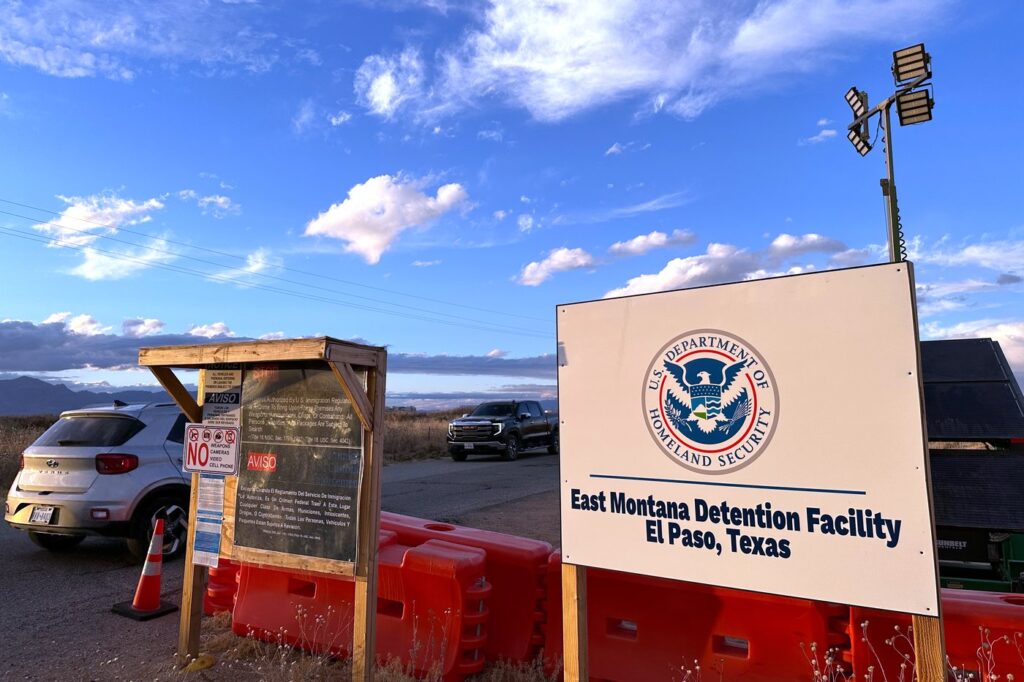
The Trump administration's attempt to deny immigrants detained within the United States an opportunity for release on bond has been rejected by a federal appeals court. This ruling, issued by the 9th U.S. Circuit Court of Appeals based in San Francisco, was a close decision, determined by a 2-1 vote. Notably, one of the judges in the majority was appointed by President Donald Trump, highlighting the complexity of the legal landscape surrounding immigration policy.
This ruling has intensified an existing split among federal appeals courts regarding the administration’s mandatory detention policy for immigrants. While four other appeals courts have also ruled against the administration's stance, the Fifth Circuit in New Orleans and the Eighth Circuit in St. Louis have sided with the Trump administration. The divergence among various circuits significantly raises the chances that the U.S. Supreme Court will eventually address the matter, particularly as the administration has recently requested the high court to consider the issue.
The U.S. Department of Homeland Security (DHS) expressed strong disagreement with the Ninth Circuit's decision, asserting confidence in its legal stance on mandatory detention. In a statement, DHS emphasized its commitment to enforcing laws in a manner that it believes will enhance national security. The statement underscored the administration's view that it is acting in accordance with the law as it was conceived, aiming to protect the United States.
Under prior administrations, noncitizens without a criminal record who were apprehended inside the United States were typically allowed to seek a bond hearing while their immigration proceedings were ongoing. Mandatory detention was largely reserved for those captured at U.S. borders. However, last July, immigration officials under the Trump administration extended this mandatory detention policy, which pertains to immigrants in the U.S. interior, as part of a broader mass deportation initiative. This shift incited numerous federal lawsuits from immigrants seeking release from custody.
Judicial responses to the administration’s policies have included some federal judges ordering bond hearings, expressing frustration at the administration’s failure to comply with their orders. The Trump administration has contended that changes in immigration law enacted by Congress in 1996 permitted mandatory detention beyond the scope of border apprehensions. Nonetheless, prior administrations chose not to enforce such provisions.
In authoring the majority opinion in the recent ruling, 9th U.S. Circuit Judge Daniel Bress articulated a rejection of the Trump administration’s interpretation of the law. Judge Bress acknowledged that the complex legal text involved has its limitations, yet asserted that the historical understanding of the statute provides a stronger basis for ruling against mandatory detention. His majority opinion drew support from Judge M. Margaret McKeown, who was appointed by President Bill Clinton.
Conversely, Judge Carlos Bea, who was appointed by President George W. Bush, dissented from the majority opinion. He maintained that Congress's intent and the text of the enacted amendment from 1996 support the Trump administration's interpretation of mandatory detention.