WASHINGTON - President Donald Trump announced on Thursday that a deal has been reached for Hamas to disarm and for Israel to withdraw its forces from Gaza. However, the plan faces numerous hurdles, conditions, and lengthy timelines before the situation can be stabilized in the Palestinian territory. Neither Hamas nor Israel has yet provided confirmation of their agreement to the terms.
The White House statement comes nine months after a U.S.-brokered ceasefire was negotiated. Talks between Israel and Hamas have stalled, primarily over the execution of the agreement's second phase, which includes the disarmament of Hamas and the reconstruction of Gaza.
Trump stated on social media, “The agreement will be carried out in carefully structured phases. As disarmament is completed, Israeli forces will withdraw, and the International Stabilization Force will collaborate with a new Palestinian police force to ensure safety in Gaza for both its residents and neighboring areas.” His 20-point ceasefire plan requires Hamas to surrender its weapons and dismantle its extensive network of tunnels. The plan also includes provisions for Israeli forces to withdraw from Gaza, the establishment of a new technocratic Palestinian government, and the deployment of an international security force to rebuild the war-torn area.
Despite Trump's optimistic announcement regarding a crucial aspect of the Gaza ceasefire, progress is hampered by escalating military attacks and stalled negotiations. For instance, the ongoing conflict that the U.S. and Israel engaged in against Iran began in February 2023 and is seen as a significant factor influencing the situation, as Iran is a crucial backer of Hamas.
Officials from the U.S. and the Board of Peace, speaking on condition of anonymity, expressed a highly positive outlook regarding the deal’s potential. However, they could not provide specific timelines for Hamas’s disarmament or for the disarmament of other militant groups in Gaza, such as Palestinian Islamic Jihad. They mentioned that the Gaza police force would hand over some weapons to the new Palestinian administration in the next two weeks but acknowledged that this would not include the majority of Hamas militants or their heavy weaponry. The disarmament of heavy weapons and the destruction of Hamas tunnels are expected to take between 200 and 350 days.
Israel has not yet responded to the announcement but has expressed skepticism regarding Hamas’s commitment to relinquishing its weapons. According to a U.S. official, Israel was kept informed throughout the negotiations. Nevertheless, Israel is only being requested to adhere to what it initially agreed to under Trump’s 20-point plan, which primarily involves withdrawing its forces from Gaza and ceasing airstrikes on the territory. This lack of compliance from Israel could lead to Trump being “very, very disappointed.”
During a recent meeting at the White House, Trump and Israeli Prime Minister Benjamin Netanyahu did not discuss the agreement in detail. Israel’s U.N. mission has yet to comment on the situation. The official noted that Iran remains an unpredictable element in these negotiations. While Iran has advised Hamas against accepting the deal, it is currently preoccupied with its own conflict with the United States and unable to provide substantial support to Hamas.
Historically, Hamas has been resistant to disarming, insisting that its weapons remain an essential part of its identity and struggle against Israel. However, the group recently declared its intention to dissolve its government in Gaza and is working on transferring power to a technical committee supported by the United Nations as a part of the broader ceasefire arrangements.
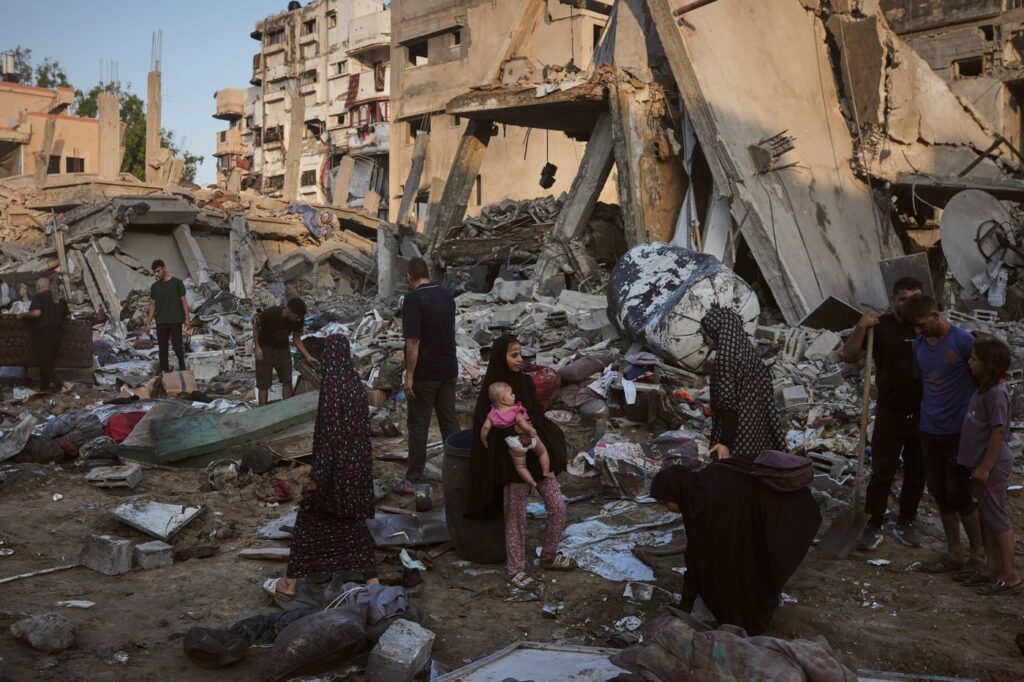
The conflict in Gaza escalated significantly following a Hamas-led attack on southern Israel on October 7, 2023, which resulted in around 1,200 Israeli fatalities and approximately 251 hostages taken. In retaliation, Israel’s military offensive in Gaza has caused the deaths of more than 73,000 Palestinians, as reported by Gaza’s Health Ministry. Israeli military operations currently control over half of Gaza, pushing many Palestinians into tent camps and heavily damaged urban areas.
___
Cooper reported from Phoenix and Amiri from New York. Associated Press writer Edith M. Lederer contributed from the United Nations.