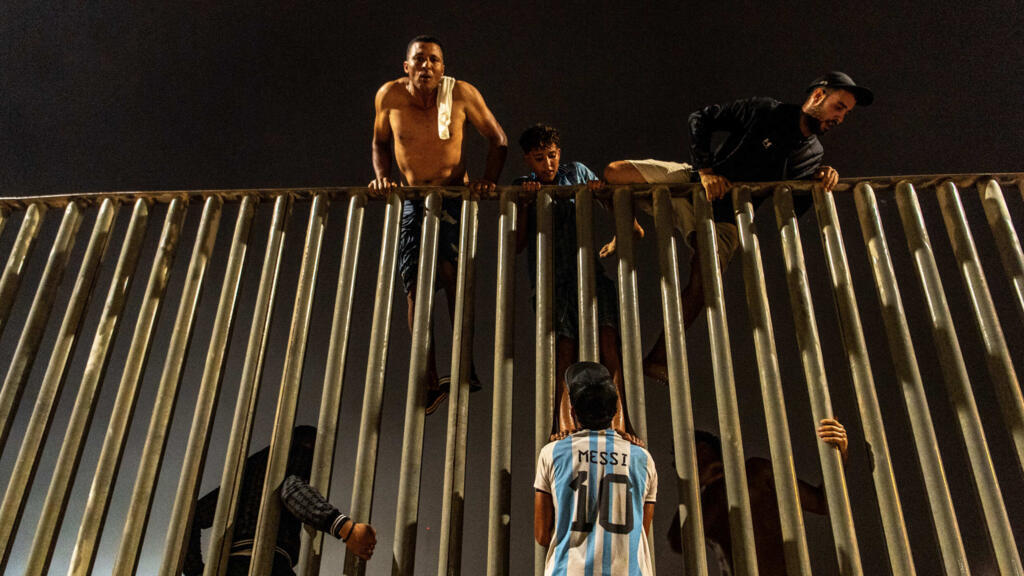
On Friday, former US President Donald Trump and various far-right leaders capitalized on the ongoing migration crisis in Spain to reinforce their political narratives regarding immigration policy. The timing of their remarks coincided with a significant event; the same day, over half of the migrants who had recently crossed the border into Spain voluntarily returned to Morocco. This situation has been a focal point of discussion on immigration and its implications for both Spain and broader European policies.
The migration flow towards Spain has been particularly pronounced, fueled by various socio-economic factors in North Africa. Many migrants see Spain as a gateway into Europe, often fleeing poverty, conflict, or persecution in their home countries. However, the immediate return of many individuals highlights the precarious nature of migration and the complexities involved in the integration process once they arrive. This trend has drawn attention from political figures eager to frame the situation in a manner that supports their existing agendas.
Far-right leaders, including Donald Trump, have utilized the Spanish migration crisis to reiterate their contrasting views on immigration. Trump, who has a history of advocating for stricter immigration policies during his presidency, emphasized the need for stronger border controls and national sovereignty. His narrative suggests that uncontrolled migration poses a threat to national security and social cohesion, a theme typical in far-right rhetoric across various countries facing similar migration challenges.
The issue has also sparked debates within Spain and the European Union about immigration policies and border management. Spanish authorities have been focusing on managing the influx of migrants as well as providing humanitarian assistance. However, the sudden return of migrants raises questions about why these individuals chose to return after such arduous journeys. Some reports suggest that many migrants may have felt hopeless about their prospects in Spain or feared facing discrimination and difficulties in establishing their lives there.
Additionally, the broader implications of migration crises can be seen through the lens of national and international politics. The conversation surrounding immigration often intersects with issues of economic stability and public safety, resulting in polarized opinions. Politicians like Trump benefit from such situations by framing migration as a national crisis, thus shifting focus from other pressing issues and rallying their voter base around shared concerns regarding immigration control.
While far-right leaders use events like the Spanish migration crisis to advocate for strict immigration measures, humanitarian organizations emphasize the need for compassion and understanding towards migrants’ circumstances. They advocate for policies that not only secure borders but also protect the rights and dignity of individuals who embark on perilous journeys in search of a better life. The challenge remains for policymakers to find a balance between national security concerns and the humanitarian responsibilities they hold towards migrants.
The dynamic of the situation continues to evolve, as migrant patterns, political rhetoric, and public sentiment shift in response to ongoing developments. The discourse surrounding immigration is likely to remain a crucial component of political platforms, especially as global migration challenges persist. As leaders like Trump and others leverage these situations for political gain, the real-life implications for migrants seeking asylum and a chance at new beginnings cannot be overlooked. The outcome of these discussions will significantly impact both local communities in Spain and the broader European landscape regarding immigration and integration policies.