TEL AVIV, Israel – Israel has voiced significant security concerns to the White House regarding a proposed disarmament deal with Hamas, as the region continues to face violence. Israeli airstrikes overnight and into Sunday evening resulted in the deaths of at least 17 people in Gaza, including children, as stated by Israeli officials.
Doron Spielman, a spokesperson for Israeli Prime Minister Benjamin Netanyahu's office, articulated Israel’s apprehensions regarding the disarmament efforts. His comments marked one of the first public responses following U.S. President Donald Trump’s announcement of the agreement. According to Spielman, Israel’s intelligence suggests that Hamas is more interested in rebuilding its military capabilities rather than genuinely disarming. He emphasized that Israeli military forces would not withdraw from Gaza, where they control more than 60% of the territory, until Hamas fulfills its disarmament obligations.
Spielman expressed concern that premature redeployment of Israeli forces could allow Hamas to quickly reassert its military presence, rebuild terrorist infrastructure, and pose a renewed threat to Israeli communities. He cautioned about the risk of another attack similar to the one on October 7, 2023, which had previously instigated the ongoing war in the Gaza Strip.
According to Hamas, the group has indicated its willingness to disarm as part of a U.S.-brokered ceasefire agreement signed nine months prior, which aimed to bring an end to the nearly three-year-long conflict. However, numerous hurdles and conditions remain unaddressed, casting doubt on the viability of this potential breakthrough.
Trump's 20-point ceasefire plan mandates that Hamas surrender its weapons and dismantle its extensive network of tunnels. Furthermore, the plan envisions a withdrawal of Israeli forces from Gaza along with the establishment of a new technocratic Palestinian government, the deployment of an international security force, and the reconstruction of the war-torn enclave.
The issue of disarmament has stalled negotiations for months, and Trump has stated that the process would be executed in “carefully structured phases.” A copy of the agreement obtained by sources indicated that all weapons held by Hamas-run police would be handed over to the U.S.-supported Palestinian committee designated for Gaza administration upon their arrival in the territory. The timeline for this transfer remains uncertain and is contingent upon several preceding steps.
After the Palestinian committee's arrival and the deployment of international forces, a process to decommission heavy weapons and dismantle military production facilities and tunnels will commence, linked to a phased Israeli military withdrawal.
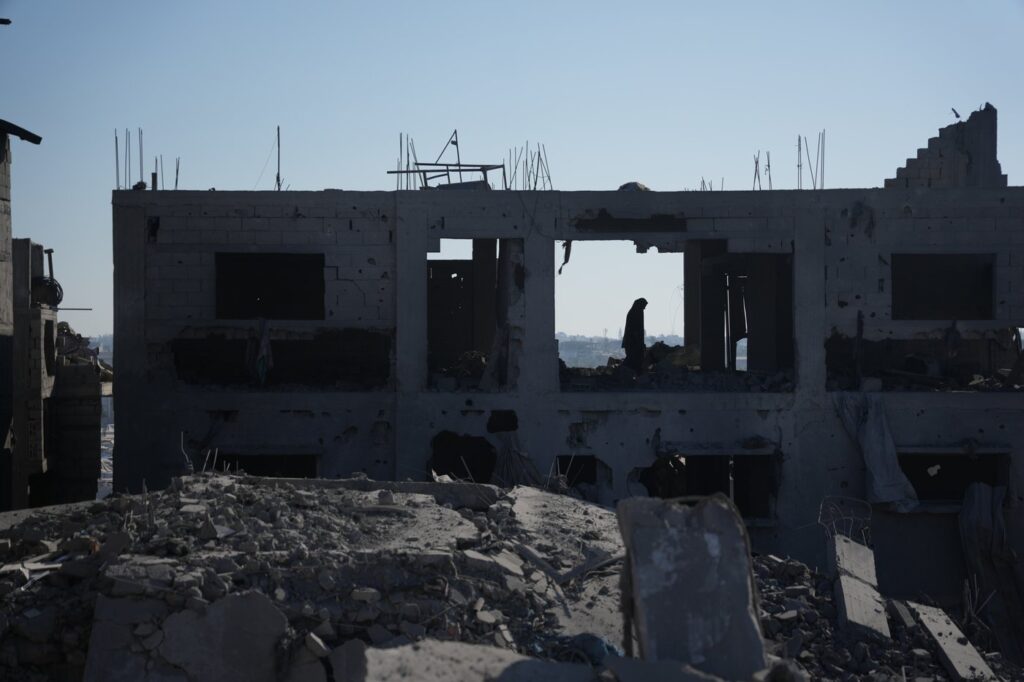
Israel's territory in Gaza has faced extensive destruction and depopulation, with the majority of the 2 million residents now living in squalid conditions elsewhere. With upcoming elections in October, Netanyahu's government may be reluctant to make significant concessions. Political pressures from far-right coalition partners encourage maintaining military pressure on Hamas, while rivals criticize Netanyahu’s handling of security issues following the October 7 attacks, which resulted in around 1,200 Israeli fatalities and 251 hostages being taken.
In their retaliation, Israeli military operations have reportedly led to over 73,000 casualties in Gaza, according to the local health ministry, which updates its figures based on demographic data considered reliable by U.N. agencies. Spielman reaffirmed Israel's resolve, pointing to ongoing intelligence assessments indicating that Hamas continues to rearm and enhance its military capabilities.
The White House has not commented further on Israel's concerns about Hamas's military ambitions. Informal discussions confirmed that Israel communicated its reservations through former British Prime Minister Tony Blair, part of Trump's Board of Peace, highlighting the need for freedom to conduct military operations in Gaza. Furthermore, Israel indicated a preference for excluding Qatar and Turkey from verification roles within the agreement's stages and insisted that Hamas weaponry be destroyed post-confiscation.
Despite the ceasefire agreement in place, Israeli strikes on Gaza have persisted. The latest military actions resulted in additional civilian casualties, raising alarms over humanitarian conditions in Gaza. Local health officials report that recent airstrikes targeted militants but have also culminated in tragic losses among innocent families, including a young child.