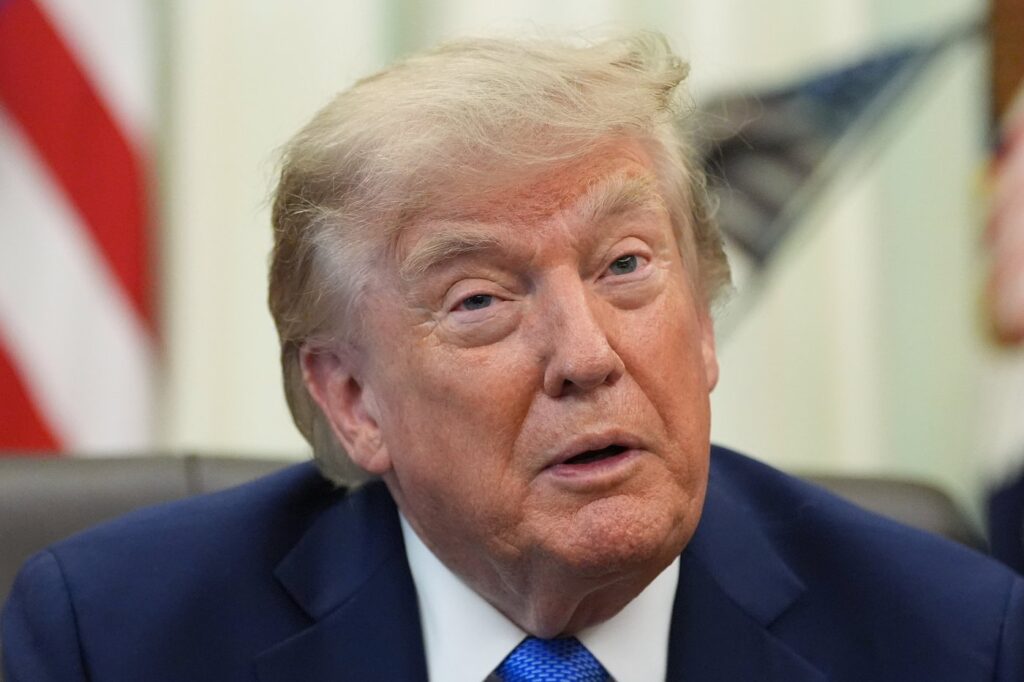
The Trump administration is once again attempting to limit American citizenship through executive orders aimed at placing restrictions on birthright citizenship and on foreigners who give birth in the United States. These orders were issued following a Supreme Court decision in June that struck down a prior attempt to regulate birthright citizenship. President Donald Trump stated that the latest orders included "adjustments" to comply with the Court's ruling. However, they are expected to face legal challenges.
The 14th Amendment of the U.S. Constitution provides automatic citizenship to anyone born on U.S. soil, though there are specific exceptions outlined in two subsequent Supreme Court decisions. Trump's renewed efforts to restrict birthright citizenship, even after previous setbacks in the court, underscore the administration's ongoing commitment to limiting who can become an American citizen.
Under current law, birthright citizenship is guaranteed for individuals born in the U.S. with notable exceptions for certain categories. The executive order issued on Thursday narrowed its focus compared to the prior, invalidated order, aiming specifically to restrict automatic citizenship for children born to individuals connected to foreign embassies or organizations. Additionally, individuals classified as “alien enemies” of the United States are also excluded from automatic citizenship.
According to existing U.S. immigration law, those born to foreign diplomatic officers—such as ambassadors and other officials accredited to the U.S.—do not qualify for birthright citizenship. Trump’s executive orders seek to broaden these exemptions significantly. One of the directives specifically disqualifies children born as a result of what the administration terms “birth tourism,” while the other applies to the children of employees of foreign governments, the United Nations, and those connected to organizations labeled as terrorist groups, including claims regarding groups like Antifa or Tren de Aragua.
Legal experts, such as César Cuauhtémoc García Hernández from Ohio State University, are skeptical about how the government would determine if a child is born to a member of a designated terrorist organization, citing the lack of transparency and clear membership structures in such groups. Another area of concern is the potential impact of the new executive actions on citizenship through surrogacy; some lawmakers have additionally proposed legislation aimed at restricting citizenship for children of noncitizen parents born via surrogates in the U.S.
The executive order defines “birth tourism” as the act of entering the United States on a “nonimmigrant visa for the purpose of giving birth on American soil.” This concept is already associated with visa fraud and can lead to the denial of visas for applicants specifically seeking to come to the U.S. for citizenship for their child. Immigration advocates warn that without clearly defined guidelines, immigration officers may have broad discretion to deny entry to pregnant women believed to be seeking to give birth in the U.S., raising concerns over fairness and potential discrimination.
Although President Trump claimed that “hundreds of thousands” of cases of birth tourism exist, experts suggest this figure is an overestimation. Data from the Centers for Disease Control and Prevention indicates that around 9,600 children born to foreign mothers with no official U.S. address were recorded in 2024, while the Center for Immigration Studies estimated that between 20,000 to 26,000 birth tourists enter the U.S. each year.
The executive orders target so-called “birth tourism operators,” yet they lack empirical evidence regarding the scale of such operations or why individuals utilizing these services would not be protected under constitutional rights. The Trump administration's initiatives are not unprecedented, as previous administrations also sought to crack down on birth tourism schemes.
On the legal front, President Trump was questioned about how his new orders would withstand Supreme Court scrutiny, given the past failures of similar initiatives. White House staff secretary Will Scharf emphasized the legitimacy of targeting the birth tourism industry, asserting their actions are legally validated and compliant with Supreme Court rulings.
Opponents of the proposed changes argue that past Supreme Court decisions affirm the constitutional guarantee of birthright citizenship under the 14th Amendment. Cody Wofsy, the deputy director at the American Civil Liberties Union’s Immigrants’ Rights Project, asserted that no number of executive orders can alter this constitutional protection.