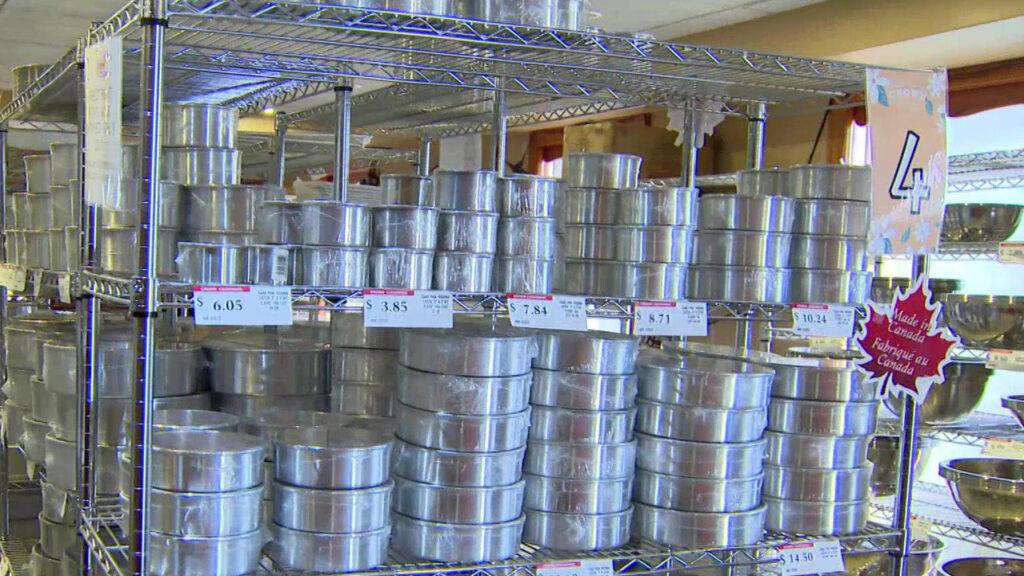
David Paul Vella has been a key figure at Crown Cookware since its inception, with the family-owned manufacturing company producing pots, pans, and tins for over 40 years. Recently, the business faced significant challenges as it almost faced closure in 2023, highlighting the struggles that many companies encounter during uncertain economic times.
Currently, Vella reports that Crown Cookware operates at only 40 to 50 percent of its capacity, significantly lower than the ideal 75 percent. This downturn primarily stems from two of their largest customers, who export 90 percent of their products to the United States, experiencing reduced sales. "We should be running closer to 75 but two of our biggest customers sell everything that they make... and they haven’t sold much this year," Vella explains.
The uncertainty surrounding trade relations has adversely affected Canadian businesses, and Crown Cookware is particularly impacted by U.S. tariffs on aluminum. Consequently, Vella and his team have been forced to turn to foreign suppliers. "Aluminum loves to travel," Vella states. "It’s one of the only resources Canada doesn’t have." This shift has been compounded by their decision to halt shipments to the U.S. nearly 18 months ago due to tariff concerns.
Presently, Vella indicates that Crown Cookware’s exports to America are negligible. Despite this, they observe that Chinese-made pans continue to be sold in the U.S., raising questions about competitive practices in international trade. In response to these challenges, Crown is focusing on domestic sales by providing their products to Canadian consumers and businesses. Their offerings include retail through an outlet store located in Toronto and an online platform.
Crown Cookware emphasizes the significance of supporting Canadian-made products. Vella emphasizes, "When you buy something Canadian, even if you pay a little more money, that money is coming back to you." He argues that local purchasing not only helps individual businesses but also contributes positively to the broader Canadian economy.
In light of the recent economic strains, both federal and provincial governments have introduced measures aimed at supporting businesses affected by tariffs. However, Vella suggests that the most effective solution would be to negotiate a trade deal. "I think any deal right now would be better than no deal because things are changing," he asserts. He warns of the unpredictability of trade policies, mentioning the potential for sudden tax changes by U.S. officials, including former President Donald Trump.
The Canadian Manufacturers and Exporters Association recognizes the government's initiation of support for tariff-impacted businesses as a move in the right direction. However, they stress the importance of proactive measures from governments across Canada, cautioning that retaliatory actions, such as counter-tariffs, may escalate costs for smaller manufacturers in Canada who rely on U.S. imports. The ongoing trade uncertainties pose a significant threat to the stability and growth prospects of Canadian manufacturing.