NAIROBI, Kenya (AP) – The Kenyan Health Ministry has confirmed the country's second case of Ebola, with a relative of the first patient testing positive while under quarantine. This development comes just two days after the first case, a 40-year-old Kenyan man, died from the virus shortly after arriving in Kenya from the Democratic Republic of Congo (DRC).
The Health Ministry disclosed that the second patient, a 39-year-old man, is a close relative of the deceased and began exhibiting symptoms on Tuesday. Contact tracing efforts revealed that this individual had been quarantined due to his exposure to the first patient.
The initial patient had been residing in the DRC, where he fell ill and sought treatment at two different health facilities. His journey included travel through three provinces known to be affected by Ebola before he crossed into Uganda on October 1. Shortly thereafter, he arrived in Kenya, where a relative picked him up from the airport and transported him directly to a hospital. Following treatment, he tested positive for Ebola on October 5 and sadly passed away on the same day.
In response to the first case, health officials in Kenya identified approximately 128 individuals who had direct contact with the initial patient. Out of these, 108 were placed in quarantine as a precautionary measure. Notably, five contacts are located outside of Kenya, prompting authorities to notify health officials in those respective countries.
The Health Ministry emphasized that the second patient was confirmed among those quarantined and highlighted that the early detection of his infection "improves his chances of recovery." Officials reiterated the crucial link between the two cases, stating that there is currently "no evidence of spread in the community." This suggests that the outbreak has remained contained to those directly connected to the initial infection.
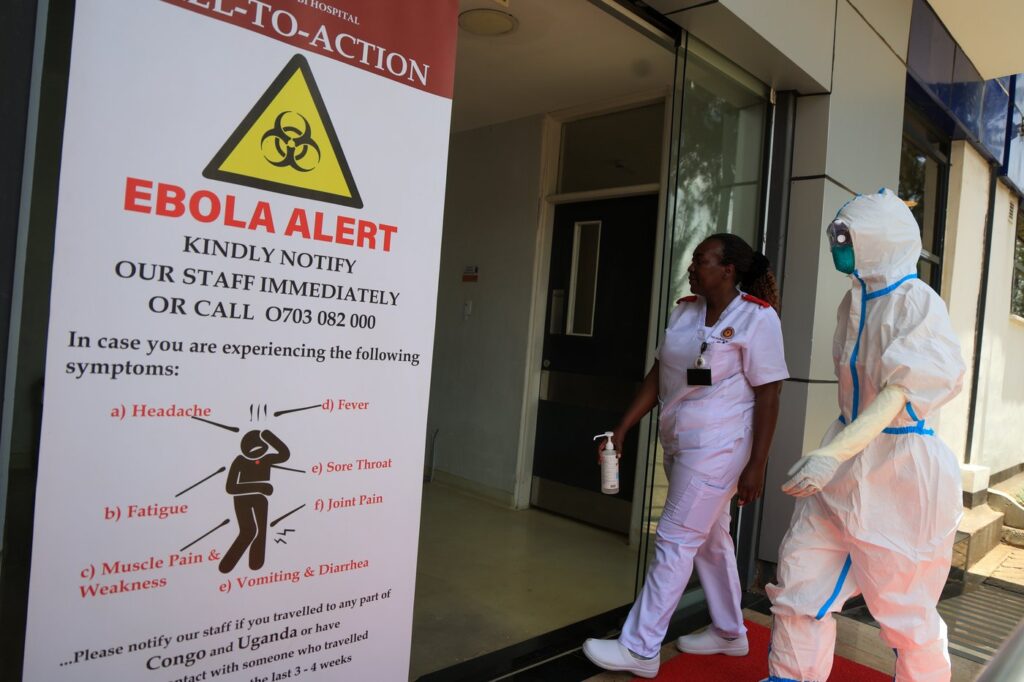
In light of these events, Kenya has implemented stricter screening protocols at its border crossings and airports. The government has also urged the public to take preventive measures and report any suspected cases through an emergency hotline. These steps aim to control the situation and prevent further transmission of the Ebola virus within the country.
As the situation develops, the Ministry of Health continues to monitor the health and safety of the population, striving to contain the virus and support those affected by this outbreak.