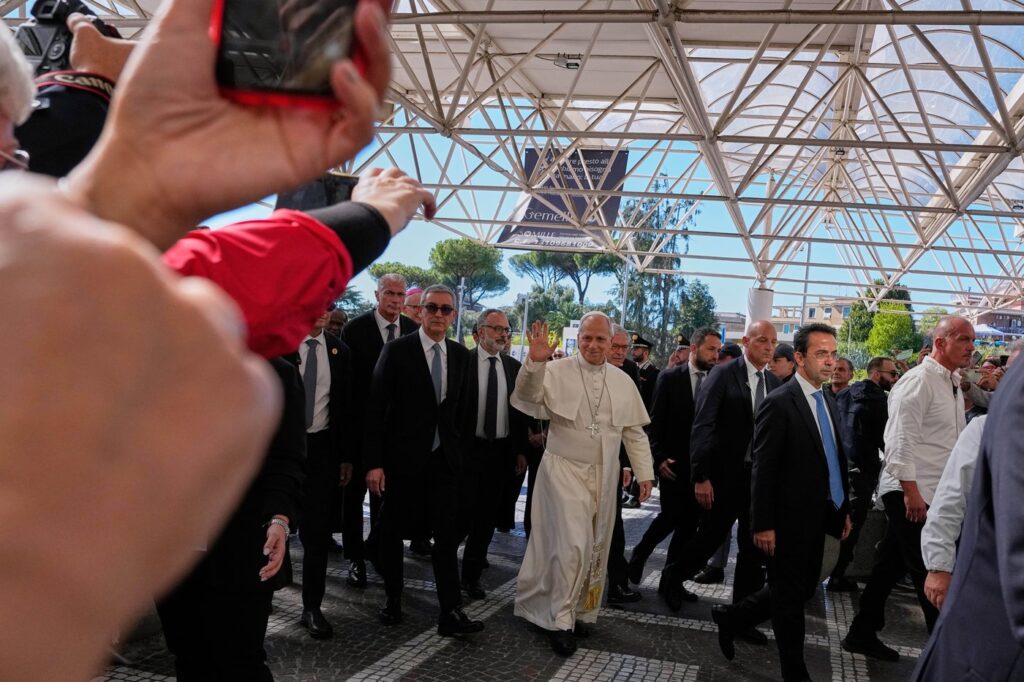
Pope Leo XIV has begun his recovery following recent surgery to remove a cancerous mass from his lung, according to a statement from the Vatican. On Wednesday, he resumed a regular diet, started walking, and participated in respiratory exercises, with medical updates indicating his recovery was progressing normally. However, uncertainty remains regarding the potential spread of the cancer, leading to suggestions that his upcoming trip to Latin America in November may need to be adjusted.
Dr. Luigi Carbone and Dr. Stefano Margaritora, who performed the surgery, reported that blood tests and a chest X-ray confirmed the 71-year-old pontiff’s recovery is on track. They stated, "The Holy Father underwent respiratory physiotherapy and has begun walking in his room. He resumed his regular diet and had breakfast and lunch." The surgery confirmed a diagnosis of lung adenocarcinoma, the most prevalent form of lung cancer, with the lower lobe of Leo’s right lung being removed.
The right lung consists of three lobes, while the left has two. Following the removal of one lobe, the remaining lung tissue can adapt over time, especially in otherwise healthy individuals. Pope Leo, known for his active lifestyle, including regular tennis games and swimming, is expected to benefit from this adaptability. Nevertheless, medical experts noted that several lymph nodes may have been removed and will undergo testing to ascertain if the cancer has metastasized. The results of those tests have not yet been publicly disclosed.
Dr. Stephen Liu, a lung cancer specialist at Georgetown’s Lombardi Comprehensive Cancer Center, indicated that the prognosis for adenocarcinoma is generally favorable, but that further testing is critical to determine the cancer's stage and extent. He noted, "While we know the diagnosis, we now need to know the stage,” which plays a pivotal role in guiding future treatment options, should they become necessary.
Dr. PierCarlo Gentile, head of radiation oncology at Rome’s San Pietro Fatebenefratelli Hospital, mentioned that the type of minimally invasive surgery the pope underwent typically involves a recovery period of about 15 to 20 days. Complications post-surgery are uncommon, contributing to an optimistic outlook for the pope's health.
Concerns Surrounding Scheduled Latin America Trip
Despite the Vatican not announcing changes to Pope Leo's planned visit to Uruguay, Argentina, and Peru from November 6 to 17, there are growing concerns about his ability to travel. Peruvian President Keiko Fujimori has suggested that the pope’s health may impact this trip. Expressing hope for the visit to proceed, Fujimori stated, "We understand that this recovery will take several weeks, longer than expected.” Pope Leo has a deep connection to Peru, having spent two decades as a missionary there and holding Peruvian citizenship, which amplifies the significance of his potential visit.
The ambitious itinerary involves over 31,000 kilometers (19,000 miles) of travel, including numerous flights and helicopter rides across the three countries and will also entail a significant change in altitude while visiting Peru. Patients who have undergone similar surgeries are often advised against flying for a minimum of three weeks post-operation, adding further complexity to his travel plans. Dr. Liu pointed out that if the cancer is confirmed to be at Stage 1, the pope could potentially undertake the journey, but any requirement for additional treatment would likely rule out travel.
Importance of Transparency about Health Issues
Pope Leo has shown greater openness regarding his health compared to previous popes. He publicly disclosed the discovery of a lung nodule during a Sunday prayer, revealing the information almost incidentally while delivering a blessing. Although he did not explicitly mention cancer, he described the nodule as being at an "early stage." Preoperative tests had triggered suspicion of cancer, which was confirmed during the surgery. The Vatican stated that these tests, including a robotic bronchoscopic biopsy, had already yielded tissue samples to evaluate the malignancy of the mass.
This communication contrasts sharply with the Vatican's historical pattern of secrecy regarding papal health issues. In the past, health problems of popes have often been kept under wraps, exemplified by the circumstances surrounding the deaths of St. John XXIII and St. John Paul II. Pope Francis also controlled the narrative of his health until the very end. Leo’s decision to self-disclose his health condition represents a noteworthy shift in this longstanding practice of opacity surrounding papal health information, which has been attributed to both practical and cultural reasons.
As a cultural European institution with deep-rooted traditions, the Vatican's reluctance to share health-related details is part of its legacy. Giovanni Maria Vian, a church historian and former editor-in-chief of the Vatican newspaper, highlighted this change as a significant moment in how health issues are addressed within the papacy.