On Thursday, Prime Minister Mark Carney of Canada responded to U.S. President Donald Trump's new executive order aimed at renaming Lake Ontario to Lake America. Carney emphasized that Canadians regard Lake Ontario by its original name, which has been in existence for over 400 years, long before both the Confederation of Canada and the Declaration of Independence of the United States.
In his social media statement, Carney highlighted the Wendat origin of the lake's name, which translates to "the lake is beautiful, the lake is big." He asserted that this name reflects a historical and geographical reality that Canadians acknowledge. "Naming reality means calling it Lake Ontario — then, now, and always," Carney declared in his tweet.
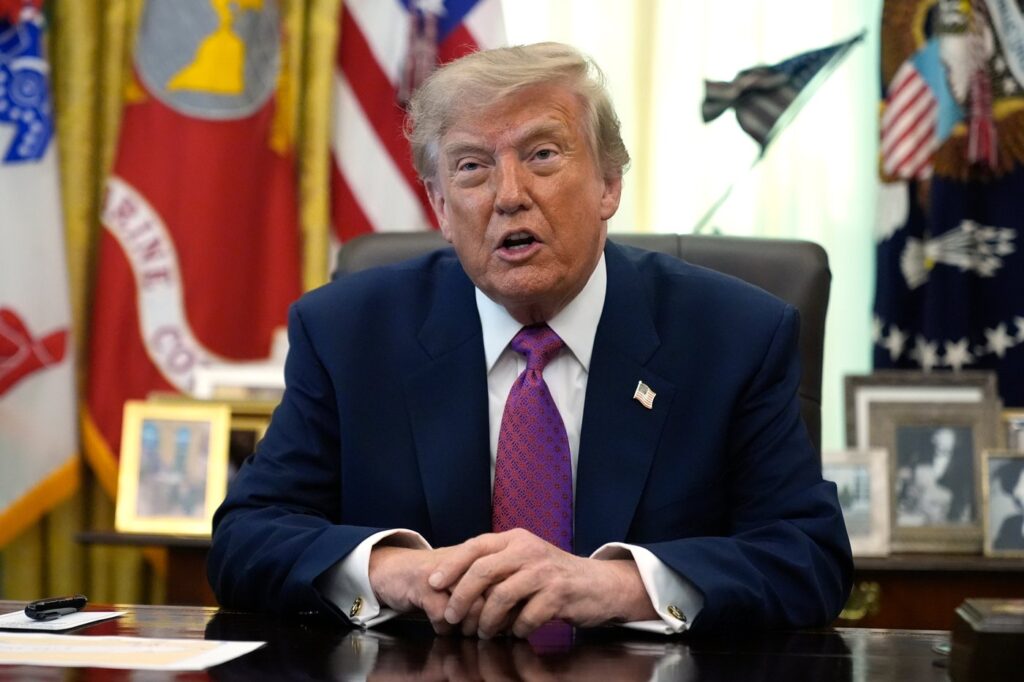
During remarks in the Oval Office, Trump explained that his executive order directs Secretary of the Interior Doug Burgum to update the Geographic Names Information Service, which oversees the names of natural features in the U.S. "We filed all the necessary papers, documents, everything else... this is official," Trump assured the press.
This latest move by Trump came amid escalating tensions with Canadian officials, particularly Ontario Premier Doug Ford. Initially, Trump had threatened to rename Lake Ontario during a heated exchange with Ford. When pressed by reporters as to why he was targeting Canadian allies rather than U.S. adversaries, Trump argued that Canadians had not treated the U.S. well.
Toronto Mayor Olivia Chow, whose municipality is adjacent to Lake Ontario, expressed her disapproval of Trump's actions. In her response on social media, she stated, "Donald Trump's antics won’t weaken our resolve as Canadians." Furthermore, Manitoba Premier Wab Kinew weighed in, likening Trump's approach to a washed-up rock band trying to relive past glory. "This is part of Donald Trump's presidency we’re at now," he said, suggesting that Trump is resorting to tired strategies to appeal to his base.
New York State Governor Kathy Hochul also chimed in, firmly stating that "New York won’t be calling it that" in response to the White House's announcement regarding the name change. The controversy surrounding Lake Ontario's renaming echoes a similar situation from last year, when Trump attempted to rename the Gulf of Mexico as the Gulf of America. He even jokingly suggested that the U.S. might need to change the names of the Atlantic and Pacific Oceans to complete his nomenclature ambitions.
Despite Trump's executive order, it is important to note that he does not have the unilateral authority to rename a body of water that is jointly governed by Canada and the U.S. Lake Ontario's name is recognized internationally and has longstanding legal precedence, appearing in federal legislation and treaties that date back over a century. The Province of Ontario itself was named for the lake upon its creation in 1867 during Canadian Confederation, indicating that the name's significance predates both countries and European colonization.
This recent development is occurring amidst a backdrop of tense trade negotiations between Canada and the United States, which had seen significant breakdowns late in the previous week. Trump’s strategies come just days after Canada imposed 50 percent tariffs on billions of dollars worth of American exports, following unmet trade demands from U.S. officials. Prime Minister Carney accused the U.S. government of trying to introduce last-minute restrictions that would jeopardize Canada's ability to forge its trade deals and maintain cultural sovereignty.
The situation further escalated after Premier Doug Ford told Trump to "kiss [his] ass," drawing a fiery rebuke from the U.S. president, who labeled Ford a "flunky" and made unfavorable comparisons to Ford's deceased brother, former Toronto mayor Rob Ford. Canada has since revealed plans to implement dollar-for-dollar retaliatory tariffs, which are scheduled to take effect on September 8.