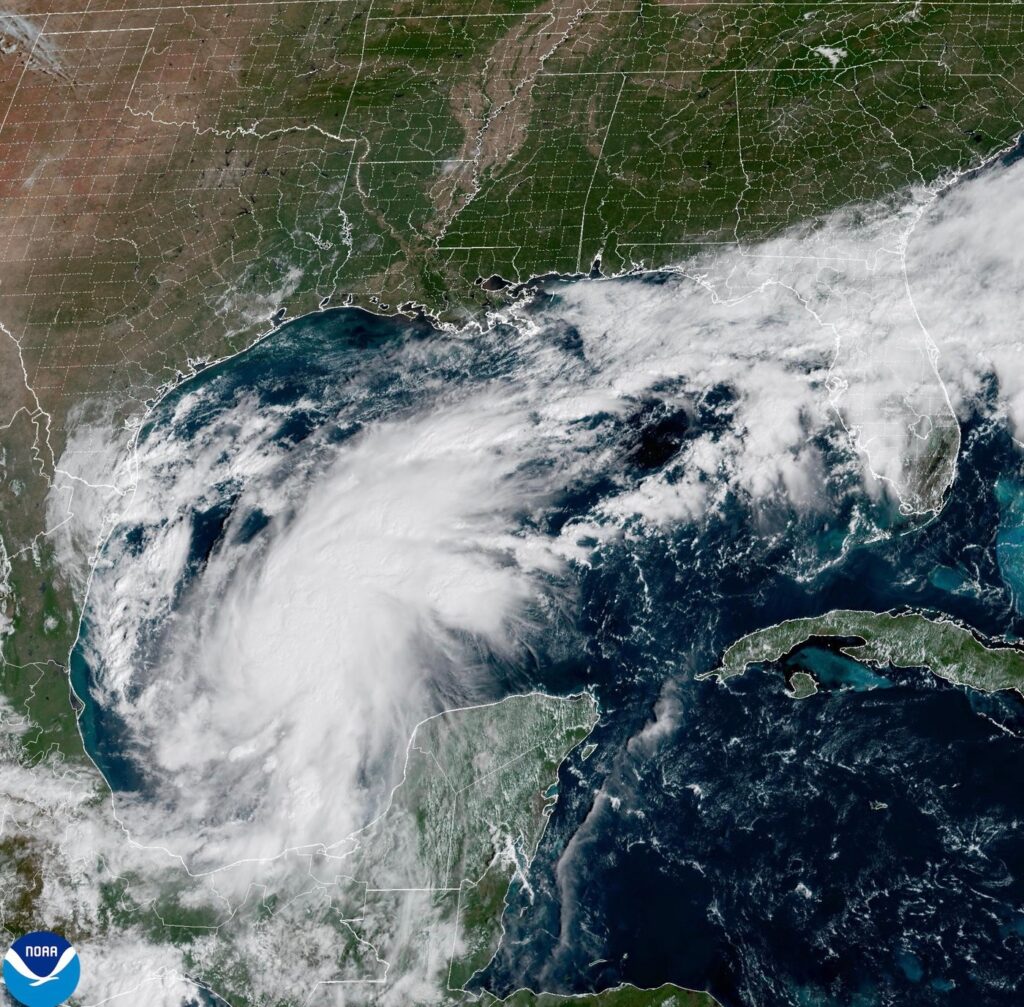
MIAMI (AP) Hurricane Isaias strengthened into a Category 2 storm as it advanced towards the U.S. Gulf Coast on Thursday, resulting in evacuation orders for tourists, local residents scrambling for essential supplies, and fishing crews securing their boats ahead of the impending storm. The hurricane, described as the first of the Atlantic season, was anticipated to rapidly intensify and bring dangerous conditions to the Florida Panhandle, southern Alabama, and southern Mississippi upon making landfall late Friday or early Saturday. Heavy rainfall and potential flooding were forecasted to extend as far north as Tennessee and North Carolina throughout the weekend.
Michael Brennan, director of the National Hurricane Center in Miami, stated, "We are expecting Isaias to be a dangerous hurricane when it makes landfall." He advised residents to prepare and seek safe locations by Friday as conditions would quickly deteriorate along the northern Gulf Coast as Isaias approached. The hurricane was reported to have maximum sustained winds of 105 mph (165 kph), surpassing the threshold of 96 mph (154 kph) for a Category 2 storm.
As of Thursday, Isaias was moving northeast at 14 mph (22 kph), approximately 260 miles (415 kilometers) south of the mouth of the Mississippi River. A hurricane warning was in effect from Ocean Springs, Mississippi, to the Bay-Gulf County line in Florida, while a storm surge warning extended from the mouth of the Mississippi to the Suwannee River.
Coastal communities took measures to prepare with urgency. Alabama Governor Kay Ivey mandated that non-residents evacuate Gulf Shores, Orange Beach, and Dauphin Island. Videos surfaced on social media depicting traffic gridlock on highways leading out of Gulf Shores, where double-red beach flags indicated that water access was closed. Several Florida school districts canceled late-week classes, and some counties implemented mandatory evacuations for specific coastal regions. Both Florida’s Governor Ron DeSantis and Alabama Governor Kay Ivey declared states of emergency across numerous counties, with DeSantis announcing the mobilization of approximately 5,000 National Guard troops by Friday.
On Dauphin Island, which is a 15-mile (24-kilometer) barrier island off the Alabama coast, local officials urged voluntary evacuations, especially for the vulnerable western section. Mayor Jeff Collier remarked that while he did not expect significant damage, it was crucial to remain prepared for unforeseen changes in the storm’s path or intensity. Forecasts indicate that the hurricane could cause storm surge heights between 5 to 7 feet (1.5 to 2 meters) in parts of Alabama and Mississippi, along with up to 15 inches (38 centimeters) of rainfall and potential tornado activities from Friday night into Saturday.
The National Weather Service cautioned residents about possible "long-duration power outages," as the hurricane formed late in the Atlantic hurricane season, developing more than four months into the season. It approached near a record dating back to 1905, which was the year’s first Atlantic hurricane that formed on October 8.
This year's Atlantic hurricane season has been relatively quiet due to a strong El Niño that disrupts storm formation over the Atlantic. Conversely, storm activity in the Pacific has been above average, including Hurricane Simon, which formed as a tropical storm off Mexico and was expected to intensify into a Category 4 hurricane. The coastline where Isaias is predicted to strike has a history of significant hurricanes; Hurricane Camille in 1969 caused over 250 fatalities, and Hurricane Katrina in 2005 resulted in widespread destruction and nearly 1,400 deaths.
As the storm approached, oil and gas producers in the Gulf began shutting down operations, affecting nearly 15% of crude oil production in the U.S. By Thursday, about 63% of the Gulf's oil production was temporarily halted, removing nearly 1.3 million barrels per day from the market. The evacuation of 121 out of 371 manned oil platforms was also reported. The impact of these production cuts on the already high oil prices might be substantial, particularly if Isaias were to strike as a powerful storm near oil refineries.
In addition to oil production, Isaias could disrupt the college football game between Georgia and Alabama, a match President Donald Trump intended to attend. As preparations continued throughout Alabama, residents were advised to check on elderly neighbors and others needing assistance, emphasizing the necessity for preparedness over panic.