Understanding the Political Psychology Behind France's Student Protests
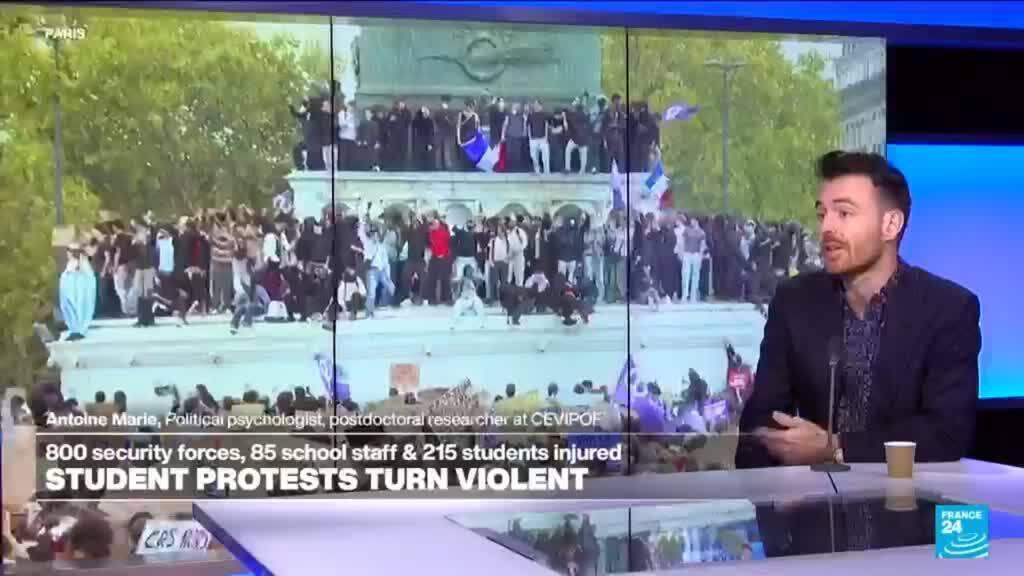
In a recent discussion hosted by Erin Ogunkeye, Dr. Antoine Marie, a postdoctoral researcher and lecturer at Sciences Po / CEVIPOF, delves into the intricate layers of political psychology that shape the perceptions and responses surrounding France's student protests. These protests have sparked widespread attention, raising questions about the nature of violence, accountability, and the societal divides marking contemporary France.
Dr. Marie emphasizes that the phenomenon of witnessing the same events yet arriving at drastically different interpretations of violence is rooted in several psychological and social mechanisms. One of the core factors identified is the role of media echo chambers. These echo chambers curate information that aligns with the pre-existing beliefs of individuals, leading them to interpret violence in ways that reinforce their political affiliations. For instance, supporters of the student protests may see violence as a necessary response to systemic injustices, while opponents might frame it as unprovoked aggression. This divergence illustrates a broader trend in which media consumption is not merely about information-gathering but is instead increasingly tied to one's identity and ideological stance.
Furthermore, Dr. Marie explores the concept of partisan thinking, which shapes individuals' responses to conflicts. He suggests that partisanship does more than affect opinions; it can alter perceptions of morality, making certain actions justifiable depending on one's political alignment. In this context, empathy becomes politicized, leading individuals to sympathize with those they perceive as allies while dismissing the suffering of those labeled as opponents. This selective empathy contributes to societal polarization, compounding misunderstandings and deepening divisions within the public discourse.
In addition to these psychological factors, Dr. Marie highlights the evolving nature of police conduct in France, which he characterizes as increasingly aggressive. This shift raises significant questions about accountability and the mechanisms in place to address allegations of police misconduct. The current institutional structure often creates disincentives for independent investigations, a situation that many believe exacerbates tensions between the police and the communities they serve. Dr. Marie's examination of the police's "offensive doctrine" suggests that operational strategies may prioritize control over community trust, further complicating the landscape in which protests occur.
Dr. Marie's discussion underscores the complexities surrounding France’s student protests. It illustrates how biases and structural factors can shape public perception, potentially leading to widespread misinterpretations of events. As students advocate for their rights and social justice, a deeper understanding of the psychological and social undercurrents at play is crucial for fostering dialogue and finding resolutions.
Overall, the intersection of political psychology, media influence, and police accountability presents a challenging yet essential framework for understanding the dynamics of contemporary protests in France. The implications of this framework resonate beyond the immediate context of the protests, signaling broader societal issues that warrant careful consideration and reflection.
```