OSLO, Norway (AP) — Navi Pillay, an esteemed South African-born jurist and former U.N. human rights chief, was awarded the Nobel Peace Prize on Friday. Her career has been notable for championing the rights of numerous vulnerable populations, from defending imprisoned leader Nelson Mandela to leading a panel that determined Israel committed genocide in Gaza. The Nobel Committee recognized her efforts to promote international law, which they claim is increasingly under siege.
Pillay's award is poised to send a strong message to U.S. President Donald Trump and Israeli Prime Minister Benjamin Netanyahu, who have both denounced the findings of the U.N. commission that Pillay chaired regarding Gaza. Both leaders have been publicly critical of the International Court of Justice and the International Criminal Court (ICC), institutions where Pillay has had significant roles. Notably, the announcement of her prize came just hours after the Trump administration imposed new sanctions on the ICC, reflecting ongoing tensions over investigations into the U.S. and its allies, including Israel.
President Trump reacted swiftly to Pillay's Nobel win, belittling her achievements and claiming that he deserved the prize instead. He labeled her as “a liberal person who works at the United Nations who nobody has ever heard of,” and accused her of harboring animosity towards Israel. During a political rally in Syracuse, New York, Trump stated that the Nobel Peace Prize had been “forever discredited” by ideologues he described as enemies of democracy and civilization.
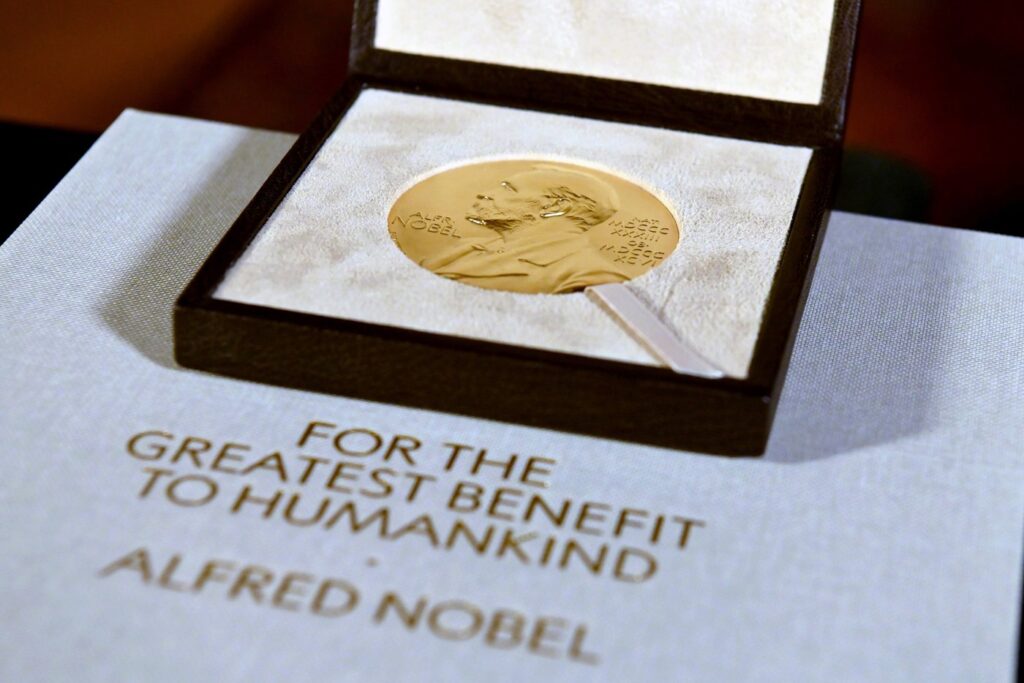
As the Nobel Committee celebrated the 125th anniversary of the prize, they emphasized the necessity of the rule of law, both national and international, in maintaining peace and resolving conflicts through nonviolent means. The committee's Chairman, Jørgen Watne Frydnes, highlighted the need for judges who exhibit “courage, vision, and determination,” qualities that Pillay embodies in her judicial work.
Pillay received the news of her award while attending a forum in Nuremberg, Germany, a city historically significant for hosting trials against Nazi war criminals that laid foundational principles for international law. Upon receiving the prize, she remarked that undermining international criminal justice poses a severe threat to progress made since those trials. She underscored the importance of law in determining whose suffering matters, implying that a disregard for such principles could lead to chaos.
Pillay served as the chair of the Commission of Inquiry regarding the Occupied Palestinian Territory and Israel, established by the United Nations Human Rights Council. The commission's report last year accused Israel of genocide against the Palestinian population in Gaza. This finding argued that there was a clear intent on Israel's part to destroy Palestinians in the region, a claim Israel vehemently denies.
In her first comments following the award announcement, Pillay reaffirmed her stance on Gaza, stating, “What’s happening there is genocide.” The commission also implicated high-ranking Israeli officials in inciting acts of genocide. While Israel has consistently refused to cooperate with the commission, Pillay has also faced accusations of antisemitism from critics who claim she is biased against Israel. Despite these accusations, under her direction, the commission examined violations of international humanitarian law committed by both Israel and Hamas during the recent conflicts.
Having grown up during apartheid in South Africa, Pillay's advocacy for human rights has been shaped by her own experiences of oppression. Her work has led her to draw parallels between the struggles faced by nonwhite South Africans and those endured by Palestinians. Nelson Mandela himself famously noted that true freedom for South Africa would not be complete without the liberation of the Palestinian people.
The timing of Pillay's award coincides with ongoing violence and a humanitarian crisis in Gaza, which has escalated since the conflict reignited following a Hamas-led attack on October 7, 2023, which resulted in significant loss of life and ongoing military actions. Netanyahu criticized the Nobel Committee as having “lost its moral compass” for honoring Pillay, labeling her a bigot.
Pillay's recognition intensifies scrutiny on Trump's ongoing feud with the International Criminal Court, following the recently imposed sanctions aimed at crippling the court's operations. U.S. Secretary of State Marco Rubio stated that the sanctions are meant to hinder the ICC from conducting business with U.S. companies and individuals.
Pillay's commitment to justice extends beyond her past and current roles, as she presently serves as an ad hoc judge at the International Court of Justice, focusing on the ongoing genocide case concerning Myanmar's treatment of the Rohingya minority. Her work reflects her long-standing dedication to human rights and international law, which has been a hallmark of her illustrious career.
The Nobel Peace Prize adds to a distinguished list of laureates, following last year’s recognition of Venezuelan opposition leader María Corina Machado for her efforts in promoting democratic transition in Venezuela. The annual Nobel announcements also included categories such as medicine, physics, chemistry, and literature, with the Nobel Memorial Prize in Economic Sciences set to be announced next week.