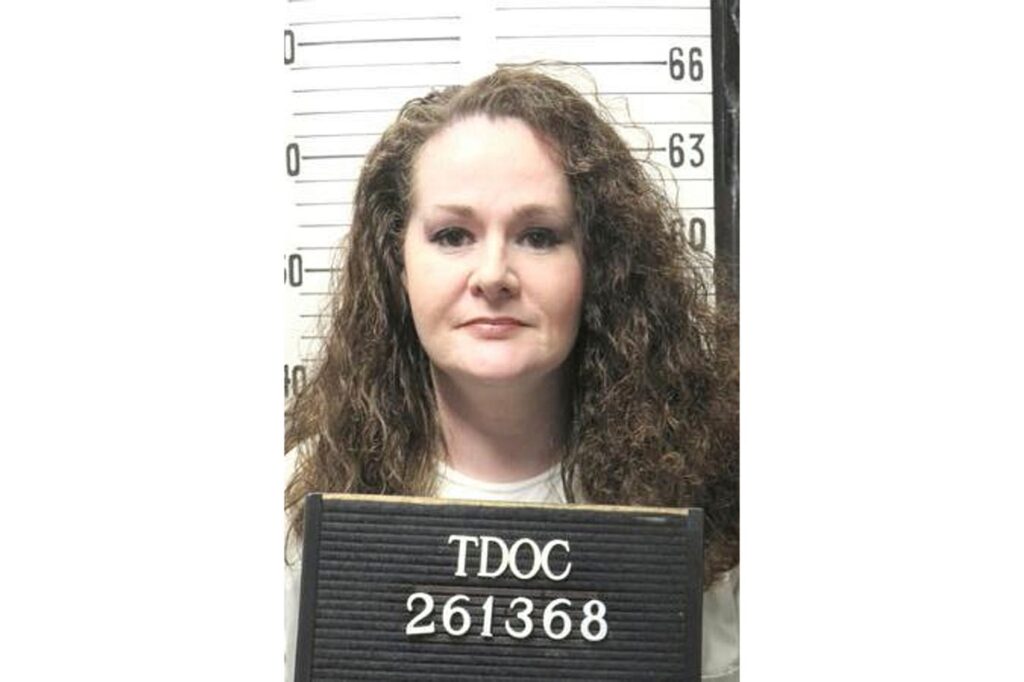
NASHVILLE, Tenn. (AP) - Christa Pike, who notably survived a failed attempt by the state of Tennessee to execute her via lethal injection, has been returned to prison after being discharged from the hospital, according to her attorneys. Pike, now 50 years old, was hospitalized following the September 30 execution attempt, which involved administering a lethal dose of pentobarbital, the lethal injection drug.
The Tennessee Department of Correction confirmed that Pike is currently back at the Deborah K. Johnson Rehabilitation Center, the women’s prison where she has been housed for the past 30 years. Her legal team released a statement expressing gratitude towards the first responders and medical staff who treated her during the critical aftermath of the execution attempt. They noted that she continues to receive medical care while in custody and that they will be monitoring her recovery progress closely.
Pike's hospital stay followed her unexpected reaction to the execution attempt, where she survived two doses of pentobarbital. During the event, which aimed to carry out her death sentence for the 1995 murder of her classmate Colleen Slemmer, Pike experienced significant medical distress, including requiring a ventilator at one point. Her attorneys reported that there were serious concerns regarding her survival; however, she eventually regained consciousness and was able to converse and walk with assistance.
Significantly, the Death Penalty Information Center has recognized Christa Pike as the first individual to survive an administration of lethal injection drugs during an execution attempt. This unprecedented situation has raised numerous questions about the methods that Tennessee employs for executing death sentences. Following the incident, a thorough review was ordered by Tennessee Governor Bill Lee concerning the circumstances surrounding the failed execution, leading to the postponement of the state’s only other scheduled execution for the year. Additionally, the state's prison chief resigned in light of the mistakes made during the execution process.
During the execution attempt, Pike was provided an opportunity to make a final statement. She expressed that she was at peace; however, shortly after, she began to experience extreme discomfort, indicating that her arm hurt. As the procedure progressed, she appeared to lose consciousness, yet her audible breathing continued for nearly 90 minutes before media witnesses were removed from the observation room. Ultimately, an ambulance was summoned to transport her to the hospital, where she received further medical attention.
The failed execution has not only called attention to the specifics of Pike’s case but has also brought forth debates on the ethical implications of the death penalty and how states implement capital punishment. The Tennessee Department of Correction has remained largely silent on the precise issues that led to Pike's survival and complications during the execution. Medical and lethal injection experts continue to explore whether malfunctions in the intravenous (IV) line used for the drugs led to the lethal substances not entering Pike's bloodstream as intended, but rather pooling in her surrounding tissue. It has been suggested by her attorneys that the execution team might not have recognized the improper placement of the IV lines during the procedure.
The ramifications of Pike's case extend beyond individual circumstances, forcing a reevaluation of protocols regarding capital punishment in Tennessee and likely influencing broader discussions surrounding the death penalty in the United States.