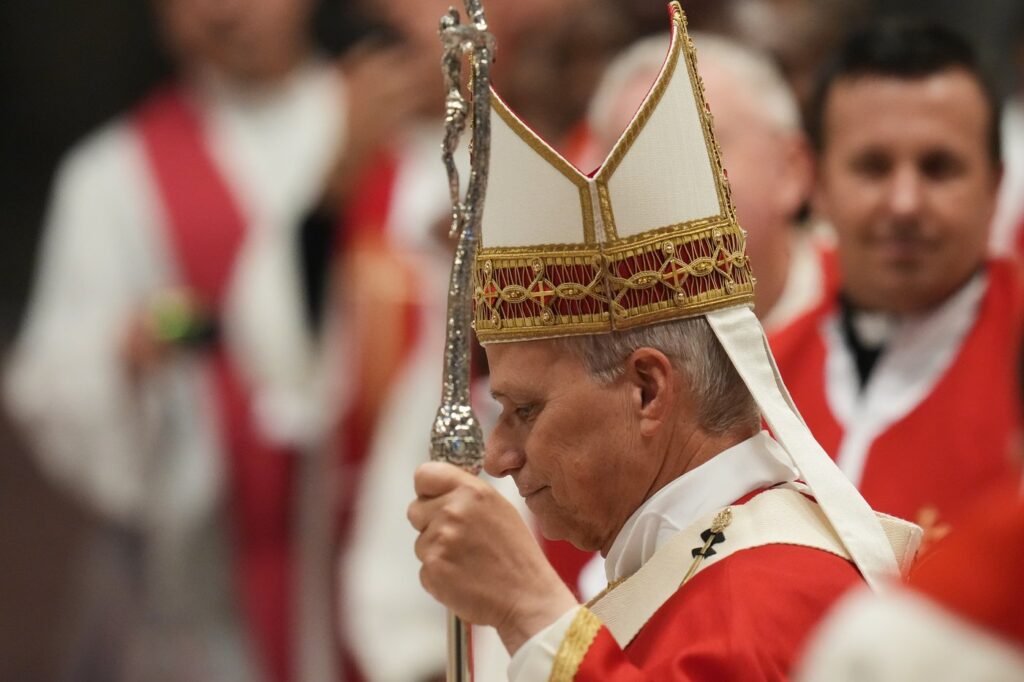
ROME (AP) – Pope Leo XIV on Saturday declared capital punishment "inadmissible" as he commemorated the World Day Against the Death Penalty. This declaration came just as the United States announced its plans to livestream an execution by firing squad.
In a message posted on X, the American pope referenced the revised Catholic teachings on capital punishment introduced by Pope Francis, which state that the death penalty "attacks the inherent dignity of a human being." Leo's post emphasized that the common good can be protected and justice can be served without resorting to the death penalty. He stated, "Effective systems of detention have been developed that protect citizens while at the same time do not completely deprive those who are guilty of the possibility of redemption," and concluded with the hashtag #NoDeathPenalty.
The U.S. Department of Defense had announced earlier that the execution of Nidal Malik Hasan, who was convicted for a 2009 shooting at the Fort Hood military base that resulted in the deaths of 13 people and injuries to 32 others, would be livestreamed on December 3. Though Pope Leo did not specifically mention this planned execution or the recent botched lethal injection in Tennessee, the timing of his message was notable as it coincided with the World Day Against the Death Penalty. The pope typically uses his social media platforms to address relevant commemorative events.
Leo's declaration closely followed a statement from his top deputy, Cardinal Pietro Parolin, the Vatican's Secretary of State, who explicitly condemned the planned public execution in the U.S. as "unacceptable." Parolin stated that the Church opposes the death penalty entirely, emphasizing that it is incompatible with human dignity and does not serve as an effective deterrent. He described the intent to publicly display an execution as "truly incomprehensible" and criticized the idea of turning death into a spectacle.
Pope Francis had declared capital punishment "inadmissible" in all circumstances during a 2018 amendment to the Catholic Church's official teachings. This shift marked a departure from previous language found in the Catechism, which had allowed for the possibility of capital punishment in cases deemed necessary for the defense of innocent lives. Past popes, including St. John Paul II, had also started emphasizing the need to abolish the death penalty, advocating for the dignity of all individuals, including those found guilty of crimes.
In line with his predecessors, Pope Leo has prioritized prison visits during his papacy to convey messages of hope to incarcerated individuals and reinforce their inherent dignity. During an April visit to the notorious Bata prison in Equatorial Guinea, he reassured inmates that God would never abandon them and that the Church would stand by their side. Additionally, Leo plans to visit a prison in Buenos Aires as part of his upcoming tour in Latin America.
The head of the U.S. Conference of Catholic Bishops, Archbishop Paul Coakley, expressed "shock" and "great sorrow" regarding the Pentagon's decision to livestream Hasan's execution. He criticized the move as a "barbaric promotion of a culture of death" that undermines the moral fabric of the nation. Coakley emphasized that even though Hasan's actions are indefensible, the decision to conduct a public execution will only serve to harm the conscience of the American public.