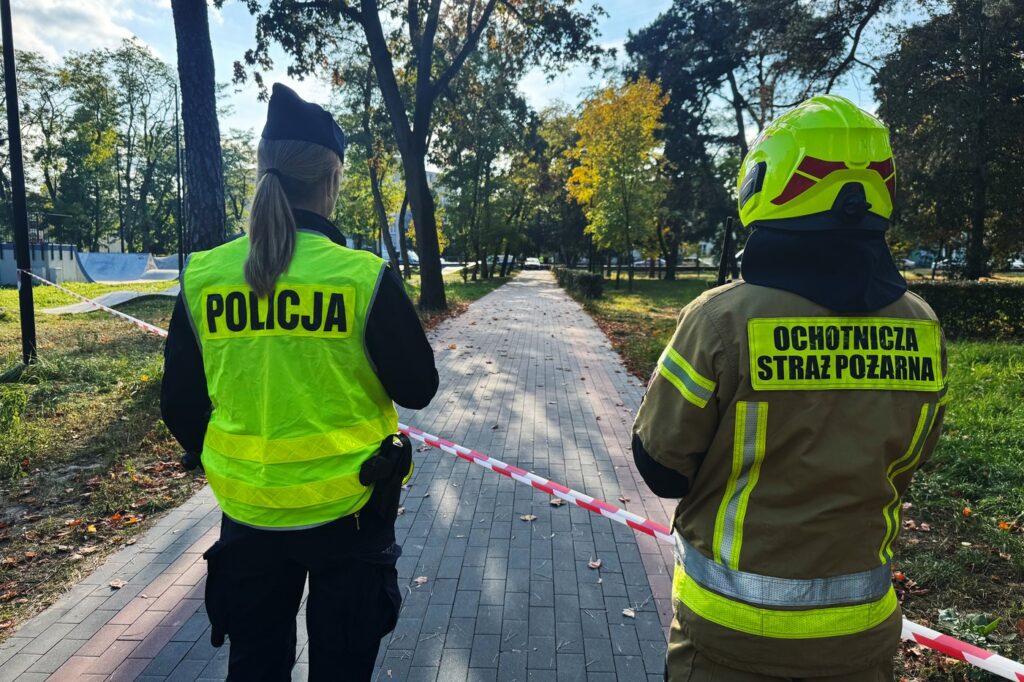
On Saturday in Warsaw, Poland, a woman attacked three individuals inside a private post-secondary educational institution, marking the third school assault in the country within a week. Authorities reported that bloodstains were found near the school's entrance, where the victims were busy submitting paperwork when the attack occurred. Fortunately, none of the injuries sustained by the victims, aged 17, 17, and 24, were deemed life-threatening, and the assailant was taken into custody.
This violent incident was preceded by a series of school attacks that had already shocked Poland, where incidents of school violence have become increasingly rare. On Wednesday, a 19-year-old student at a vocational school in the Mazovian province injured nine people, including fellow students and teachers, with a sharp object before being arrested nearby. The following day, a 15-year-old former student fatally attacked a school custodian and injured two others at his previous school in the same province.
In response to the alarming pattern of school violence, Polish police conducted extensive preventative operations, detaining 76 individuals nationwide and inspecting nearly 50,000 schools to enhance safety protocols. The police indicated that the suspect in Saturday's attack wielded a "dangerous object" and that there was no immediate evidence suggesting the attacks were coordinated, despite concerns about a potential internet challenge promoting such violence.
Kacper Rekawek, a senior researcher at the International Center for Counterterrorism, noted that the string of attacks has raised suspicions of a possible "copycat scenario," reflecting an unsettling trend in violent behavior traced back to high-profile attackers, including Brenton Tarrant, who was responsible for the Christchurch mosque shootings in 2019. Rekawek suggested that the aesthetics used by the attackers in Poland mirror those of Tarrant, thereby framing the incidents within the realm of terrorism.
Rumors of a coordinated effort led to widespread anxiety, sparking parents to discuss the risks of school violence. This anxiety prompted 59 schools to preemptively suspend classes, primarily in the Mazovian province, while other institutions ramped up security measures, including additional staff at entrances and inspections of students’ bags. Polish Interior Minister Marcin Kierwinski reaffirmed that student safety is paramount, stating that there would be “no compromise” when it comes to protecting the youth.
Furthermore, recent detentions included several minors found with weapons, including a 14-year-old boy from Warsaw carrying a concealed knife and firecrackers, and a 16-year-old with a butterfly knife. Complaints from students about threats or displays of violence online have also been reported, signaling a growing unease within school communities.
Authorities are now grappling with the need to educate parents on how to discuss the troubling topic of school violence with their children. They have pledged to maintain heightened security at schools, coupled with crisis training initiatives. Prime Minister Donald Tusk emphasized that without legal tools to block harmful online content, the potential for similar incidents would increase, notably if perpetrators were able to stream their actions online.
In the aftermath of the latest assault, the 15-year-old attacker, who recorded his actions, was overwhelmed by the school principal, Krzysztof Ochmanski. The principal recounted a moment when the assailant requested assistance, expressing remorse for his actions. This chilling narrative underscores the urgent need for effective interventions and dialogue amidst rising concerns about safety in schools across Poland.