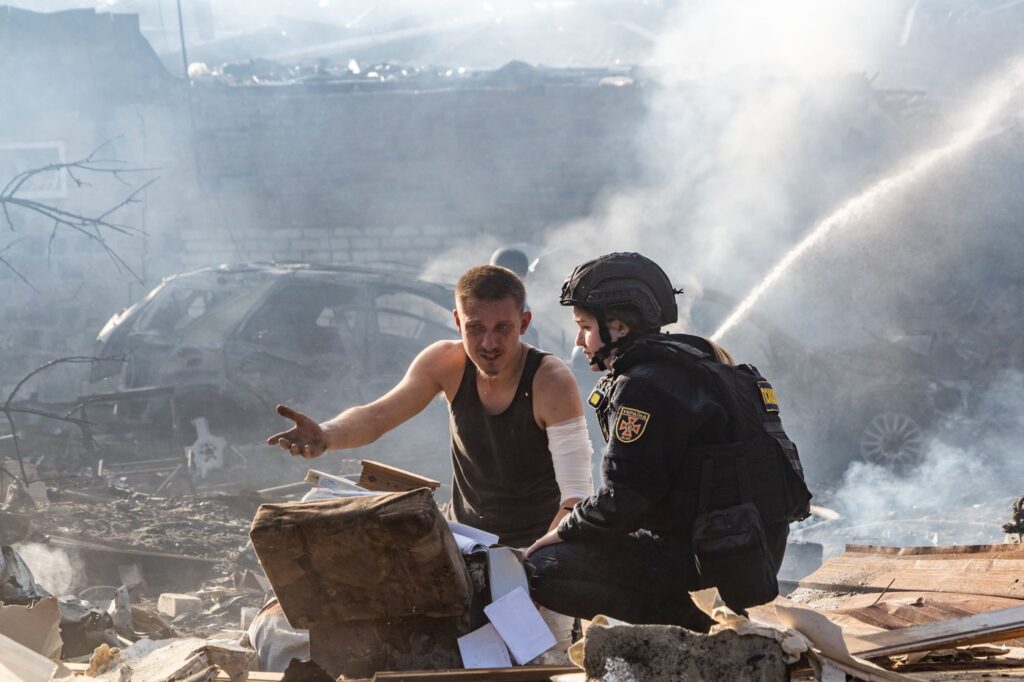
KYIV, Ukraine (AP) — Ukrainian President Volodymyr Zelenskyy announced on Monday that Ukraine is ready to pause its attacks on Russia's energy infrastructure. However, he expressed frustration that Moscow continues to target Ukrainian energy sites despite the announcement from U.S. President Donald Trump, which claimed an agreement to cease such assaults had been reached. Zelenskyy described being “horribly surprised” that Moscow attacked a power plant in Kharkiv, along with a gas production facility and a civilian gas station just hours after Trump announced the purported energy ceasefire.
Speaking at the Warsaw Security Forum in Poland, Zelenskyy indicated that his government had not retaliated against Russian energy targets since the announcement made by Trump on Sunday, considering the ceasefire a “good first step” towards ending the ongoing conflict. He expressed skepticism regarding Russian President Vladimir Putin's willingness to uphold the truce, noting that “Even after yesterday’s messages from (Trump)… Putin attacked our gas infrastructure.” Zelenskyy emphasized that an energy ceasefire would entail both nations refraining from attacks on each other's energy infrastructure.
At the White House, Trump asserted that an energy ceasefire was indeed in place, stating, “Well, they agreed… because I said, ‘You agree.’ That’s why they agreed.” When questioned about continued Russian attacks, Trump noted he would need to investigate the situation, attributing violations to both sides. His brief social media post indicated that the ceasefire was effective immediately, with an urging to “not break it.” Meanwhile, Kremlin spokesman Dmitry Peskov refrained from confirming any agreement, stating that “contacts are ongoing.”
The ongoing strikes on energy infrastructure have inflicted significant hardship on both Ukraine and Russia. Previously, Trump had suggested another agreement to halt energy strikes on September 14, which also did not materialize. Russia has been methodical in targeting Ukrainian energy facilities, aiming to deprive civilians of essential services such as power, heat, and running water, hoping to diminish public support for Ukraine’s efforts against the invasion. Ukrainian officials have warned that this strategy constitutes “weaponizing winter,” fearing an escalation of attacks as colder weather approaches.
In retaliation, Ukraine has conducted strikes on Russian energy installations, including oil refineries, often deep within Russian territory. This approach has prompted Trump to shift blame for surging U.S. diesel prices onto Zelenskyy instead of recognizing the impact of the U.S.-led conflict in Iran. Trump, in a bid to alleviate fuel prices before the U.S. midterm elections, struck a deal with Putin to procure diesel from Russia.
During his Monday interview on Fox News, Zelenskyy countered Trump’s claims, clarifying that diesel prices are not influenced by Ukrainian attacks but rather by geopolitical events such as the blocking of the Strait of Hormuz. The European Union's foreign policy chief, Kaja Kallas, expressed cautious optimism regarding the prospect of a ceasefire on energy strikes but highlighted that there is little indication Russia would comply. "We haven't yet seen that Russia will stick to it," she remarked during a meeting with EU foreign ministers in Luxembourg.
Trump's deal with Putin to purchase diesel from Russia has faced backlash from U.S. officials, with a bipartisan group of six senators urging the administration to reverse the agreement to avoid financially supporting a regime engaged in the war against Ukraine. Kallas criticized Trump's notion that Ukraine should pursue a new president, affirming that elections should not proceed during wartime and especially without a ceasefire.
In light of ongoing conflict, Zelenskyy reiterated that holding elections under wartime conditions is unfeasible. He articulated a willingness to consider elections if a comprehensive ceasefire lasting at least 60 days was secured. In response, Peskov stated that if Ukraine were to hold elections, Putin would be open to halting attacks on election day, but offered criticism on Ukraine’s request for a 60-day ceasefire, claiming it was merely a strategy to "gather their strength" for continued hostilities.
On the ground, recent attacks have claimed lives, with Russian drones striking a high-rise apartment building in Kyiv, resulting in the deaths of two individuals and injuries to nine others. Zelenskyy labeled these strikes as evidence that Russia needs to face increased pressure. He asserted, “They are the ones continuing the brutal strikes. They are the ones prolonging the war,” emphasizing the need for a strong U.S. response to these aggressions.
Ukrainian air defenses reportedly intercepted 89 of 121 Russian drones in overnight actions, while the Russian Defense Ministry claimed to have thwarted 151 Ukrainian drones over Russian territories, including Crimea and the Black Sea. Furthermore, the Russian forces conducted drone strikes on Ukraine’s port infrastructure, exacerbating the dire situation amid the ongoing conflict and heightening tensions between the two nations.