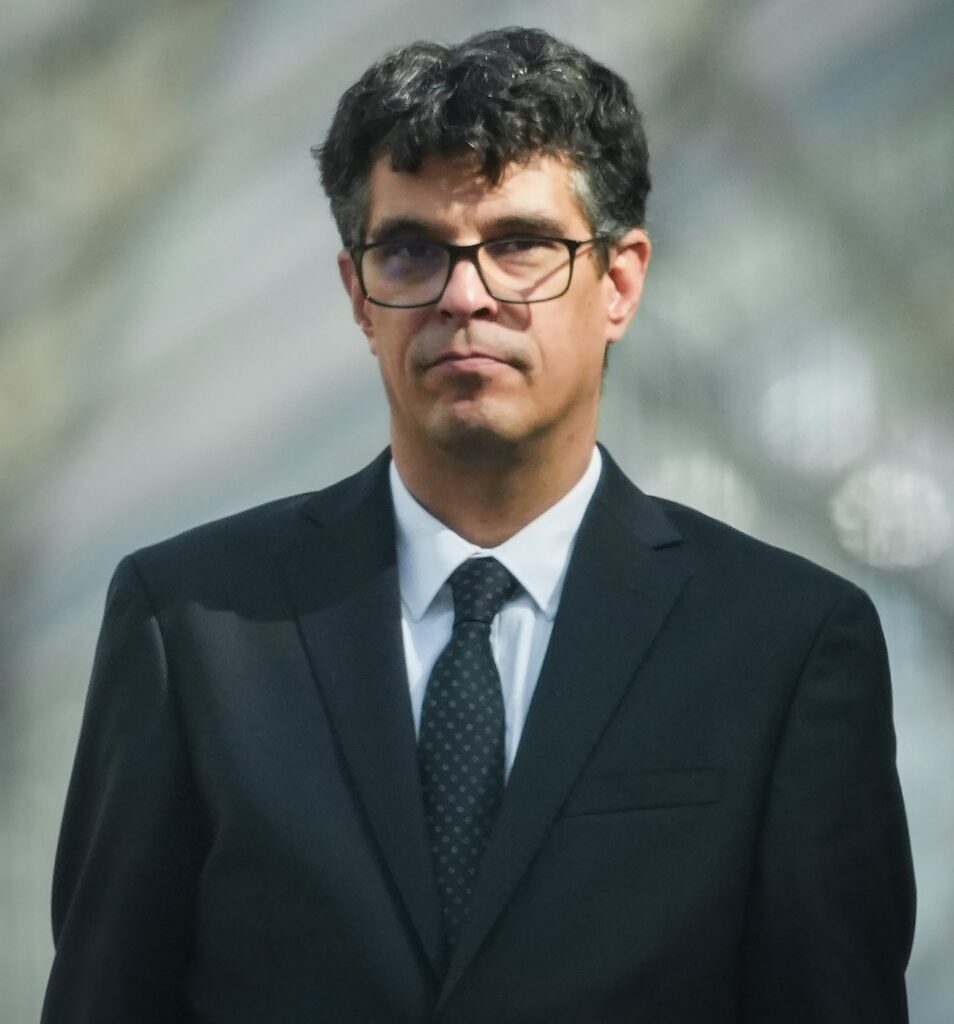
VANCOUVER — Author and former University of British Columbia (UBC) creative writing chair Steven Galloway has finished his testimony in a defamation lawsuit trial in Vancouver. The case centers around allegations made against him regarding sexual assault, which he claims are unproven and defamatory.
Galloway has been on the stand for a week, during which he faced questions from Glynnis Kirchmeier, one of the defendants in the lawsuit who is representing herself and attending the trial remotely. Kirchmeier inquired whether Galloway believed she was involved with an advocacy group dedicated to supporting victims of sexual violence and harassment. She also asked about her communications with A.B., a former UBC student who made allegations against Galloway.
In response, Galloway expressed skepticism over Kirchmeier’s lack of involvement in the advocacy group, citing her presence on one of their fundraising pages. He reflected on feeling nauseated by one of her tweets that labeled him a "rapist," questioning, "why is this person I’ve never met calling me a rapist?" This statement underscores the emotional toll that the allegations and public statements have had on him.
The trial, held in B.C. Supreme Court, is set to hear from its next witness, Ronna Syed, a producer for the Canadian Broadcasting Corporation (CBC) program "Fifth Estate." Galloway indicated that Syed was the first journalist to reach out to him following the emergence of the allegations, to which he responded with "no comment."
Galloway initiated his defamation lawsuit in 2018, and since then, several defendants have settled the case with him and have issued public apologies. He claims that the allegations of rape and sexual assault have effectively destroyed his career, which he has vehemently denied. Furthermore, an investigation led by a former B.C. Supreme Court judge deemed these allegations unsubstantiated.
In earlier testimony, it was revealed that A.B. has shifted her defense strategy. She no longer asserts that she was assaulted by Galloway, but rather maintains that she reported the alleged incidents. Galloway admitted in court that he felt a sense of shame regarding his affair with A.B., who is protected by a publication ban. Nonetheless, he stated there were no policies at UBC prohibiting faculty-student relationships, acknowledging that he was aware of "numerous" such relationships within the institution.
This ongoing legal battle spotlights the complex intersection of personal relationships, allegations of misconduct, and the subsequent impact on an individual’s career and reputation. The results of this trial may have significant implications not only for Galloway but also for those involved in the advocacy and reporting of sexual violence and harassment.