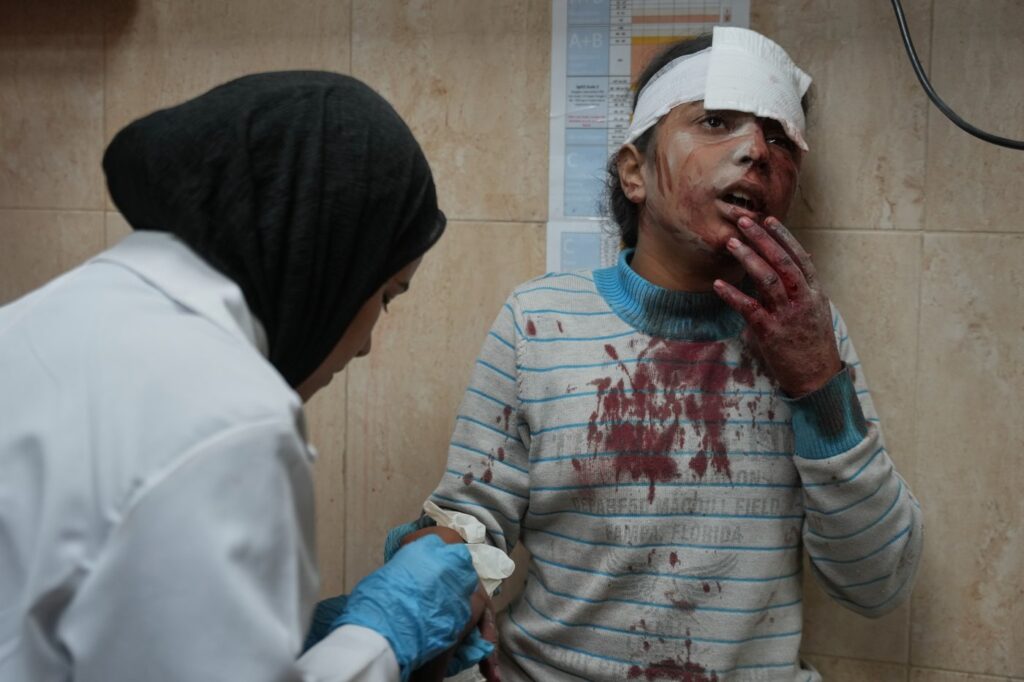
On Saturday, a drone strike carried out by Israel resulted in the deaths of two Palestinians in Jabaliya, located on the northern edge of Gaza City, as confirmed by hospital officials. Mohamed Abu Selmiya, the director of Shifa Hospital in Gaza City, reported that the drone hit two Palestinians who were walking down the street. The American field hospital stated that several other individuals sustained injuries, although specific numbers were not disclosed. The Israeli military later commented that the drone strike targeted two Hamas militants in the vicinity. Notably, near-daily Israeli airstrikes and gunfire have persisted in Gaza over a year after a ceasefire agreement was reached between Israel and Hamas, during which at least 1,600 Palestinians have been killed, according to figures from Gaza’s Health Ministry. This tally includes a significant number of women and children, as the ministry does not differentiate between civilians and militants in its reporting.
In the afternoon, mourners in Jabaliya held a vigil for 70 war victims whose remains had recently been excavated from the rubble of buildings destroyed by Israeli strikes. Families gathered to pay their respects, with the remains draped in Palestinian flags and candles set beside them. Among those mourning was Wael al-Dibs, whose wife and other family members were among the recovered remains, while the remains of his 3-year-old daughter remain unfound. Mahmoud Nabhan was present as well; he lost 16 relatives, including children and grandchildren, when his home was hit during an early stage of the conflict. This ongoing conflict began on October 7, 2023, when Hamas-led militants launched an attack on southern Israel, resulting in approximately 1,200 fatalities and 251 hostages taken. According to the Gaza Health Ministry, over 74,600 individuals have been killed in Gaza since Israel's retaliatory offensive commenced.
In an adjacent development in Jordan, the Council of Church Leaders announced the cancellation of Christmas festivities in light of a deadly attack on a Greek Orthodox church last month. This decision will allow the continuation of liturgical services but calls for a more solemn and simple observance of the holiday. As stores begin to fill with Christmas decorations, the council emphasized that priority should be given to prayers and acts of social solidarity to honor the victims, specifically remembering the nine individuals who lost their lives during the church attack, which also resulted in over three dozen injuries.
Meanwhile, in the Persian Gulf, the situation escalated as Iranian state television reported that three oil tankers struck naval mines near the Strait of Hormuz and subsequently caught fire. The Revolutionary Guard and the Iranian Navy reported that two of the tankers were hit inside the strait, while the third burned east of this vital waterway. Specific information about casualties, the tankers' nationalities, or their destinations was not furnished. The Iranian military warned that any ships using strait routes without Iran's permission would face similar consequences. This development is part of a series of Iranian attacks on oil tankers in the region, likely aimed at increasing global energy prices amid ongoing tensions with the United States, which has imposed a blockade on Iranian ports, significantly straining Iran’s economy. October witnessed the highest number of incidents involving commercial vessels in the contested waters since hostilities commenced in February.
This report will continue to be updated as situations develop throughout the day.