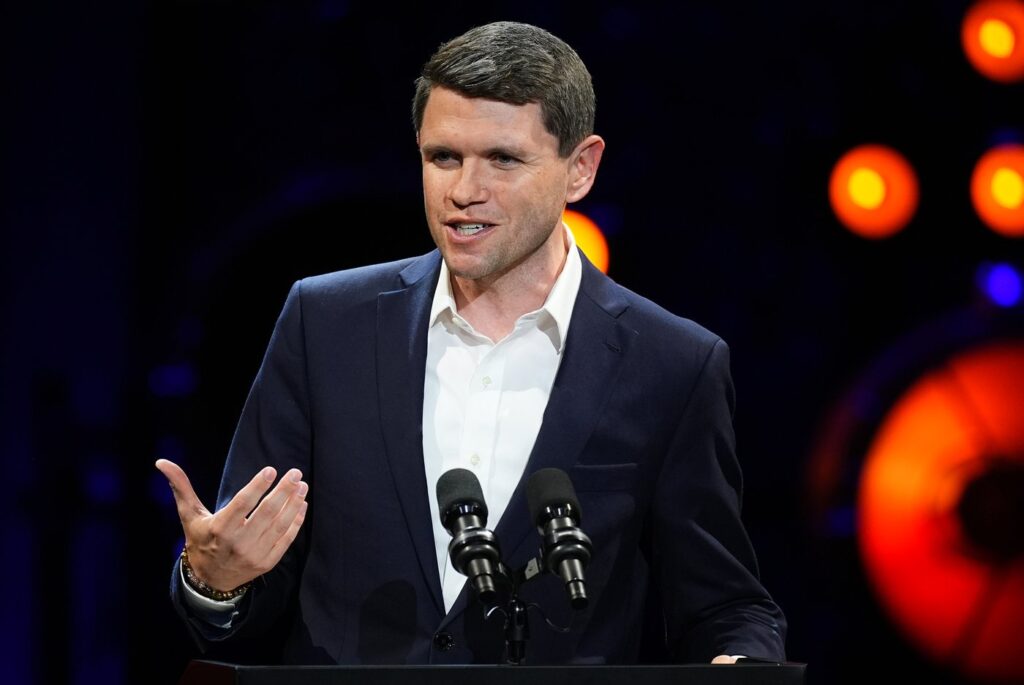
In a bold political maneuver, Abdul El-Sayed has introduced a healthcare proposal dubbed "TrumpCare," highlighting a universal healthcare plan that leverages President Donald Trump’s name to garner attention and support for the ambitious Democratic initiative. El-Sayed’s plan features a golden insurance card emblazoned with Trump’s name, promoting the concept of universal healthcare as a right for all Americans.
Meanwhile, James Talarico, a newly elected U.S. Senator from Texas, has drawn historical parallels by suggesting that Trump has the potential to emulate former President Lyndon B. Johnson, recognized as a master of legislative negotiations. Both Talarico and Hakeem Jeffries, who is expected to step into the role of House Speaker in January, have expressed a willingness to collaborate across party lines in order to enact significant policies beneficial for the American public.
This emerging approach from some Democrats comes as they seek to recalibrate their strategy following their recent electoral victories, driven largely by a voter backlash against Trump's tenure. The attempts to collaborate with the President are not universally accepted within the party, yet they indicate a tactical recognition of the importance of Trump’s input in legislative processes, especially when new laws require his signature.
Trump, for his part, has shown openness to negotiation, emphasizing a desire to avoid the duality of merely vetoing Democratic proposals throughout the remainder of his presidency. Reflecting on his past experiences, Trump pointed to instances where he made unexpected compromises with Democratic leaders like Chuck Schumer and Nancy Pelosi.
In a calculated attempt to appeal to Trump’s ego, Democrats are reiterating the prospect of leaving a lasting legacy in terms of healthcare reform. El-Sayed has urged the President to consider partnering on health initiatives that promise "guaranteed healthcare for every American, from cradle to grave," using visual aids to emphasize the potential impact of such legislation on his presidential legacy. This rhetoric comes as polls indicate that about 60% of voters believe the federal government should assume a larger role in healthcare.
Democrats are engaging in discussions on the implications of expanding Medicare, with various proposals being considered to lower the eligibility age and broaden coverage. The Congressional Budget Office projected that such moves could elevate federal healthcare spending significantly, while potentially reducing overall patient costs.
As negotiations loom, questions remain about Trump's willingness and ability to engage in productive discussions with Democratic leaders, particularly against a backdrop of previously inconsistent promises of bipartisanship. Trump has reiterated his stance, acknowledging a willingness to work with Democrats, particularly on pressing issues like healthcare and drug pricing, although challenges remain due to personnel changes in his administration.
Keeping momentum, Democrats such as Talarico are keen to frame proposals to Trump as opportunities for him to achieve historic recognition akin to Johnson’s legacy, suggesting that Trump could secure lasting honors from both parties if he commits to transformative legislation. The discussions around these proposals highlight a significant balancing act for Democrats—seeking to fulfill voter mandates for meaningful reforms while navigating party loyalties and perceptions of collaboration with Trump.
Amidst a divided political landscape, prominent Democratic figures assert that bold legislative actions are crucial and should not be postponed until after Trump’s term. Democratic governors have encouraged their colleagues to push forward with bills they believe will improve American lives, challenging the President to either support or veto these initiatives. Ultimately, the dynamics of this evolving political climate signal potential avenues for historic policymaking, requiring strategic engagement and collaboration regardless of party affiliation.