On Thursday, the leaders of the United States, China, and Russia are scheduled to meet on the sidelines of the upcoming Asia-Pacific Economic Cooperation (APEC) summit in Shenzhen, China. This unprecedented gathering of the heads of the world’s biggest nuclear powers is being watched closely, although analysts suggest that expectations for major breakthroughs are low, emphasizing that the meeting may be more symbolic than substantive.
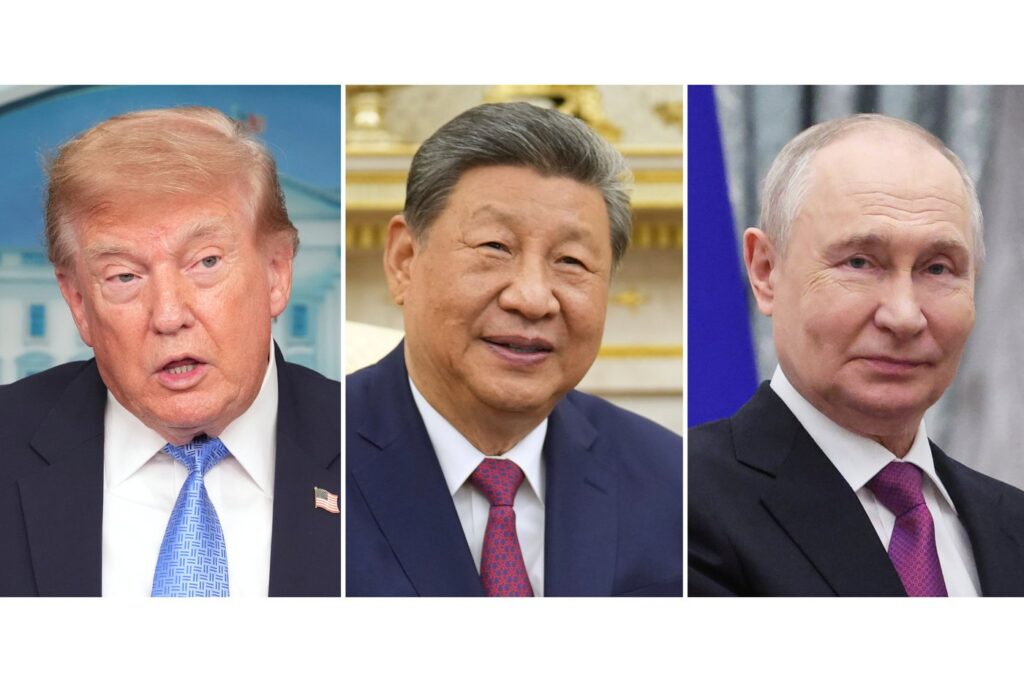
The White House confirmed that the meeting will include U.S. President Donald Trump, Chinese President Xi Jinping, and Russian President Vladimir Putin. This significant moment in international relations comes at a time of heightened tensions among the three nations, particularly regarding the ongoing war between Russia and Ukraine and the contentious U.S. stance on Iran.
Trump has recently sought to strengthen his relationships with both Xi and Putin, despite ongoing conflicts. Following a temporary truce in the U.S.-China trade war, the two leaders have emphasized cooperation even amid differing perspectives on issues like the Iran conflict and Russia's military actions in Ukraine. The U.S. President has expressed his intention to discuss Iran's external military role and aims to reach a three-party agreement concerning nuclear arms stockpiles.
While Trump plans to highlight the U.S. stance on Iran, he will reportedly avoid discussing Ukraine during the summit, according to a senior U.S. official. The last major nuclear arms treaty between Russia and the U.S., known as New START, expired in February, removing long-standing caps on their nuclear arsenals. In this light, Trump has called for a "new, improved, and modernized" nuclear deal that also includes China, despite its smaller nuclear arsenal of estimated over 600 warheads compared to the U.S. and Russia’s more than 5,000 each.
The trilateral meeting is seen as a potential starting point for discussions on nuclear disarmament, although no concrete agreements are expected to be reached. U.S. officials characterize the meeting as an opportunity for China to take part in critical international dialogues. However, analysts note that China's nuclear capabilities create a barrier for deeper engagement on these issues.
China's participation in the summit reflects its growing influence and prestige as a global power. For Russia, the meeting is an opportunity to assert its status as a superpower alongside the U.S. and China, particularly amidst its ongoing military campaign in Ukraine, which has drawn international condemnation. Analysts highlight that this summit may reshape perceptions regarding international cooperation on pressing geopolitical issues.
The APEC summit itself gathers representatives from 21 economies in Shenzhen, showcasing China’s rapid development from a fishing village to a global technology and economic hub. However, the trilateral meeting could complicate China’s narrative that Western sentiment has hindered peace efforts related to the Ukraine conflict. Moreover, the summit could challenge China’s portrayal as a proponent of free trade and multilateralism.
Historically, leaders of these nations have connected in pairs, with Putin and Xi enjoying a strong rapport, having met over 40 times since Xi’s presidency began in 2013. Additionally, both Trump and Putin have held several direct meetings, with Trump and Xi also engaging multiple times, reflecting the intertwined nature of their diplomatic efforts.
Furthermore, China and Russia have strengthened their ties significantly since the onset of the war in Ukraine, with China increasingly becoming a key supplier to Russia amid Western sanctions. While Chinese officials maintain a stance of neutrality regarding Ukraine, they also assert that Western allies provoked the conflict, which illustrates the complexity of the international relations involved.
The planned meeting has drawn comparisons to the 1945 Yalta Conference, which involved the division of post-war Germany among the Allied powers. However, Kremlin spokesman Dmitry Peskov dismissed such comparisons, insisting that any agreements reached would be based on mutual respect rather than coercive imposition of global order concerning third parties.
Overall, the upcoming trilateral summit represents a potentially pivotal moment in international relations, highlighting the intricate balance of power and ongoing tensions among these major global players.