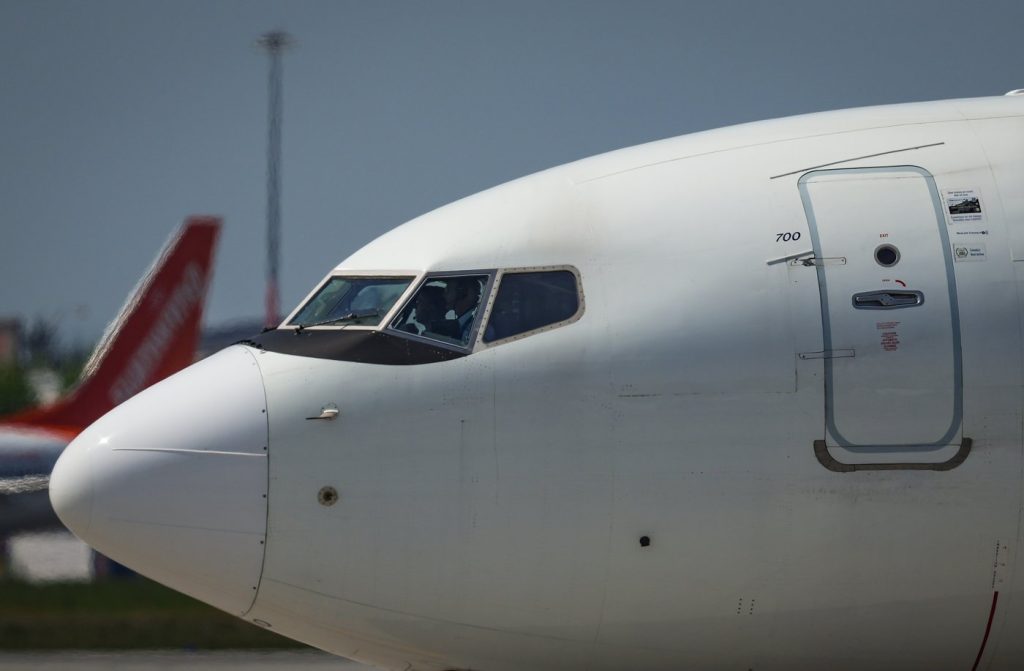
An incident involving an Air India pilot led to the arrest of the crew member at Vancouver International Airport on December 23, raising significant concerns regarding airline compliance with regulations pertaining to alcohol consumption. Transport Canada announced that it would closely engage with Air India and Indian aviation authorities to ensure necessary follow-up actions are taken.
The Richmond Royal Canadian Mounted Police (RCMP) responded to a report concerning the airline crew member, which resulted in the pilot being removed from the flight in preparation for Air India’s scheduled service from Vancouver to Delhi. Subsequent investigations are ongoing, and the police have stated that no further information will be released at this time.
According to a spokeswoman for the airport, the flight was delayed for several hours but successfully departed later. The Air India spokesperson confirmed via email that the scheduled flight was held up after the offloading of one of its cockpit crew members. Canadian authorities expressed concerns regarding the pilot’s fitness for flight, which necessitated further inquiry into the situation.
Air India stated that it had followed safety protocols by rostered an alternative pilot to operate the flight, resulting in the delay. The airline has expressed full cooperation with local authorities and confirmed that the involved pilot has been suspended from flying duties during the ongoing investigation.
Highlighting its commitment to safety, Air India emphasized a zero-tolerance policy for any violations of applicable regulations. The airline noted that any confirmed violation following the inquiry would lead to strict disciplinary measures in accordance with company policy.
Flight tracking data from FlightRadar24 indicated that the Air India flight from Vancouver to Delhi, with a stop in Vienna, was originally scheduled to take off at 3 p.m. but did not leave the airport until 10:02 p.m. Reports from Indian media have suggested that the pilot failed a breathalyzer test, raising alarms about adherence to safety protocols.
Transport Canada reiterated in its statement that the Directorate General of Civil Aviation of India holds primary responsibility for overseeing Air India’s regulatory compliance. Furthermore, the agency expressed its commitment to taking immediate action if any safety concerns arise during the investigation. Canadian regulations explicitly prohibit pilots and crew members from operating within 12 hours of consuming alcohol or while under its influence, emphasizing that airlines are not permitted to assign unfit crew to flights.
The statement also underscored that failure to comply with these regulations could lead to severe repercussions for airlines, including the potential suspension or cancellation of a Canadian Aviation Document under the Aeronautics Act, as well as judicial and other penalties. Transport Canada highlighted that ensuring the safety and security of the traveling public remains its top priority.
This incident is particularly notable in light of previous aviation tragedies, such as the catastrophic crash of an Air India flight bound for London in June, which resulted in the deaths of 241 people shortly after takeoff. The ongoing scrutiny and investigation into this recent event reflect a broader commitment to aviation safety and regulatory compliance in the airline industry.