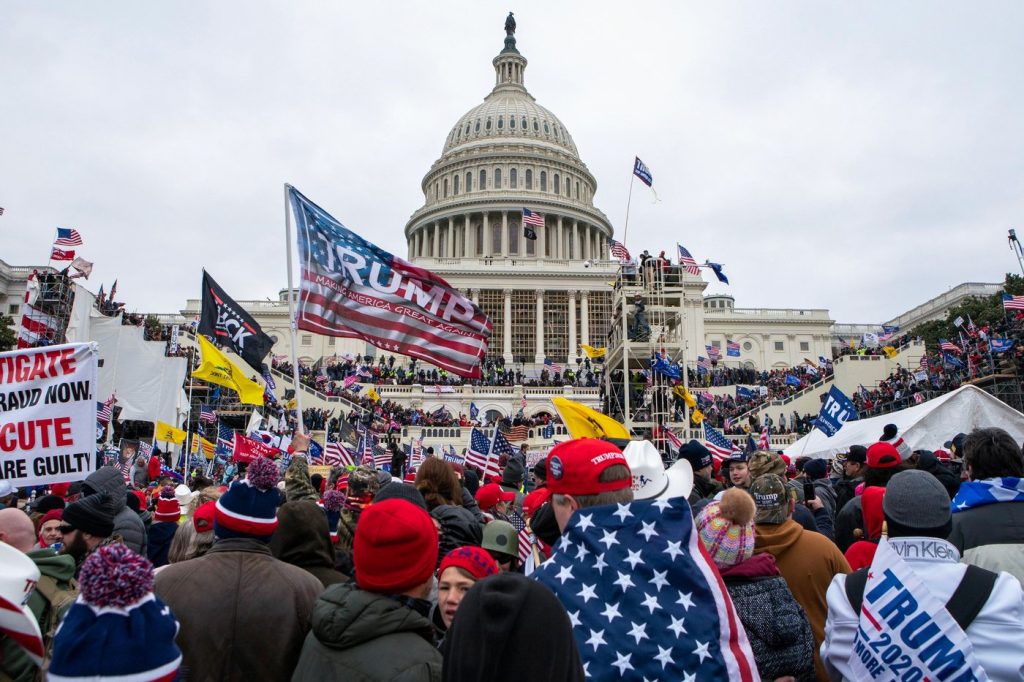
WASHINGTON (AP) - A week after the United States commemorated the fifth anniversary of the January 6, 2021, Capitol attack, the narrative surrounding that day is being reconsidered by the current ruling party. The House GOP's new Select Committee on the January 6 attack held its inaugural hearing on Wednesday, primarily focusing on the FBI's investigation into the pipe bombs found outside the Democratic and Republican party headquarters that day. After several years of investigation, the FBI arrested a suspect last month.
However, the hearing quickly transformed into a platform for revisionist views as Republicans introduced alternative theories regarding the motives behind the mob violence perpetrated by supporters of then-President Donald Trump. Some committee members suggested that the rioters were misled into attacking the Capitol, a violent event that was broadcast globally.
During the session, Rep. Barry Loudermilk, the chairman of the committee, acknowledged the ongoing discussions about conspiracy theories surrounding the incident. He expressed his objective to uncover the truth. Nonetheless, Rep. Jamie Raskin, the top Democrat on the panel, strongly opposed the revisionist agenda put forth by the GOP committee, stating, "The truth is a resilient thing. We're not going to put up with a pack of lies in this subcommittee and a bunch of conspiracy theories."
The aftermath of January 6 continues to haunt Congress and the nation, as Americans grapple with the events of that day when Trump urged his supporters to "fight like hell" during Congress's certification of the 2020 election results for Democrat Joe Biden.
This recent hearing marks the second instance of House Republicans launching a new committee to investigate January 6 since they regained control, this time countering the findings of the original panel. The earlier committee, established by former Speaker Nancy Pelosi shortly after the riot, held Trump accountable for inciting the violence as part of his efforts to overturn Biden's election victory. While Trump was impeached for his role, he was acquitted by the Senate.
Many Republicans remain skeptical about the events of January 6. Rep. Troy Nehls of Texas, who was present during the riot, labeled the original committee a "total sham" and dismissed the testimony of police officers who described their injuries during the violent outbreak as "highly scripted" and composed by "Trump haters." The GOP pointed fingers at specific instigators, claiming that certain militia groups involved in the siege were entrapped by federal agents.
Stewart Rhodes, the founder of the Oath Keepers, attended the hearing and was previously convicted of seditious conspiracy for his involvement in the insurrection. Additionally, the Republicans claimed that the pipe bombs found that day may have been part of an inside job intended to divert law enforcement during the Capitol siege.
During the hearing, lawmakers scrutinized the lengthy investigation into the pipe bombs, especially following the FBI's recent arrest of Brian Cole Jr., who is accused of placing the devices. Some committee members, like Rep. Morgan Griffith of Virginia, expressed concerns about the apparent failures of law enforcement to detect the bombs on January 6, speculating about the possibility of a cover-up.
Trump's pardons of January 6 rioters also became a focal point of discussion, with Raskin highlighting how many of those pardoned have since committed other crimes. Mike Romano, a former Justice Department prosecutor, criticized the pardons as "ill-advised," noting that many of the pardoned individuals appeared to celebrate and distort the narrative of their actions during the Capitol riot. When questioned about whether Trump's pardons would extend to Cole if convicted in the pipe bomb case, Romano stated it remains an open question, highlighting lingering uncertainties surrounding legal ramifications.