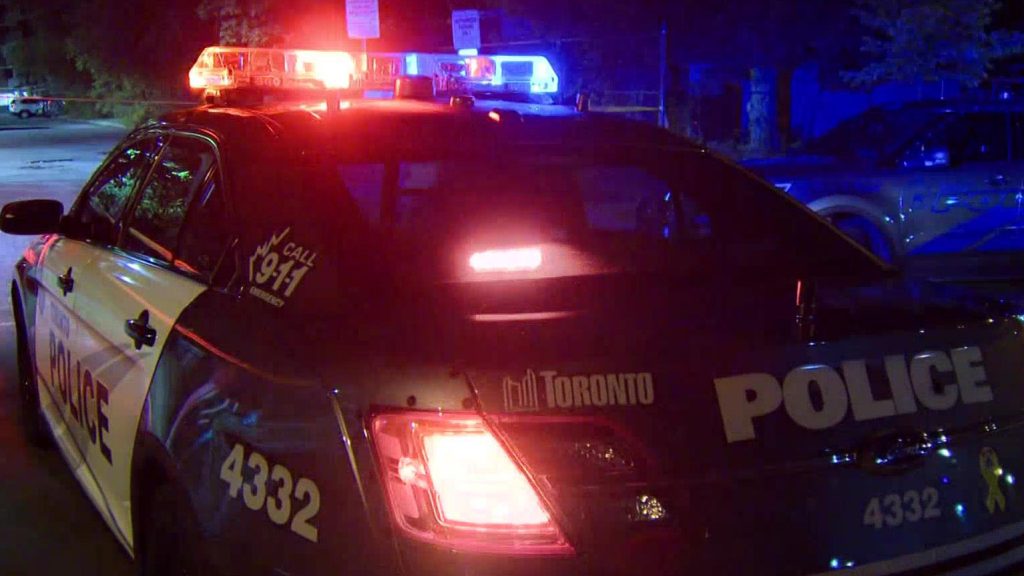
Toronto police Deputy Chief Frank Barredo defended the implementation of a new ban on pro-Palestinian demonstrations in residential areas of a predominantly Jewish community in North York. During a news conference on Tuesday, he characterized the ban as a "reasonable limitation" on charter rights.
The ban permits demonstrations in the busy intersection of Bathurst Street and Sheppard Avenue but prohibits protesters from moving into the quieter residential side streets in that vicinity. Barredo stated, "People can still protest at Bathurst and Sheppard, people can still protest along Bathurst and along Sheppard, but what we will be preventing is movement into residential areas, in and around the Bathurst and Sheppard area."
Individuals who defy the new regulations will initially receive a verbal warning, but could face arrest and charges of obstructing police should they not comply. This area has seen an uptick in demonstrations following the Hamas attack in Israel on October 7.
Barredo clarified that the ban is currently limited to this specific area, noting, "At this time this is a localized direction," though he indicated that it could be expanded as deemed necessary. He emphasized that the Toronto Police Service (TPS) has carefully balanced the rights of demonstrators with the concerns of local residents, labeling the ban a "reasonable limitation" based on "the totality of the circumstances."
The Deputy Chief underscored, "(This) is not so much about curtailing charter rights any more than absolutely necessary… we take limitations on that (charter rights) very seriously." He reiterated that protests are still allowed on the main streets, with police focusing on restricting access to quiet residential areas where residents reside.
The move has been met with mixed reactions; it was praised by some, including city councillor James Pasternak, who described the ban as "long overdue." Conversely, it has faced opposition from the Canadian Civil Liberties Association (CCLA), which raised alarms about potential violations of Charter-protected rights related to freedom of expression and assembly. Fundamental Freedoms Director at the CCLA, Bussières McNicoll, argued, "Public space belongs to the people. A democracy is no longer healthy if the police silence peaceful dissent and act as the arbiter of acceptable protest speech and location."
Barredo countered that these charter rights remain subject to "reasonable limits," asserting that the police believe their actions meet this standard. He stated, "We've thought long and hard about this and we've sought legal advice about how it balances." He acknowledged that civil libertarians might oppose the strategy but maintained that the police are acting reasonably given the circumstances.
Toronto Police Announces New Counter-Terrorism Security Unit
In a separate initiative, Toronto Police Chief Myron Demkiw revealed two new efforts aimed at preventing, detecting, and disrupting extremist violence and terrorism while reassuring community members. During the same press conference, he cited increased global volatility and heightened polarization, which have contributed to the establishment of a new TPS counter-terrorism security unit that will provide additional resources directed toward combating terrorism and extremism.
Chief Demkiw highlighted a rise in hate-motivated incidents locally, including a series of synagogue shootings, stating, "We need to have the proper resources to face these new realities." The new counter-terrorism unit will enhance information sharing among law enforcement agencies, emphasizing that the initiative is "about being proactive."
Additionally, Demkiw introduced Task Force Guardian, which will increase police visibility at places of worship and popular tourist destinations. This response is designed to deter violence and reassure concerned communities. The Chief noted that members of this task force would possess tactical capabilities, including patrol rifles, but clarified that their presence does not indicate any imminent threat to public safety.