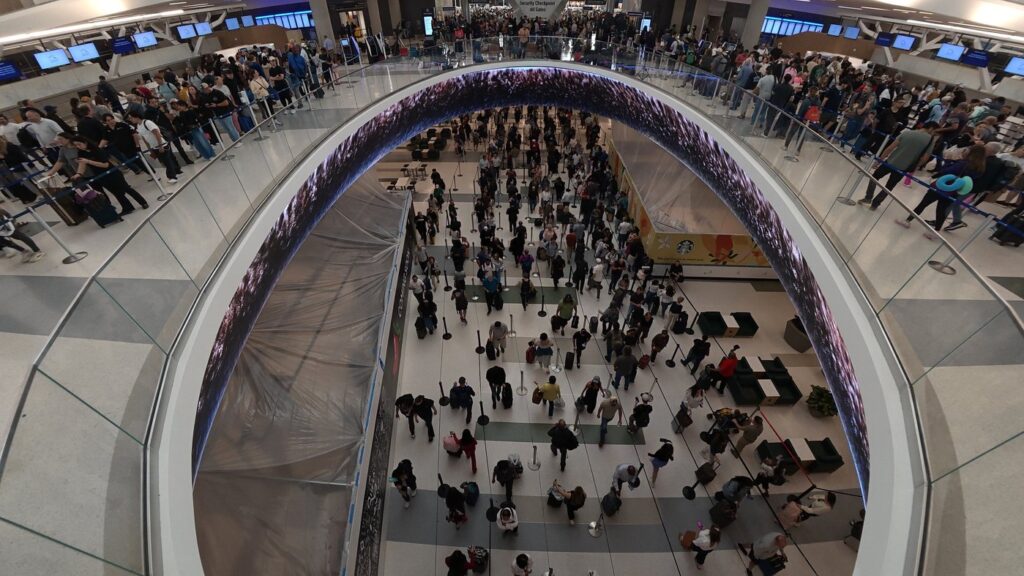
During a critical moment in the ongoing budget impasse, President Donald Trump announced his plans to sign an executive order aimed at ensuring immediate compensation for Transportation Security Administration (TSA) agents. The announcement comes as senators are working tirelessly to resolve a 42-day funding stalemate affecting the Department of Homeland Security, which has led to increased travel disruptions and financial woes for TSA workers.
In a social media post, Trump expressed urgency in resolving the situation, aiming to “stop the Chaos at the Airports.” His decision to pay TSA agents will utilize funds from his 2025 tax bill, according to a senior administration official who spoke under the condition of anonymity. This approach circumvents the contentious possibility of invoking a national emergency to fund TSA operations, a move fraught with political and legal implications.
Simultaneously, senators have been negotiating through the night on a budget package designed to fund as many aspects of the Department of Homeland Security as possible, including critical agencies such as the Federal Emergency Management Agency (FEMA) and the Coast Guard. However, Democrats have insisted on implementing restrictions on Homeland Security officers who carry out immigration enforcement, linking this to their support for funding those operations.
Senator John Barrasso of Wyoming, the GOP whip, commended the president's decision by stating, “The president is doing absolutely the right thing. The TSA agents are going to be paid.” Nevertheless, the government shutdown has led to significantly increased wait times for travelers, with reports indicating that airports have seen TSA worker callout rates exceeding 40% in some locations. Nearly 500 of the TSA's 50,000 officers have resigned during this shutdown period.
As the funding stalemate continues, frustrations mount for travelers. An example includes Melissa Gates at George Bush Intercontinental Airport in Houston, who was unable to board her flight to Baton Rouge, Louisiana, after enduring a wait of over 2.5 hours to get through security, only to miss her flight. She remarked, “I should have just driven, right? Five hours would have been hilarious next to this.”
Senate Majority Leader John Thune from South Dakota communicated a “last and final” offer to Democratic leaders on Thursday, although specific details of the proposal were not disclosed. Thune mentioned that the new framework builds upon earlier negotiations that had stalled over the weekend.
Democrats have raised concerns that the GOP's proposals fail to adequately address safeguards for agents from Immigration and Customs Enforcement (ICE) and Customs and Border Protection (CBP), especially in light of recent protests and fatalities linked to immigration enforcement actions. Democrats are pushing for federal agents to be identifiable, to avoid conducting raids near sensitive locations like schools and churches, and to require judicial approval for home searches.
Senate Democratic leader Chuck Schumer of New York emphasized the need for genuine alterations to existing practices. While Trump had previously allowed Congress to take the lead on this issue, he warned of the potential for drastic measures if the standoff continues, hinting at deploying the National Guard to airports alongside ICE agents who are currently monitoring travelers’ identification.
Notably, the significant tax cuts signed into law by Trump last year allocated billions to DHS, with $75 billion designated for ongoing ICE operations, which has allowed immigration officers to continue receiving paychecks during the budget impasse. Despite ongoing negotiations, any prospective agreement will likely necessitate concessions from both sides, as lawmakers from the far-right and progressive factions express dissatisfaction with their party's approaches to the issue.