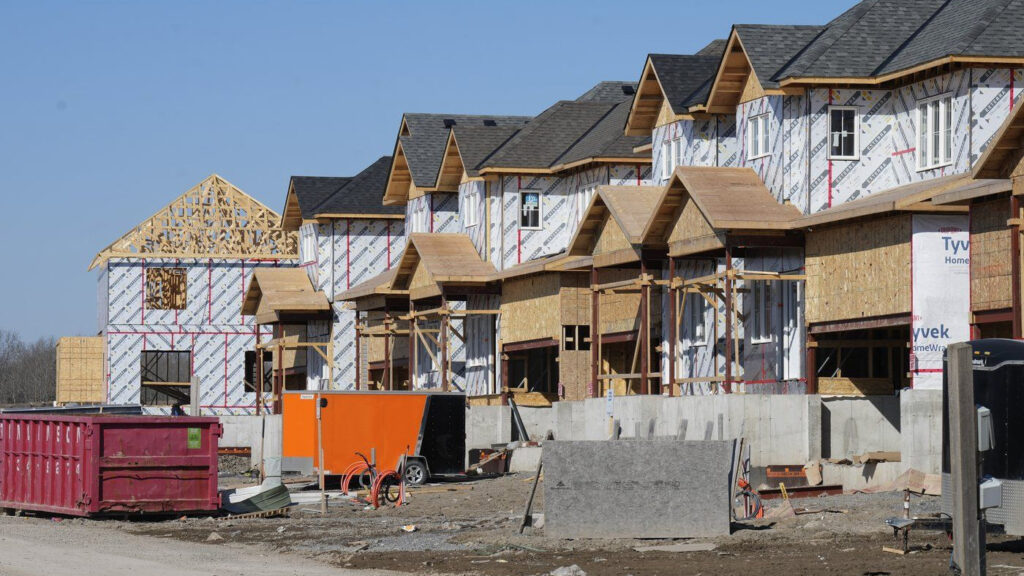
Ontario's housing start projections have been revised downward once again in the province's budget, signaling a significant deviation from the government's ambitious goal of building 1.5 million homes over the next decade. The latest projections estimate only 64,800 housing starts for this year, which is a reduction of 10,000 starts from last year's budget expectations and 30,000 fewer than what was initially outlined in the 2024 plan.
The government had previously calculated that an annual average of 175,000 housing starts would be necessary to reach the 1.5 million homes goal by 2031, a target that was established in a more favorable economic climate back in 2022. Municipal Affairs and Housing Minister Rob Flack acknowledged that current conditions have changed significantly, stating, “It was a goal set in 2022 when we had robust housing starts. We don’t today.”
Finance Minister Peter Bethlenfalvy also suggested that the target is no longer a primary focus for the government. Last year, he had referred to the 1.5 million homes target as a "soft target," indicating a pivot away from the previously emphasized goal. During the recent budget announcement, both Flack and Bethlenfalvy were hesitant to discuss the target in detail. Instead, Bethlenfalvy remarked, “I’m not focused on the target. I’m focused on what we can do today to make it more affordable for people to own homes,” while Flack echoed this sentiment regarding affordability as a newer immediate goal.
In an effort to stimulate the housing market, the government introduced a temporarily expanded HST rebate for buyers of newly constructed homes, with hopes that this measure could help achieve the addition of around 8,000 new units. While home builders have welcomed this initiative, they are advocating for reduced fees, including development charges that municipalities impose to fund infrastructure for new housing developments.
Furthermore, the budget outlines a collaborative effort between Ontario and the federal government aimed at reducing development charges, which cities utilize for housing-enabling infrastructure such as roads and utilities. Despite the government's attempts to navigate high inflation rates, escalating construction costs, and labor shortages impacting the housing industry, critics argue that the government's execution of its housing goals has been lacking.
Interim Liberal Leader John Fraser criticized the government's approach, stating, “They didn’t have a plan, and … they should have built the plane before they got in the air.” He acknowledged the complications involved in addressing the housing issue but urged the government to set realistic expectations. Green Party Leader Mike Schreiner further contended that the government should increase support for alternative housing options, such as multiplexes, mid-rise buildings, and deeply affordable cooperative or supportive housing models. He expressed disappointment, asserting, “This government was elected on the promise of 1.5 million homes and is utterly failing to deliver.”
Meanwhile, the New Democratic Party (NDP) has been advocating for the establishment of a public builder to enhance housing development, although Flack has categorically ruled this out. NDP housing critic Jessica Bell highlighted the ongoing challenges in the housing market, noting, “It’s expensive to rent, it’s hard to find a home to buy and homelessness is just going from bad to worse.” She criticized the budget for lacking measures to re-engage the government in the direct provision of housing.