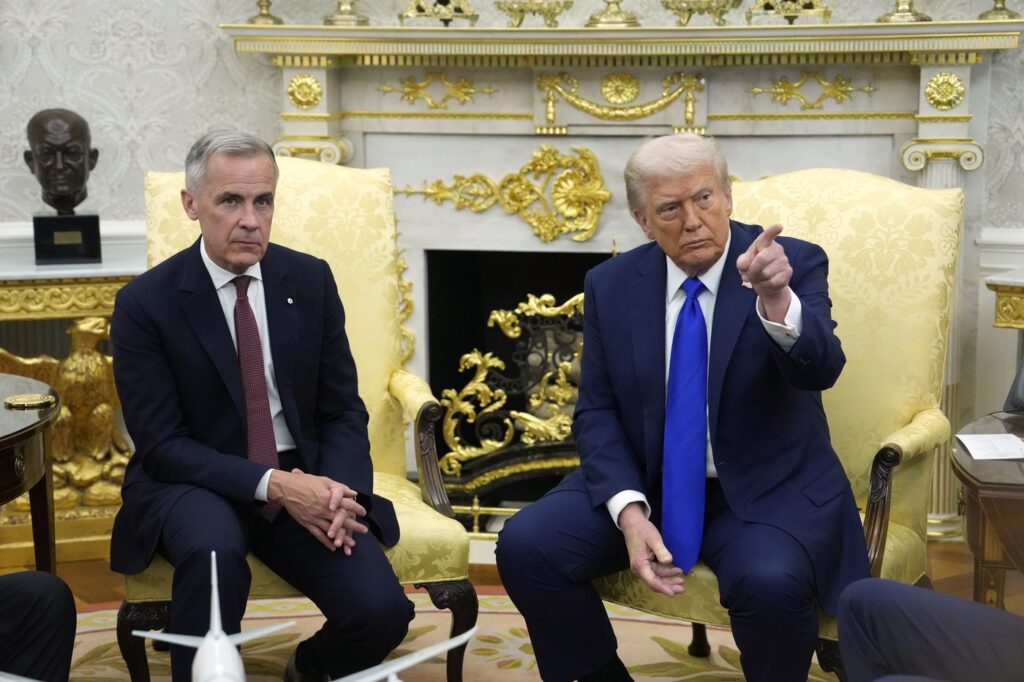
LONDON (AP) — U.S. President Donald Trump is contemplating a withdrawal of the United States from NATO, amplifying his criticism of European allies and widening a rift within the trans-Atlantic alliance amid the ongoing Iran conflict. In comments to The Telegraph, Trump indicated this possibility more definitively than ever before, suggesting that the relationship has deteriorated significantly.
When asked if he would consider U.S. membership in NATO after the conflict in the Middle East, Trump replied affirmatively, saying, “Oh yes, I would say (it’s) beyond reconsideration.” NATO has refrained from immediately commenting on Trump's remarks.
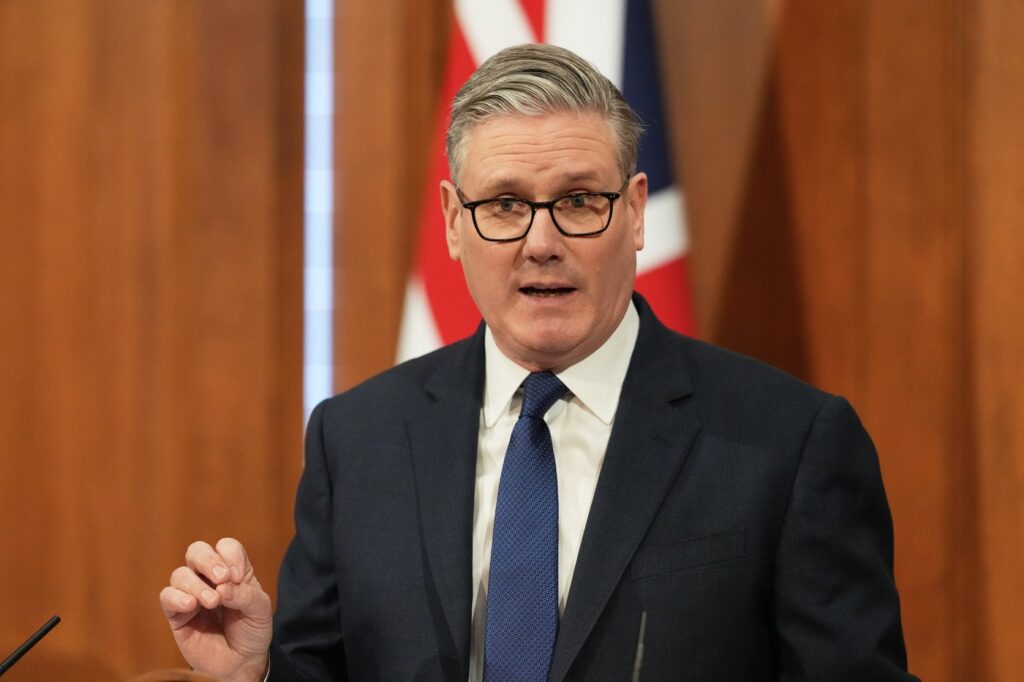
U.K. Prime Minister Keir Starmer reaffirmed his government’s commitment to NATO, describing it as “the single most effective military alliance the world has ever seen.” The conflict in Iran has placed considerable political pressure on many European leaders, especially as it has driven up energy prices and raised concerns over security for vital shipping routes like the Strait of Hormuz, where approximately one-fifth of the world’s oil is transported.
Responding to the situation, Starmer emphasized, “Whatever the pressure on me and others, whatever the noise, I am going to act in the British national interest in all the decisions I make.” Speculation regarding the implications of the war has sparked renewed criticisms of NATO, particularly directed at allies for not providing sufficient support in the region.
Over the years, Trump has vocally urged NATO allies to bear more responsibility for their own defense, claiming that the U.S. has disproportionately supported them. The potential for a U.S. exit from NATO raises questions about the future of the alliance, which has historically depended on American leadership for its effectiveness.
During an interview on Fox News, U.S. Secretary of State Marco Rubio suggested the need to “reexamine whether or not this alliance that has served this country well for a while is still serving that purpose.” He voiced concerns about NATO becoming a “one-way street” where the U.S. provides security but is denied reciprocal support from European allies.
Such criticisms could heighten anxieties within NATO regarding the U.S. commitment to the alliance under Trump’s administration. The possibility of a U.S. pullout could not only end NATO as it stands but also weaken its collective deterrence, particularly in light of ongoing tensions with Russia.
The U.K. is proactively working on plans to ease Trump’s concerns. British Foreign Secretary Yvette Cooper is set to host a virtual meeting on security initiatives in the Strait of Hormuz, aiming to bolster the protection of maritime shipping routes post-conflict. Starmer noted that military planners will also devise a security plan for the strait.
NATO's foundation lies in Article 5, which commits all member nations to collective defense in the event of an attack on one of them. With conflicts expanding, including missile strikes near NATO member Turkey and the British military base in Cyprus, questions arise about NATO’s potential for collective defense and intervention.
Despite the ongoing challenges, NATO Secretary-General Mark Rutte has concentrated on the Russia-Ukraine war, citing its proximity to NATO member states. NATO decisions require consensus, making the invocation of Article 5 particularly complex, as it necessitates agreement from all member countries.
A U.S. withdrawal from NATO would not be instantaneous, as legislation passed under President Joe Biden mandates that any exit requires the approval of two-thirds of the Senate or specific congressional authorization.
European leaders have been calling for a cessation of hostilities in the Middle East and pressing for negotiations to address Iran's nuclear program, seen as a potential threat by the U.S. and Israel. Resistance to Trump’s military operations in the region has manifested in various forms, such as Spain closing its airspace to U.S. military flights and Italy denying U.S. bombers permission to land at a Sicily air base for operations related to the Iran conflict.
Political analysts, like Franco Pavoncello from John Cabot University in Rome, suggest these actions might have significant political repercussions for European leaders, emphasizing that appearing too submissive to U.S. interests could damage their standing domestically and within the EU.
The strained relations between the U.S. and Europe have been exacerbated by prior incidents, including Trump’s controversial proposal regarding Greenland, further uniting EU nations against perceived American overreach.