The annual report released by the Office of the United States Trade Representative has identified various trade irritants between Canada and the United States, particularly focusing on provincial alcohol regulations and the federal government's "Buy Canadian" procurement policy. These barriers have been noted to significantly impede U.S. exports of wine, beer, and spirits into Canada.
The report indicates that several Canadian provinces had removed U.S. alcoholic beverages from their shelves in response to tariffs imposed by former U.S. President Donald Trump. The United States is now urging that the market access for its alcohol products be restored "immediately and permanently." This situation highlights ongoing tensions surrounding trade policies that impact the free movement of goods across borders.
Additionally, the report critiques the Canadian government's "Buy Canadian" policy, which aims to prioritize Canadian goods and labor in contracts valued at $25 million or more. U.S. companies have expressed concerns regarding barriers they face in competing for these contracts, which include requirements to disclose information about their boards of directors and demonstrate the independence of their Canadian subsidiaries from U.S. parent companies.
Other issues highlighted in the report include inefficiencies related to aircraft validation processes in Canada and excessively high tariffs on U.S. dairy products. U.S. imports exceeding quota levels are faced with extremely high tariffs, with cheese subjected to tariffs as high as 245% and butter up to 298%. This has created significant challenges for U.S. dairy exporters.
In 2025, U.S. goods exports to Canada totaled approximately $336.5 billion, reflecting nearly a four percent decline from the previous year. Despite this, Canada remains the second-largest market for U.S. goods exports. Trade discussions between the U.S. and Canada related to the comprehensive review of the Canada-U.S.-Mexico Agreement (CUSMA) are reportedly lagging behind those with Mexico, according to United States Trade Representative Jamieson Greer.
Greer has indicated that negotiations with Mexican counterparts are advancing, while similar talks with Canada appear to be stalled. CUSMA, which replaced the North American Free Trade Agreement (NAFTA) during the first Trump administration, has offered Canada and Mexico some protection from the adverse effects of Trump’s tariffs. However, Canada continues to face tariffs from Trump in several sectors, including steel, aluminum, and automotive industries.
The Trump administration has also launched investigations under Section 301 of the Trade Act of 1974, targeting several countries, including Canada, due to concerns over forced labor within supply chains. This investigation is viewed as a tactic to reinstate Trump’s previously high tariffs following a U.S. Supreme Court ruling that limited presidential powers regarding tariffs. Although Canada has implemented measures intended to prevent the importation of goods produced using forced labor, it appears that enforcement of these regulations is ineffective, allowing such products to enter and compete in the Canadian market.
The report points out that these issues might artificially reduce costs, including labor expenses, providing certain Canadian goods an unfair competitive advantage. Greer has criticized the existing barriers that complicate bilateral trade talks and mentioned provincial restrictions on U.S. alcohol imports as a particular concern.
The relationship between Canada and the U.S. has been significantly affected during Trump's second term, characterized by the imposition of tariffs and contentious statements. CUSMA is set for review, leaving uncertainty around the future of the agreement, especially as Trump has deemed it irrelevant and suggested it may have fulfilled its purpose.
Greer has also proposed the possibility of abandoning the trade pact in favor of bilateral agreements solely with Canada and Mexico. The CUSMA review is set to present a three-way decision in July, allowing each country to either renew the agreement for an additional 16 years, withdraw from it, or indicate a desire for non-renewal, which could open the door for ongoing negotiations over the next decade.
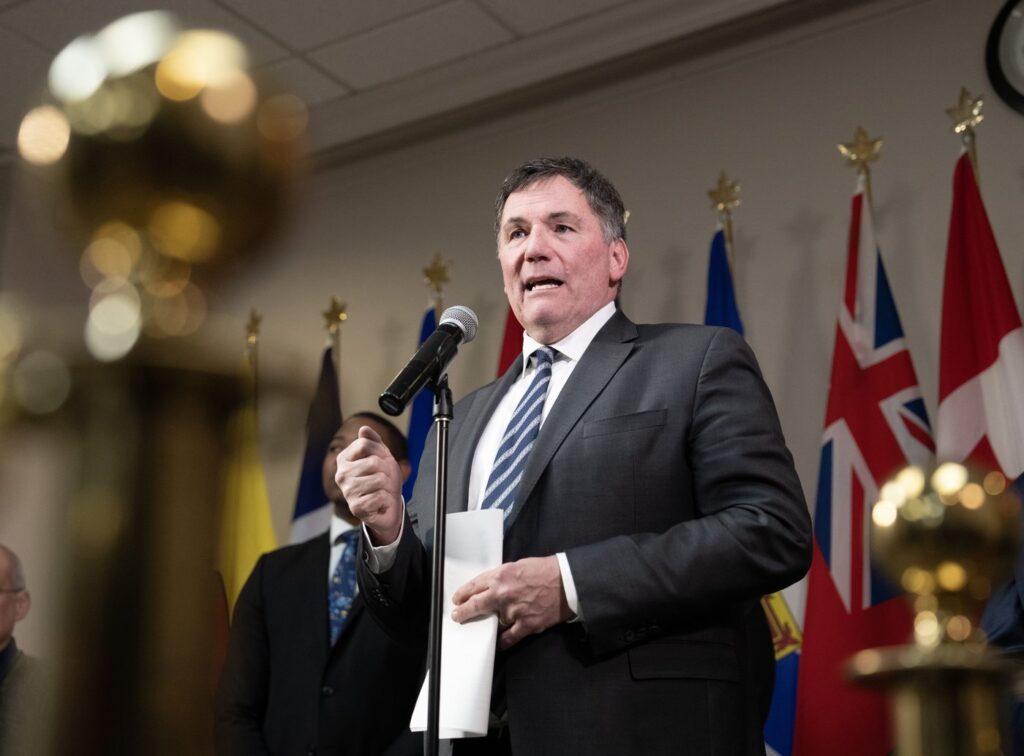
Both Ottawa and Mexico City have expressed a commitment to maintaining a trilateral agreement. Canadian Trade Minister Dominic LeBlanc recently led a significant trade mission to Mexico, with plans for a Mexican delegation to visit Canada in May.