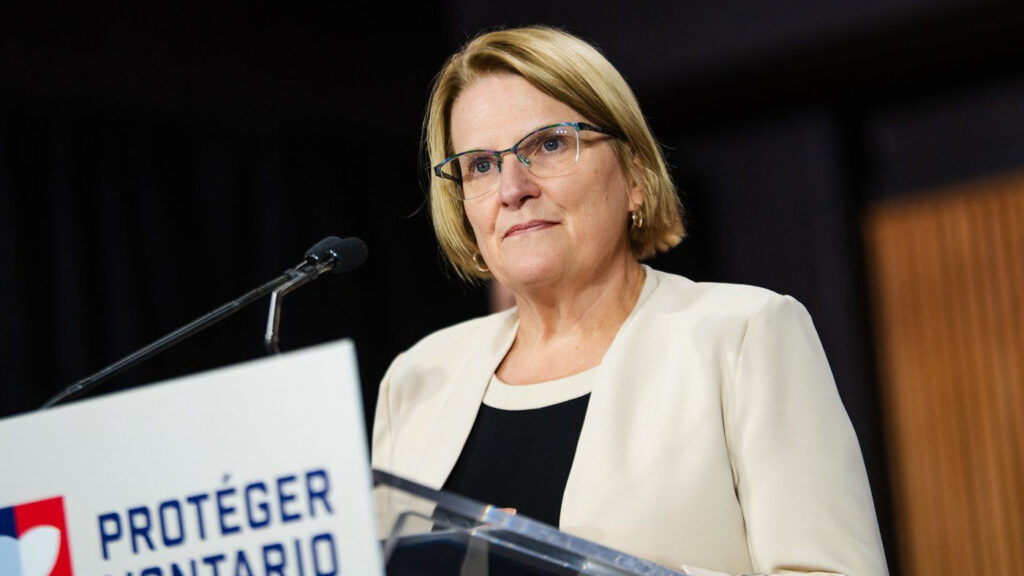
Ontario's Health Minister, Sylvia Jones, announced on Wednesday that the province will not be proceeding with plans to publicly fund all nurse practitioners’ services. This comes as Ontario missed a federal deadline for ensuring that nurse practitioner services, which are deemed medically necessary, receive equivalent funding to that of doctors. The federal government had mandated that provinces and territories comply with these funding requirements by April 1, though penalties for noncompliance will not be imposed until April 2027.
Despite previously advocating for changes to the Canada Health Act to address what she referred to as a “loophole” allowing nurse practitioners to operate subscription-fee-based clinics outside the public healthcare system, Jones indicated that Ontario has no specific plan in place at this time. She stated that the province would be compliant with the federal directive before the 2027 deadline but did not provide an exact timeline for when this compliance would occur.
After a recent question period, Jones elaborated on her vision for nurse practitioners, advocating for their integration into multidisciplinary teams and hospitals. She noted that the majority of nurse practitioners are already working within these settings, indicating a commitment to continuing this trend. In Ontario, nurse practitioners are registered nurses who possess additional university training and work in various environments, including hospitals and primary care settings. However, they encounter challenges in establishing nurse practitioner-led clinics, with only about two dozen currently receiving public funding, and they cannot set up independent practices within the public healthcare system.
Nurse practitioners have expressed a desire for more flexibility in funding models akin to those available to family doctors, who can operate on a fee-for-service basis or receive payments per enrolled patient. However, Jones dismissed the notion of altering the funding structure for nurse practitioners, stating that any changes to billing codes would need to be negotiated in partnership with the Ontario Medical Association (OMA). At present, there are no plans to change these arrangements.
The OMA, in response to the ongoing discussions, affirmed its support for nurse practitioners, advocating for their roles as integral members of collaborative, physician-led healthcare teams. They emphasized that working together in such teams could help optimize resources, alleviate pressure on physicians, and improve patient care.
Michelle Acorn, the CEO of the Nurse Practitioners Association of Ontario, raised concerns about the financial autonomy of nurse practitioners compared to other health professionals. She questioned the lack of flexible funding options available to nurse practitioners, emphasizing their capability and responsibility in providing care across the healthcare system while being constrained by existing payment structures.
Some nurse practitioners operating outside the public system have attempted to propose publicly funded clinics, yet their plans have consistently been rejected. Acorn highlighted the challenges faced by those not compensated through the public funding system, indicating that there needs to be a viable solution for them to deliver necessary care.
In light of the ongoing situation, Liberal primary care critic Adil Shamji urged the government to reimburse individuals who have to pay out of pocket for nurse practitioner services until Ontario extends public funding. He underscored the current affordability crisis and asserted that citizens should not have to choose between basic necessities and health care costs that should be covered by the public system.
Additionally, NDP Leader Marit Stiles expressed her support for nurse practitioners, citing their essential role in connecting more people with primary care services. She voiced her concerns about the competence of Health Minister Jones, criticizing the province's failure to meet the recent deadline for nurse practitioner agreements. Stiles highlighted the frustration many Ontarians experience when seeking access to primary care, particularly those who currently face out-of-pocket expenses for services that, in her opinion, should be publicly funded.
Minister Jones has set an ambitious goal of ensuring that every individual is attached to a primary care provider by 2029. Recently, she announced the acceptance of 124 successful proposals for new or expanded primary care teams, although the number of these proposals that involve nurse practitioner-led clinics remains unclear.