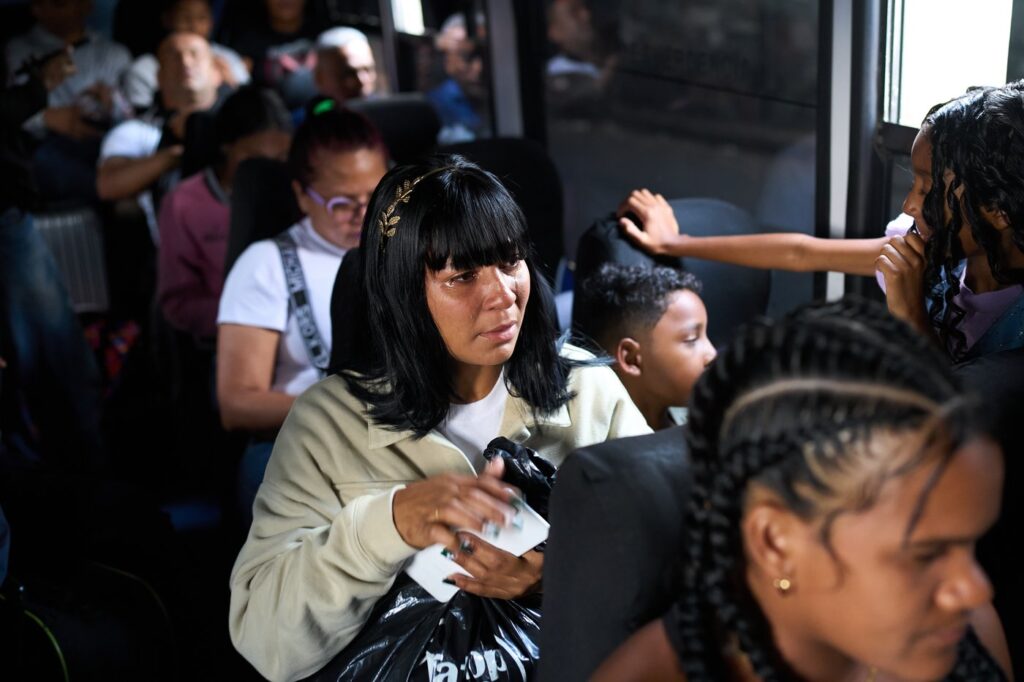
CARACAS, Venezuela (AP) – On Valentine’s Day, Mileidy Mendoza and Sandra Rosales stood vigil outside a detention center in Caracas as police officers called out the names of released prisoners. Among the 17 freed were 15 men and two women, all alleged political prisoners. This outcome was a result of relentless protests led by Mendoza, Rosales, and dozens of other women who were challenging the authoritarian Venezuelan government.'
The group of wives and mothers had camped out for 37 days, turning a dead-end street into a makeshift tent city while participating in prayer vigils, social media campaigns, and other forms of protest. Though elated for those who were released, Mendoza and Rosales felt a deep sense of despair as neither of their husbands had been called out. Their attempts to secure freedom for all political prisoners continued amidst hope and anxiety.
Motivated by the U.S. military's intervention and subsequent pressure on the Venezuelan government, the protests garnered attention. In January, Venezuelan authorities announced intentions to release political prisoners, prompting around 150 demonstrators to gather outside various detention facilities. However, human rights organizations claim that the government has been selective in its releases, with over 400 political prisoners still incarcerated.
Following the harsh reality of their husbands remaining imprisoned, Mendoza and Rosales had a simple breakfast of crackers and ham salad, vowing that it would be their last meal until their loved ones were freed. Mendoza insisted they would not give up, stating, “We must continue fighting for our goal, which is the release of all of them. Not one, not two, not 17, but all of them.”
The protests were initiated by women who had no prior political experience. Mendoza’s husband, Eric Díaz, was detained under accusations of plotting violence, while Rosales’s husband, Dionnys Quintero, faced similar allegations. The accusations bewildered both women, as they questioned the validity of the charges while their husbands were isolated from communication and legal support.
After the U.S. military captured Nicolás Maduro in January, pressure mounted on the Venezuelan government to act. This led Mendoza to connect with others in similar situations. Assembling outside a police station, the women faced hostility but also began to gain support and recognition, leading to visits with their detained husbands.
The women’s determination led to a series of meetings with lawmakers and coordinated efforts to increase support for political prisoners. They organized hunger strikes and camped outside detention centers. Their efforts culminated in further releases on March 6, when 25 more men were freed; however, the emptiness of their husbands’ continued confinement remained palpable.
In the following weeks, Mendoza and Rosales faced yet another setback. Their husbands were transferred to a harsher prison environment, notorious for poor conditions and mistreatment. Despite this, the women resolved to continue their vigil. Eventually, they received permission to visit their husbands, bringing children and personal gifts to the prison.
During the visits, conversations revolved around family updates and hopes for the future, but the bittersweet atmosphere was marked by the knowledge that true freedom remained elusive. As they held their husbands during these visits, they constantly reassured them of their commitment to secure their release.
Despite the emotional toll and the absence of their husbands, Mendoza and Rosales, along with other women, remained united in their fight against the repressive government. The struggle encapsulated not only their personal anguish but also a broader fight for civil liberties in Venezuela, as they continued to raise their voices for justice and freedom for all political prisoners.