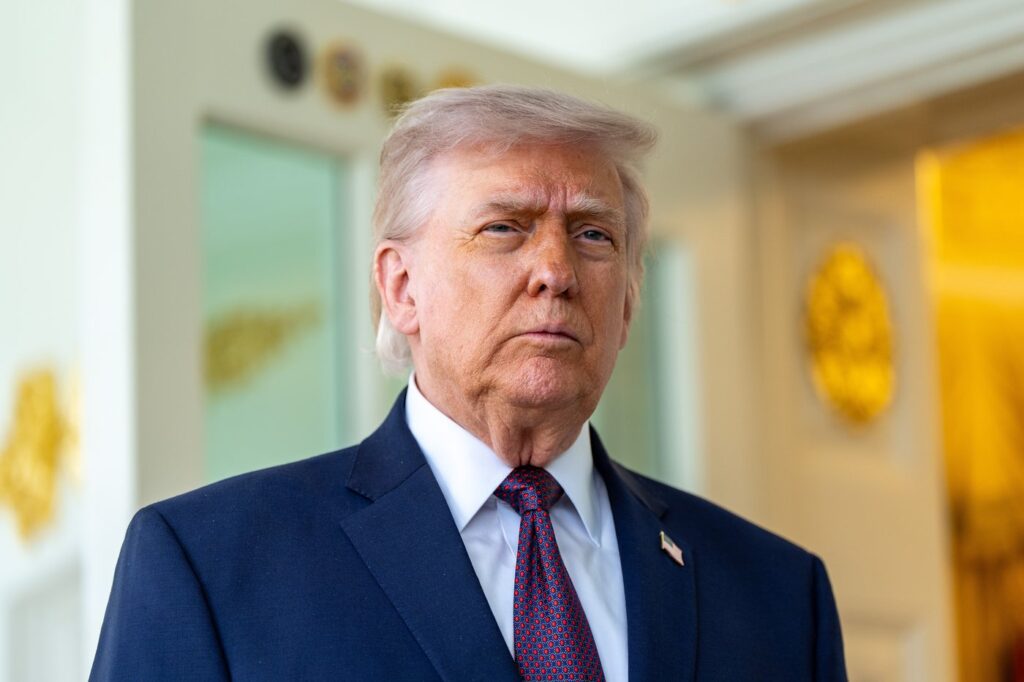
DUBAI, United Arab Emirates (AP) – President Donald Trump has taken a significant step regarding the U.S. military’s rules of engagement in the Strait of Hormuz, specifically ordering the Navy to "shoot and kill" small Iranian boats found deploying mines in the vital maritime route. This announcement was made on a Thursday, just a day after Iran conducted demonstrations illustrating its capability to disrupt the transportation of vessels through the strait, which is crucial for global oil transit.
In addition to this directive, Trump also extended a ceasefire in Lebanon by three weeks during a meeting with the ambassadors of Israel and Lebanon at the White House. His earlier post on social media included remarks about the small boats, mentioning that U.S. minesweepers are actively working to clear the Strait.
The escalation in military posture comes on the heels of the U.S. military seizing a tanker linked to the smuggling of Iranian oil, further intensifying the standoff with Tehran. The Strait of Hormuz, through which 20% of the world's crude oil and natural gas trade passes in peacetime, has become a focal point for tensions.
Trump emphasized the need for a more robust response, stating, "I am hereby ordering that activity to continue, but at a tripled-up level!" This assertion aligns with the ongoing complexities of U.S.-Iran relations, where discussions of potential negotiations remain stymied by existing hostilities. Negotiations set to take place in Islamabad, Pakistan have yet to occur, as Iran has demanded an end to American blockades on its ports and ships before re-engaging in talks.
Amid these developments, Pope Leo XIV, upon returning from Africa, urged both the U.S. and Iran to return to the discussion table and seek an end to the ongoing conflict. This highlights the international community's concern over the escalating military actions and diplomatic impasses.
The Defense Department has released footage showing U.S. forces on the captured Guinea-flagged oil tanker Majestic X, which was intersected in the Indian Ocean. The tanker had a previous moniker, Phonix, and was under U.S. sanctions for smuggling Iranian crude oil, which violates U.S. sanctions laws against Iran.
Further complicating matters, Iranian officials have echoed defiance, asserting that the U.S. lacks the courage to confront Iran directly in the Strait of Hormuz. Gholam Hossein Mohseni Ejei, head of Iran's judiciary, reinforced this sentiment, claiming that Iranian forces have displayed considerable strength in the region.
As tensions remain elevated, Trump has attempted to project an image of control over the situation, inviting speculation about a potential leadership rift within Iran. He remarked on difficulties faced by Iranian leadership in forming a cohesive response amid the ongoing hostilities, despite clear denunciations from Iranian officials who insisted on national unity.
In tandem with the military escalation, Trump has confirmed that three aircraft carriers have been deployed to the region as a show of force, further underscoring the high stakes in the Gulf. The ceasefire extension between Lebanon and Israel, which previously commenced after intense conflict, reflects the precarious nature of peace in the region, with both sides accusing each other of violating the terms.
Moreover, the ongoing conflict since February 28 has resulted in over 30 attacks on ships within the Persian Gulf and adjacent waters. The resulting threat to shipping routes has induced steep insurance premiums and elevated concerns among maritime companies about the stability of transit through the Strait of Hormuz, which Iran has demonstrated its capacity to control.
Jakob Larsen, the head of maritime security for BIMCO, noted that a return to normal shipping levels is contingent on a stable ceasefire and guarantees for security from both warring factions in the ongoing conflict.