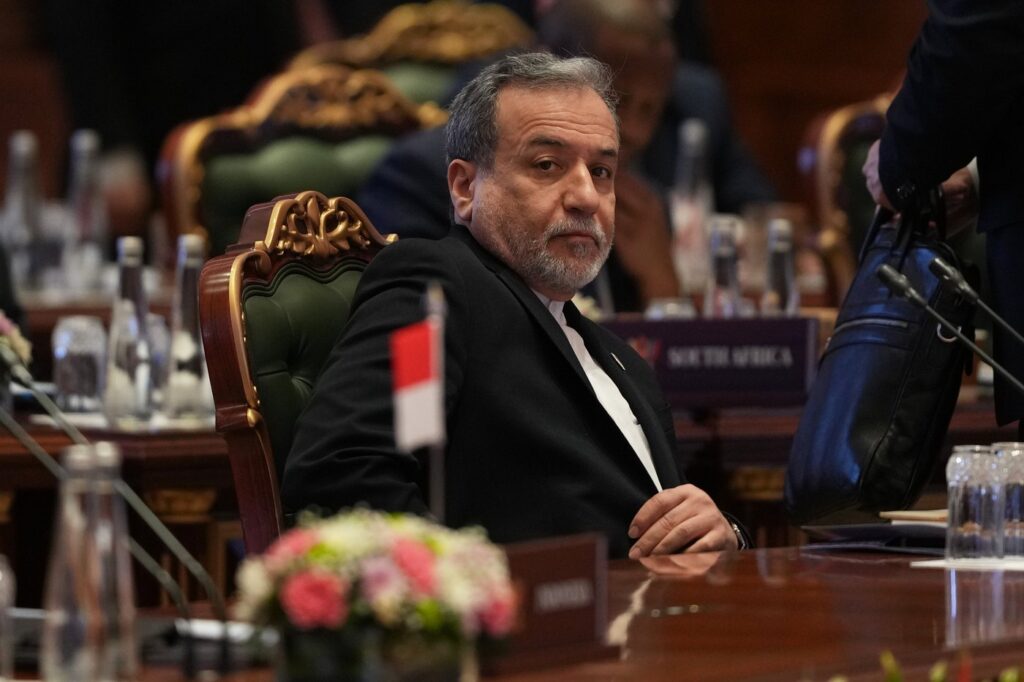
NEW DELHI (AP) – Iran's Foreign Minister Abbas Araghchi emphasized that the greatest challenge in the negotiations with the U.S. to end the ongoing war is the lack of trust between the parties. Speaking in New Delhi, he mentioned that Tehran is open to receiving diplomatic assistance, particularly from China, to help reduce tensions.
Araghchi expressed concerns about the contradictory messages from the U.S., which have left Iran doubtful about the seriousness of American intentions. He indicated that productive negotiations could proceed if Washington shows readiness for a "fair and balanced deal." Recently, U.S. President Donald Trump dismissed Iran’s latest formal proposal as "garbage," while Trump has insisted on the removal of highly enriched uranium from Iran to prevent the development of nuclear weapons. Iran maintains that its nuclear program is intended solely for peaceful purposes.
Amid the stagnant talks between Iran and the U.S., a separate ceasefire deal was reached between Israel and Lebanon, extending their agreement until early June. This development comes at a time when tensions in the Middle East are escalating, posing a risk of renewed open warfare and exacerbating the global energy crisis triggered by the ongoing conflict. Iran continues to exert control over the Strait of Hormuz, a critical waterway through which a significant portion of the world's oil was transported prior to the war, while the U.S. implements a blockade on Iranian ports.
During meetings held on May 15, Trump and Chinese President Xi Jinping recognized the urgent need to reopen the Strait of Hormuz. Araghchi welcomed China's potential diplomatic involvement, especially considering Beijing's previous successful role in facilitating relations between Iran and Saudi Arabia. However, public responses from China to U.S. requests for more involvement have been minimal, as Trump mentioned that Xi expressed willingness to help during their discussions.
Pakistan has also been actively pursuing diplomatic initiatives to ease regional tensions, although details of its discussions and any formal U.S. responses have not been disclosed. Pakistani Foreign Ministry spokesperson Tahir Andrabi remarked that the peace process is still functioning, asserting that the "clock on diplomacy has not stopped."
One major contention in negotiations remains Iran’s right to enrich uranium. Trump has demanded substantial reductions in Iran's nuclear activities, while Iranian leaders assert their right to continue enrichment. Israeli Prime Minister Benjamin Netanyahu, who played a crucial role in provoking the conflict alongside Trump, also demands the removal of Iran's highly enriched uranium.
Although Russia previously offered to take over Iran's uranium stockpile in exchange for its relinquishment, Araghchi noted that this proposal is not currently under active discussion but could be revisited in future negotiations.
In another region of the Middle East, Israel and Lebanon agreed to extend their ceasefire for an additional 45 days, allowing for negotiations toward a broader peace agreement. The U.S. State Department announced that discussions are set to reconvene on June 2 and 3, while a military dialogue will begin on May 29. Despite the ceasefire, Israel and Hezbollah have continued to exchange strikes, highlighting ongoing tensions in the region. Israel's military reported airstrikes against Hezbollah sites following hostile alerts, resulting in casualties and injuries in Lebanon.
In a related incident, a Chinese private security firm reported losing contact with a ship operating in the region, raising concerns about maritime security. The ship, Hui Chuan, was reportedly taken into Iranian waters for compliance inspections, as Iran reiterated its claim to control the Strait and its right to seize oil tankers associated with the U.S.
In response to the ongoing tensions, the United Arab Emirates is accelerating the construction of a new oil pipeline aimed at exporting oil independently of the Strait of Hormuz. This project, directed by Sheikh Khaled bin Mohammed bin Zayed Al Nahyan, is expected to double the UAE's export capacity through the port of Fujairah next year.