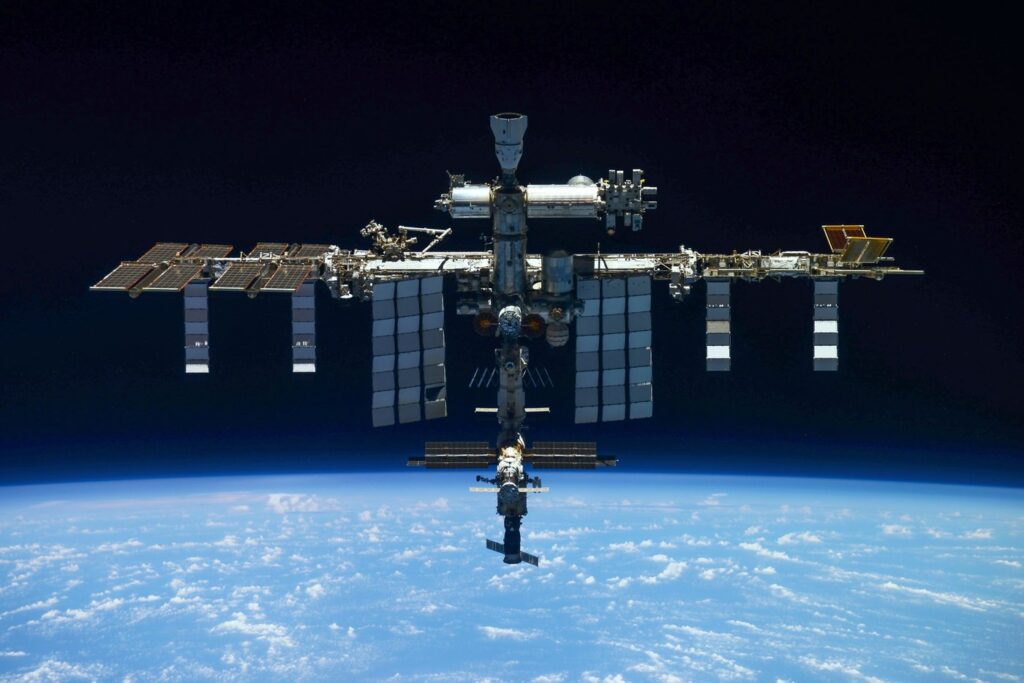
On Friday, NASA instructed its astronauts aboard the International Space Station (ISS) to temporarily take shelter as cosmonauts initiated repairs to address a new leak that was detected within the space station. This precautionary measure aimed to ensure the crew's safety while mitigating potential risks associated with the ongoing issue.
The five astronauts present on the ISS relocated to the SpaceX Crew Dragon capsule, which was docked at the station, while their Russian counterparts worked diligently to fix the leak that was identified on the Russian segment of the space station. Bethany Stevens, a spokesperson for NASA, stated the decision to evacuate to the capsule was made “out of an abundance of caution” to prioritize the safety of the astronauts during the repair operations.
After a while, the astronauts were able to leave the capsule and return to their regular duties aboard the ISS, indicating that the situation was under control, at least momentarily. The leak prompted a pause in repair efforts, allowing for further assessment of the issue before proceeding with the repairs.
The affected section of the space station has experienced a history of issues related to cracks and leaks over the years. NASA and Roscosmos, the Russian space agency, have been actively collaborating to ascertain the underlying causes of these recurrent problems. In light of recent findings, Roscosmos made the call for conducting a more comprehensive repair effort to address the fresh complications that had arisen with the leak.
This incident is not isolated; investigations into the structural integrity of the ISS are ongoing as engineers and scientists seek to understand the factors contributing to the deterioration of specific segments of the station. The operating environment in space presents unique challenges, and ensuring the astronauts' safety must remain a top priority for both NASA and Roscosmos.
Overall, this recent event highlights the collaborative efforts between different space agencies to maintain the integrity of the ISS and safeguard the astronauts who live and work there. The measures taken reflect a proactive approach to troubleshooting and problem-solving in the high-stakes context of human space exploration.
In summary, the ISS continues to be a focal point for international collaboration in space, facilitating scientific research and the advancement of human presence in low Earth orbit. The ongoing maintenance and repair activities underline the complexities of operating a long-term space station that has been in orbit for more than two decades.