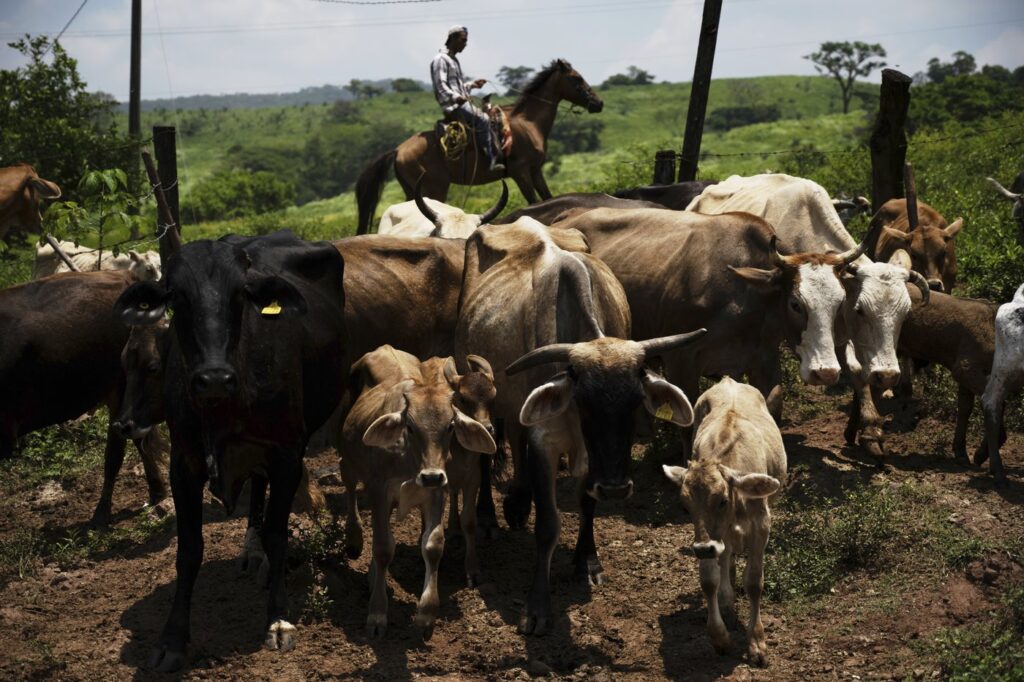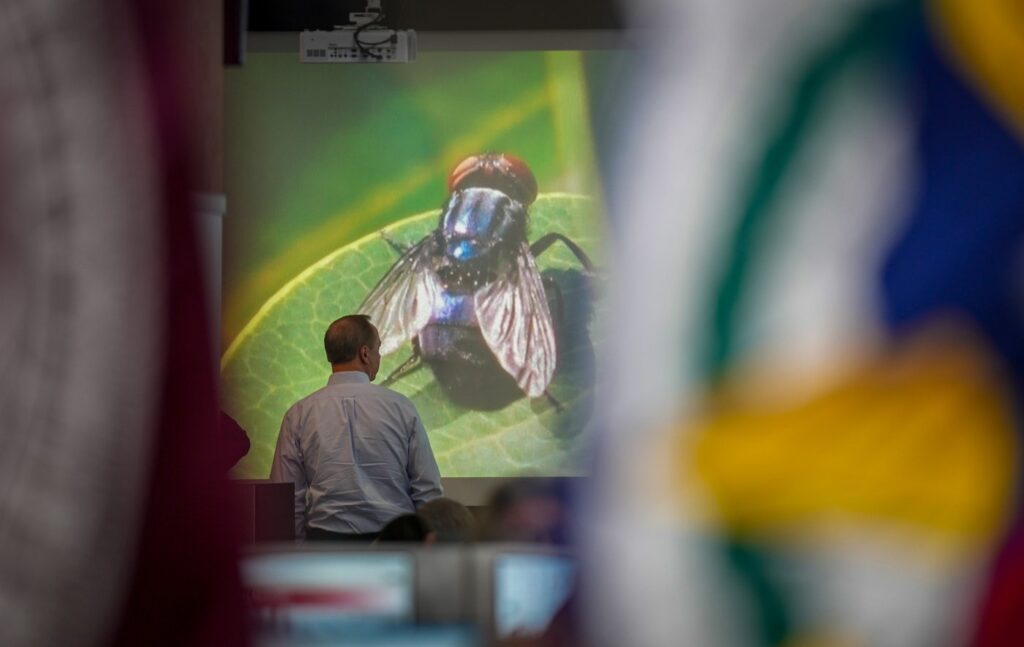
Texas Governor Greg Abbott expressed serious concerns on Friday regarding the timeline for a new factory designed to breed sterile New World screwworm flies, which is critical in combating infestations threatening the state’s US$113 billion cattle industry. Abbott highlighted that the factory, which is expected to cost about $750 million, will not be operational for over a year, adding urgency to the situation as he fears that without rapid production of sterile flies, the cattle population could face severe threats during the summer months.
The factory, located outside Edinburg, Texas, roughly 20 miles north of the U.S.-Mexico border, is a significant part of the U.S. Department of Agriculture's (USDA) response to the screwworm issue. Abbott has pledged that Texas is prepared to invest its own resources to accelerate construction efforts, stating he wants work to proceed “24 hours a day, seven days a week.” He emphasized the need for timely action in a news conference held in Austin, Texas, saying, “We cannot make it through a second summer” without increased sterile fly production.
Recently, the USDA confirmed an infestation of New World screwworm fly larvae in a 3-week-old calf located in La Pryor, Texas — marking the first case detected in the state since 1966. This situation has spurred heightened alarm among agricultural officials as they work to prevent a broader outbreak. The Edinburg facility is slated to be the larger of two fly-breeding facilities funded by the USDA, with the goal of eradicating the pesky fly from the U.S., Mexico, and Central America.
Aside from the factory in Texas, the USDA has invested $21 million to convert a site in southern Mexico from breeding fruit flies to breeding screwworm flies, which is expected to start producing flies next month at a rate of up to 100 million flies per week. The Texas breeding facility, described by Rear Admiral Michael Schmoyer of the USDA’s screwworm response team as the size of two Costco stores, is expected to generate up to 300 million flies weekly. Both facilities are deemed necessary for effective eradication efforts.
Abbott and USDA officials have expedited the planning and construction timeline for the new facility, aiming to have it operational sooner than its projected opening in November 2027. Officials recognize that the summer months pose a critical period in which the screwworm population could expand, making the immediate establishment of the breeding operations vital.
Abbott pointed out that while there are now numerous government-approved medications to treat livestock infested with screwworm larvae, the severe implications of untreated infestations cannot be overstated. He clarified that while there is a food production issue due to the infestation, there is no associated food safety crisis, stating, “There’s a food production issue, but not a food safety issue.”
According to Derrell Peel, a professor of agribusiness at Oklahoma State University, unless restrictions on cattle movement are imposed beyond local areas, the beef supply will not be significantly impacted. He believes current factors driving beef prices are more significant than the screwworm emergence. Consumers are currently facing record beef prices, and Peel anticipates further increases as ranchers withdraw heifers from the supply to rebuild their herds.
Historically, the New World screwworm fly has been a torment for U.S. cattle ranchers, with significant challenges existing from the 1930s to the 1960s. However, systematic breeding of sterile flies led to its elimination from the U.S. by the early 1970s. The challenge became pressing again with outbreaks resurging around the world in recent years, necessitating renewed efforts to manage and eradicate the fly population.
As part of the response effort, the USDA has already released approximately 130 million flies in Texas this year, mainly from aerial drops. These efforts continue, with strategic planning grounded in scientific models designed to predict the movement of screwworms across affected regions. Texas State Veterinarian Bud Dinges confirmed that monitoring traps have been set up as far as 120 miles from La Pryor to track fly migration and ensure effective response measures.