The chaotic buildup to the World Cup for Iran intensified when the national soccer federation announced that FIFA had revoked the ticket allocation for fans attending the team's three group-stage matches in the United States. Typically, each of the 48 participating teams is allocated 8% of a stadium's capacity for ticket distribution, translating to thousands of tickets per match.
Following the tournament draw in December, which took place five months after Iranians were subjected to a travel ban by the U.S. government, these allocations usually become available for loyal fans. However, just days before Iran's opening World Cup match against New Zealand at the Los Angeles Rams’ 70,000-seat stadium in Inglewood on June 15, the Iranian federation stated in a report from semi-official state media that it could not provide any tickets to its supporters.
The federation's assertion has added to the rising tensions between Iranian soccer, FIFA, and the U.S., which commenced military operations against Iran on February 28. While FIFA holds complete authority over ticketing for the World Cup, the Iranian soccer body accused the United States of taking actions to hinder the presence of Iranian fans at the games.
The Iranian soccer federation remarked, “This incident raises serious questions about the influence of non-sporting and political considerations on the organization of the world’s biggest football event.” In response, FIFA expressed that it was “working closely with the IR Iran Football Federation to identify compliant solutions that maximize opportunities for Iranian supporters to attend matches.” FIFA President Gianni Infantino and Secretary-General Mattias Grafström had promised logistical assistance during recent meetings with Iranian soccer officials in Turkey.
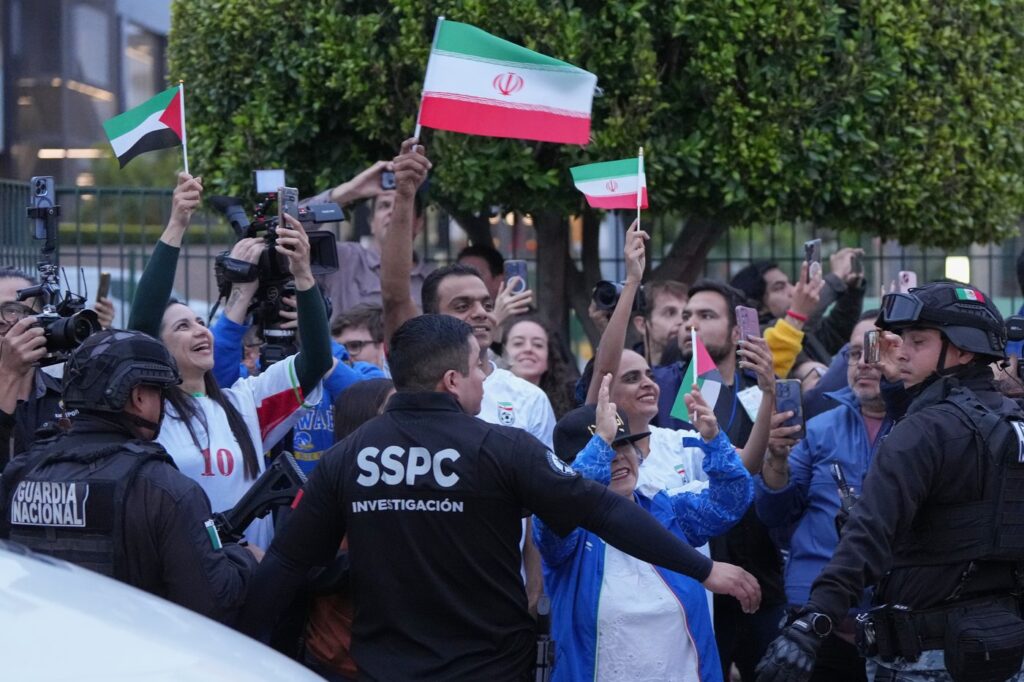
Most members of Iran's 26-man squad have not participated in competitive games since February, as their club leagues were halted due to the war. The team is now based in Tijuana, Mexico, a change from an earlier plan to train in Tucson, Arizona. This will mark Iran's seventh appearance at a men's World Cup.
Additionally, some officials from the Iranian federation reported being denied visas to enter the U.S., where Iran is scheduled to play Belgium on June 21 and Egypt on June 26, both in Inglewood and Seattle, respectively. Andrew Giuliani, executive director of the White House FIFA task force, confirmed that the Iranian team would be allowed entry a day before their matches. However, he noted that several Iranian officials were not permitted to enter, mentioning that some individuals claiming to be coaches were not recognized as such.
Giuliani emphasized the U.S. government's focus on ensuring a fair competition while restricting access to those directly associated with the Islamic Revolutionary Guard Corps (IRGC). The challenges faced by fans wishing to attend the World Cup, including obstacles obtaining visas and dealing with ongoing financial sanctions, are significant.
The Iranian federation indicated, “However, in an unexpected move, the allocation granted to Iran’s football federation has been withdrawn, and under the current circumstances the federation is unable to offer even a single ticket to national team supporters.” It remains uncertain how many tickets were previously sold from Iran's allocation or whether those fans reside in Iran or among the diaspora, which includes around 1 million people in the U.S.
If the Iranian tickets are indeed revoked, FIFA would face the challenge of selling approximately 5,600 tickets for the Iran-New Zealand match. Notably, the Los Angeles region has a substantial Iranian community. The FIFA sales portal currently lists rows of field-level seats available for $450 each, but availability is limited.
Infantino previously asserted the importance of access for fans and team officials at World Cup events, stating that a World Cup cannot occur without allowing qualified teams and their supporters access to the host country.
Issues related to U.S. policies towards World Cup attendees are becoming increasingly prominent as the tournament approaches. Reports indicate that a FIFA-appointed referee from Somalia was denied entry into the U.S. and subsequently removed from the tournament, while an Iraqi player was detained upon arrival in Chicago.
Piara Powar, executive director of FIFA's anti-discrimination monitoring partner, questioned who is in charge of the World Cup, raising concerns about the impact of U.S. immigration policies on the event. As the opening match approaches, the sense that this World Cup is anything but a global celebration of unity is beginning to dominate discussions.